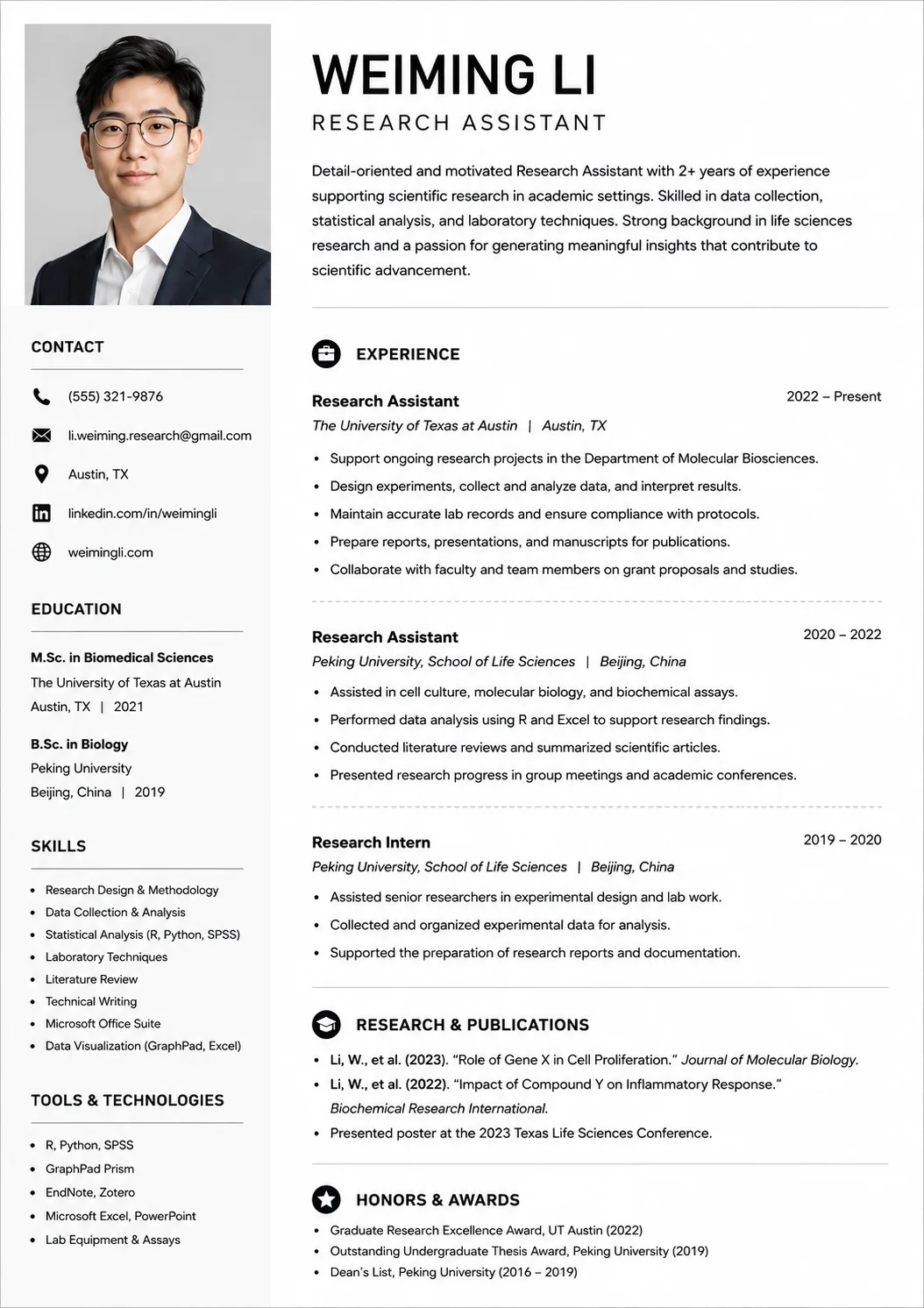
AI Engineer skills section example: show what you build and deploy
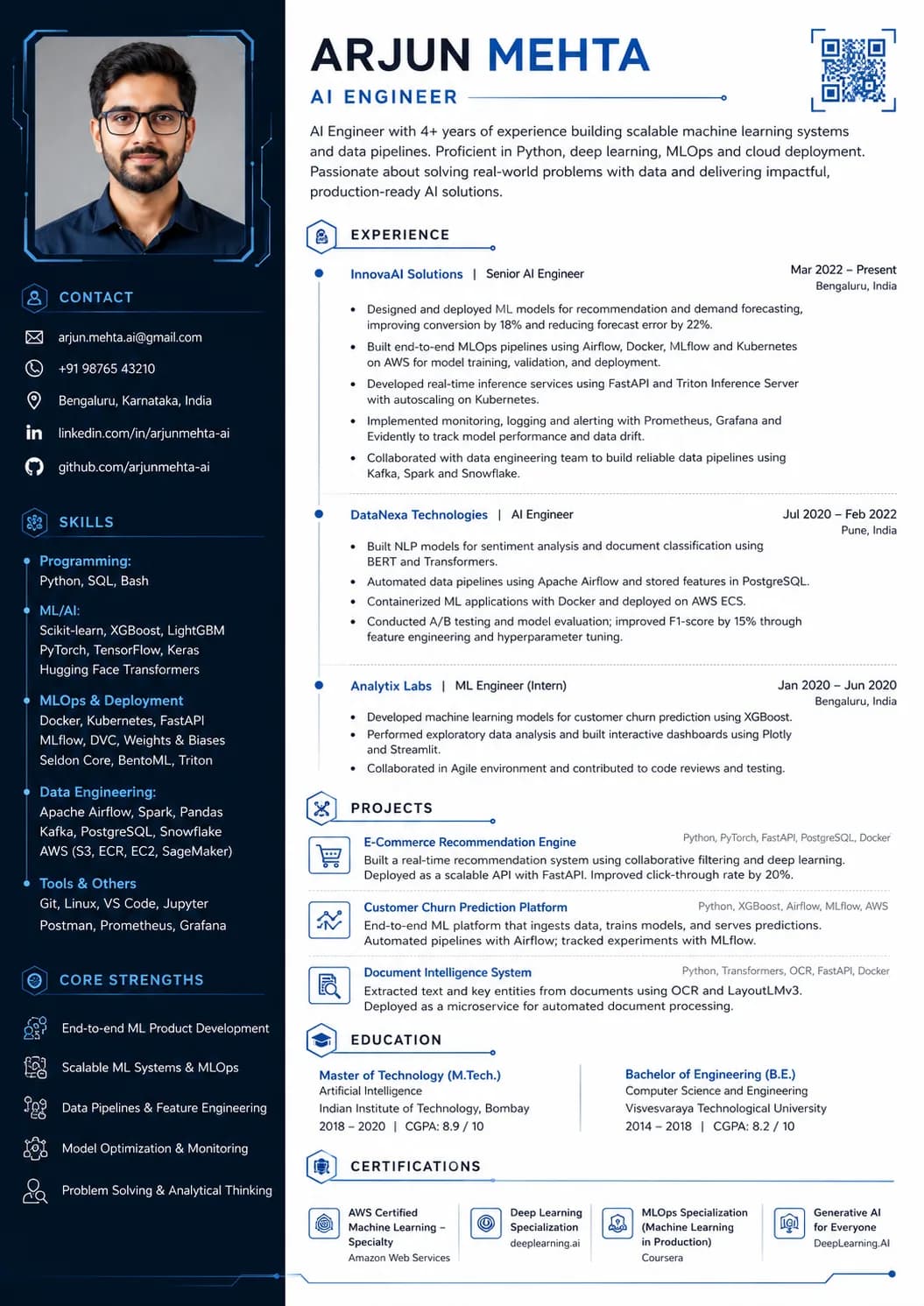
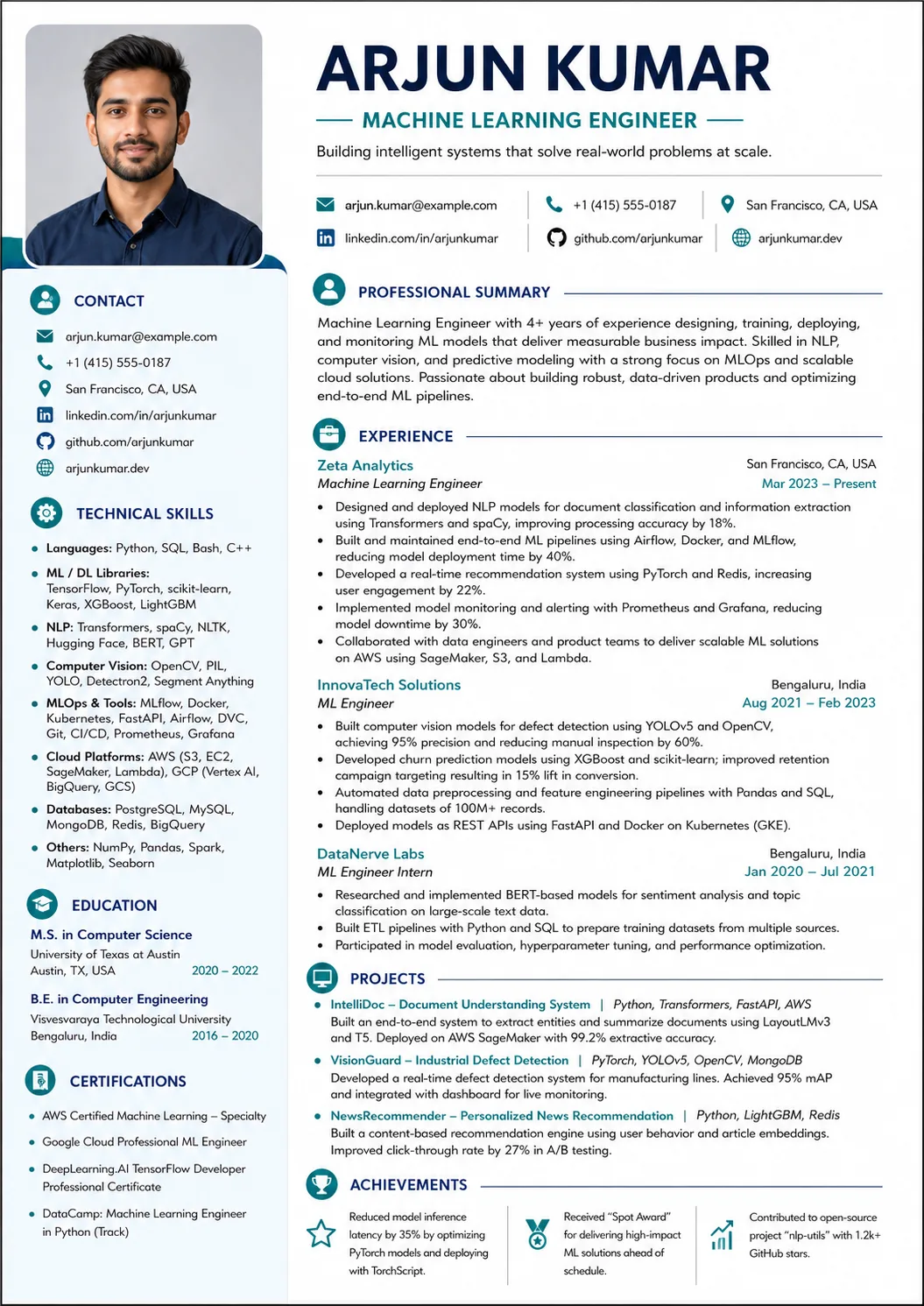
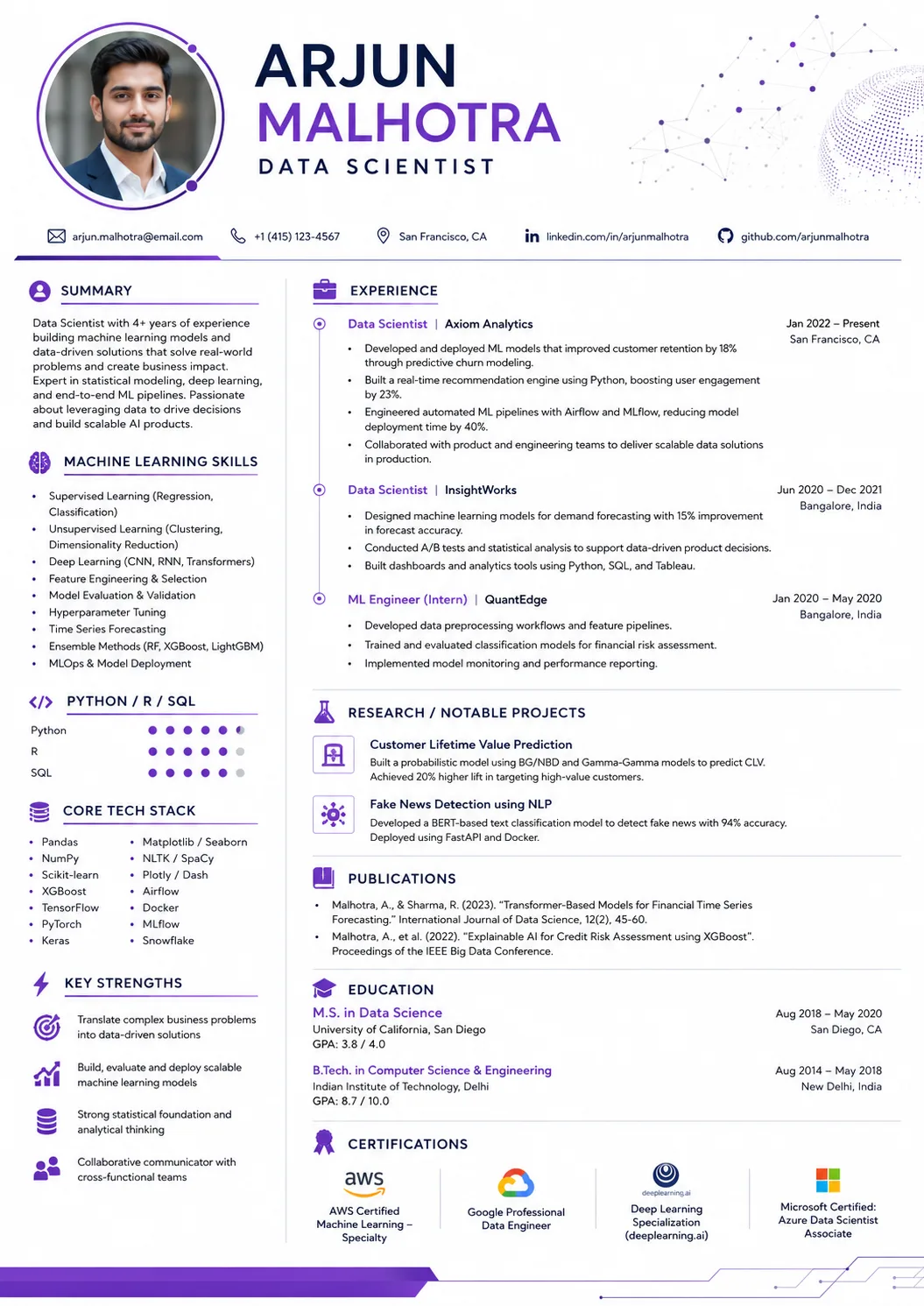
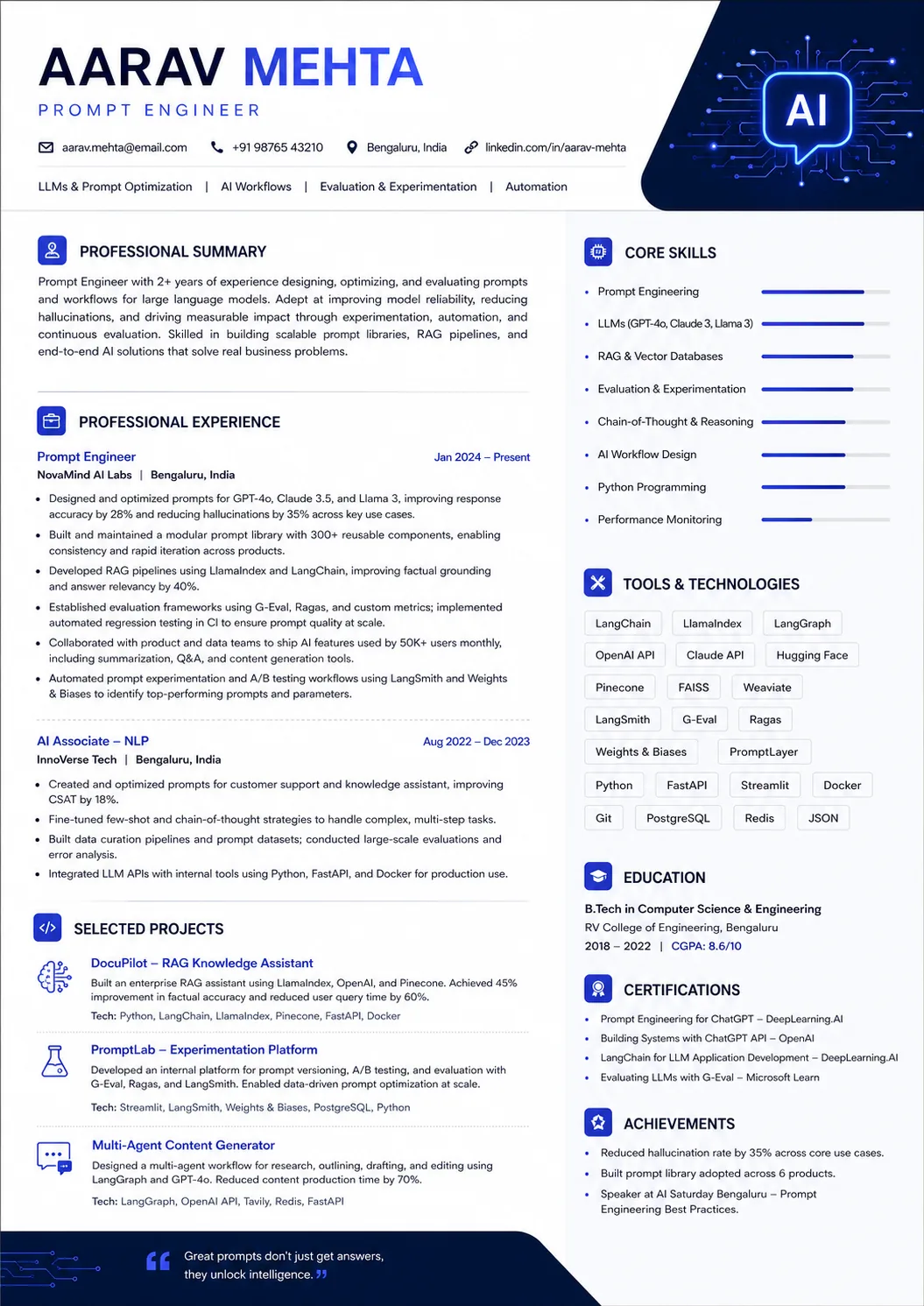
The AI Engineer skills section should reflect real engineering work. It should help a recruiter, ML lead, or ATS tool see that you can code, build models, work with data, deploy services, evaluate quality, and support production systems. Good AI Engineer resume skills are not random buzzwords. They are skills connected to actual work: Python, PyTorch, TensorFlow, scikit-learn, pandas, SQL, LLMs, RAG, embeddings, vector databases, FastAPI, Docker, Kubernetes, cloud services, MLOps, model evaluation, monitoring, and CI/CD.
Keep a longer master list outside your resume, then choose the skills that fit each job posting. A good AI Engineer resume does not need every tool you have touched. It needs the skills that match the model type, product area, and engineering environment in the job description. For example, an LLM engineer may highlight RAG, prompt evaluation, embeddings, vector search, tool calling, structured outputs, and guardrails. A computer vision engineer may highlight PyTorch, OpenCV, object detection, image classification, augmentation, and edge deployment. An MLOps-focused engineer may highlight Docker, Kubernetes, MLflow, CI/CD, model registry, drift monitoring, and cloud infrastructure.
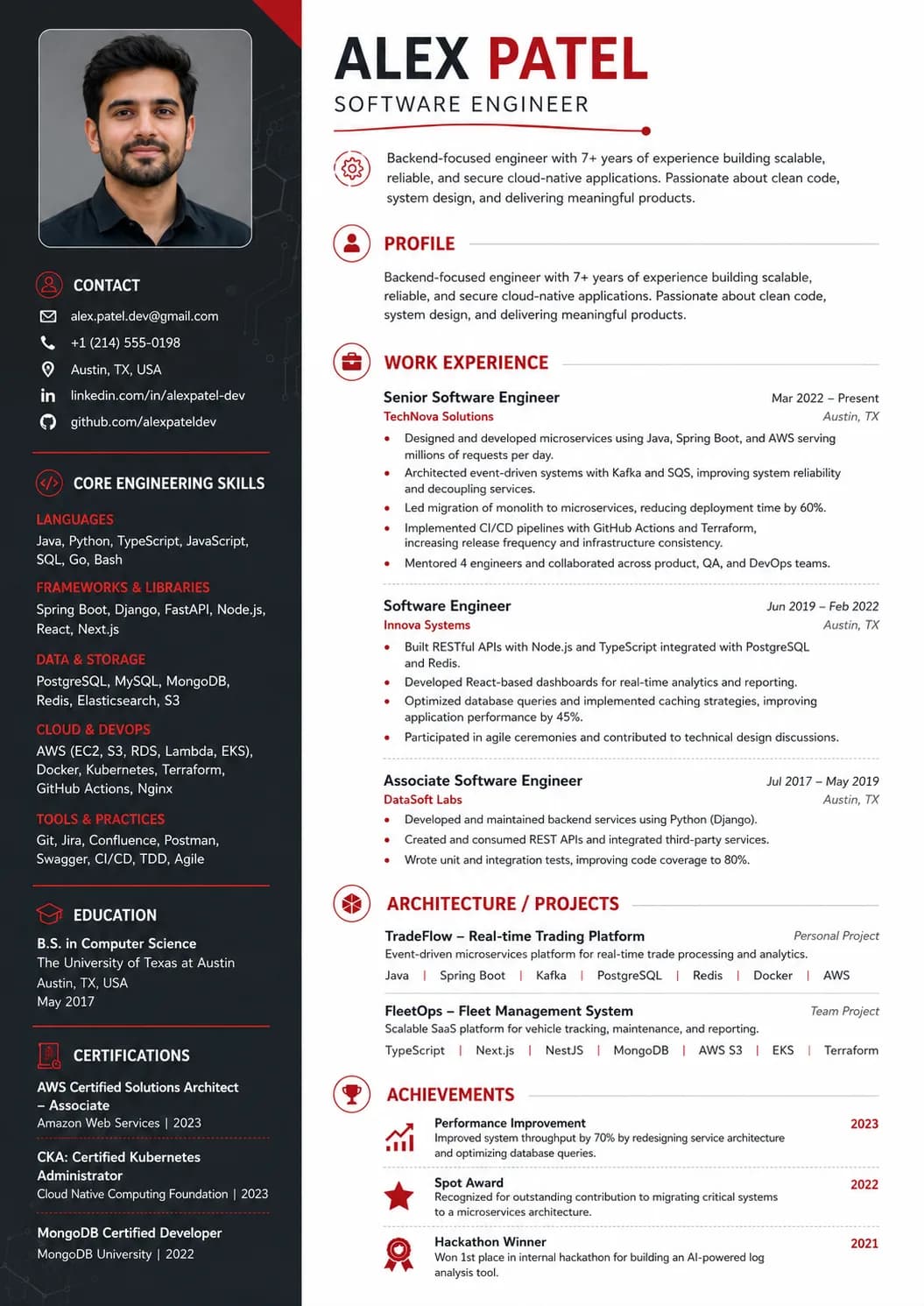
A strong AI Engineer skills section mixes model skills with software engineering and deployment skills. Do not separate skills in a way that makes the page confusing. Group them if your template allows it, or list the most important ones first. The most useful AI Engineer resume skills are usually the ones that also appear in your experience bullets. If you list RAG, show a bullet where you built a retrieval pipeline. If you list MLOps, show a bullet where you versioned, deployed, monitored, or retrained a model. This makes your skills believable instead of decorative.