Architect skills section example: show what you do every day
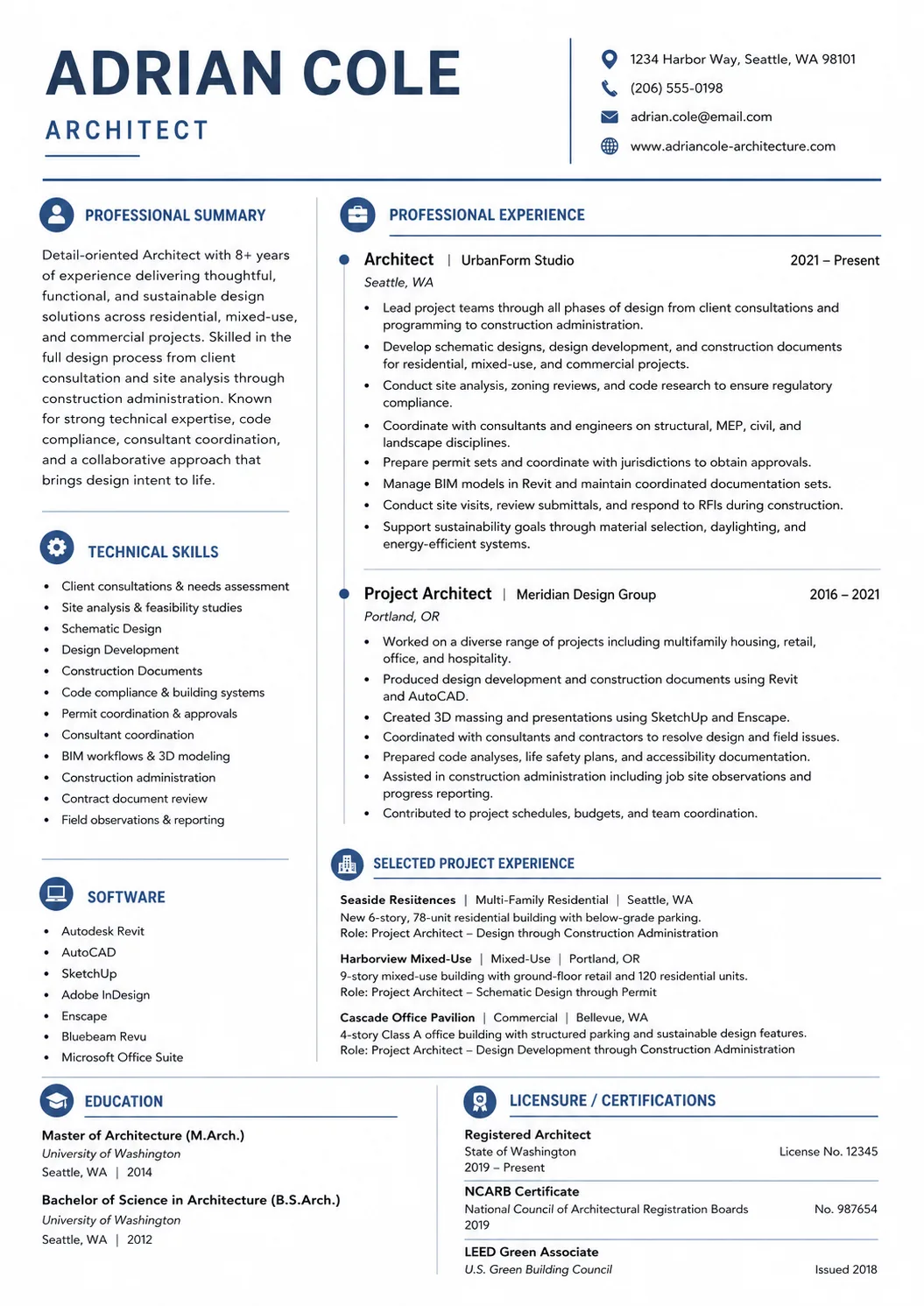
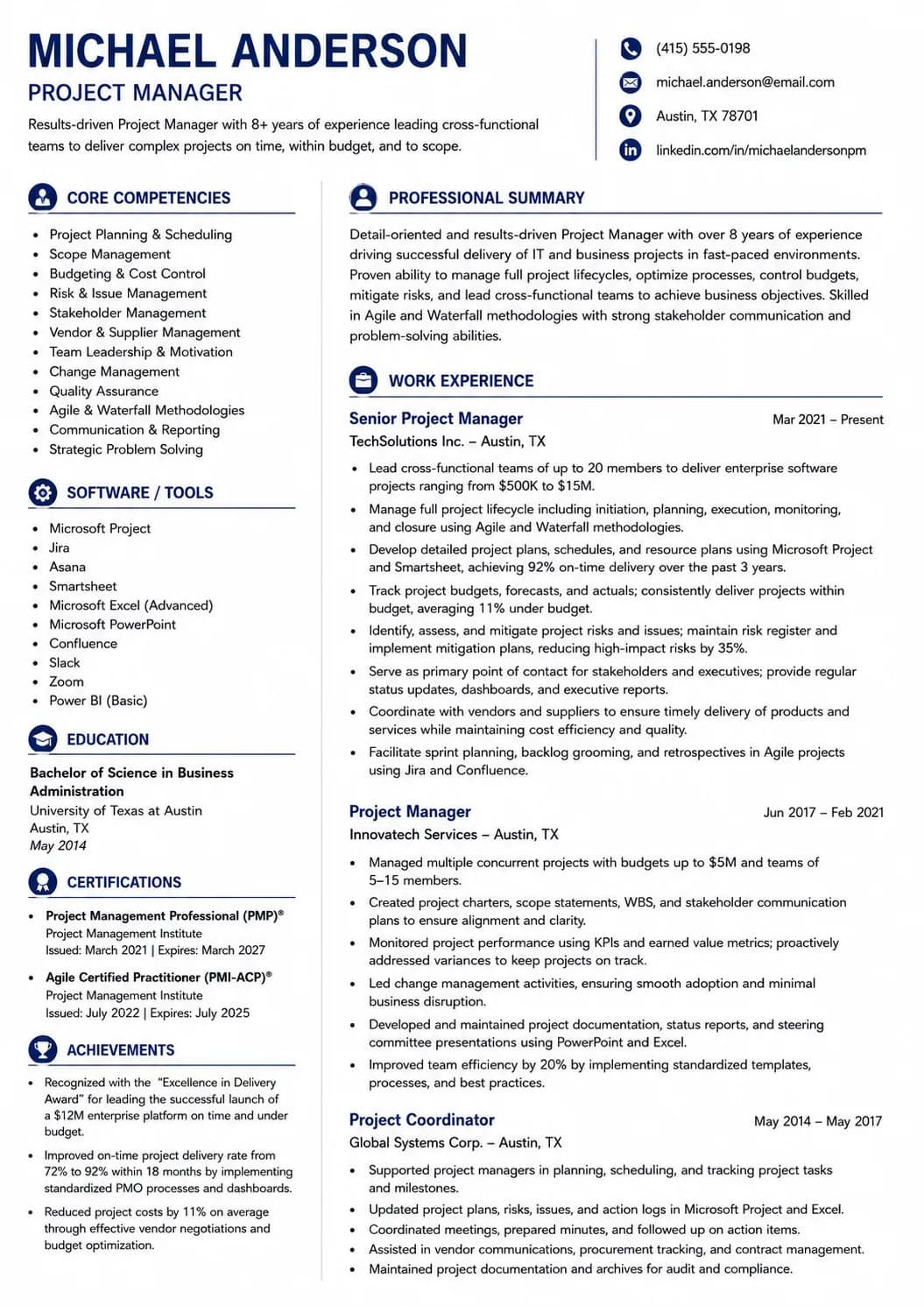
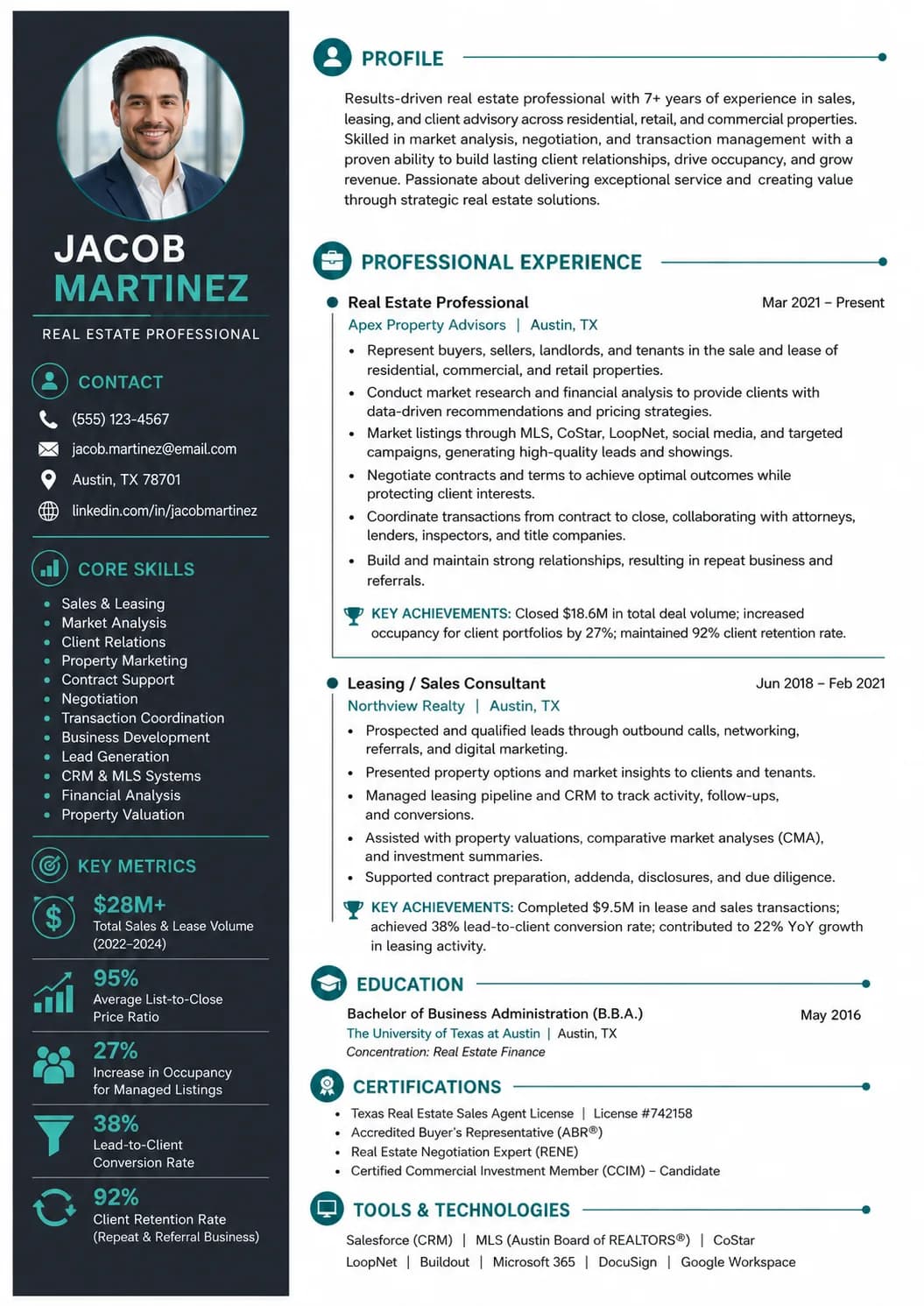
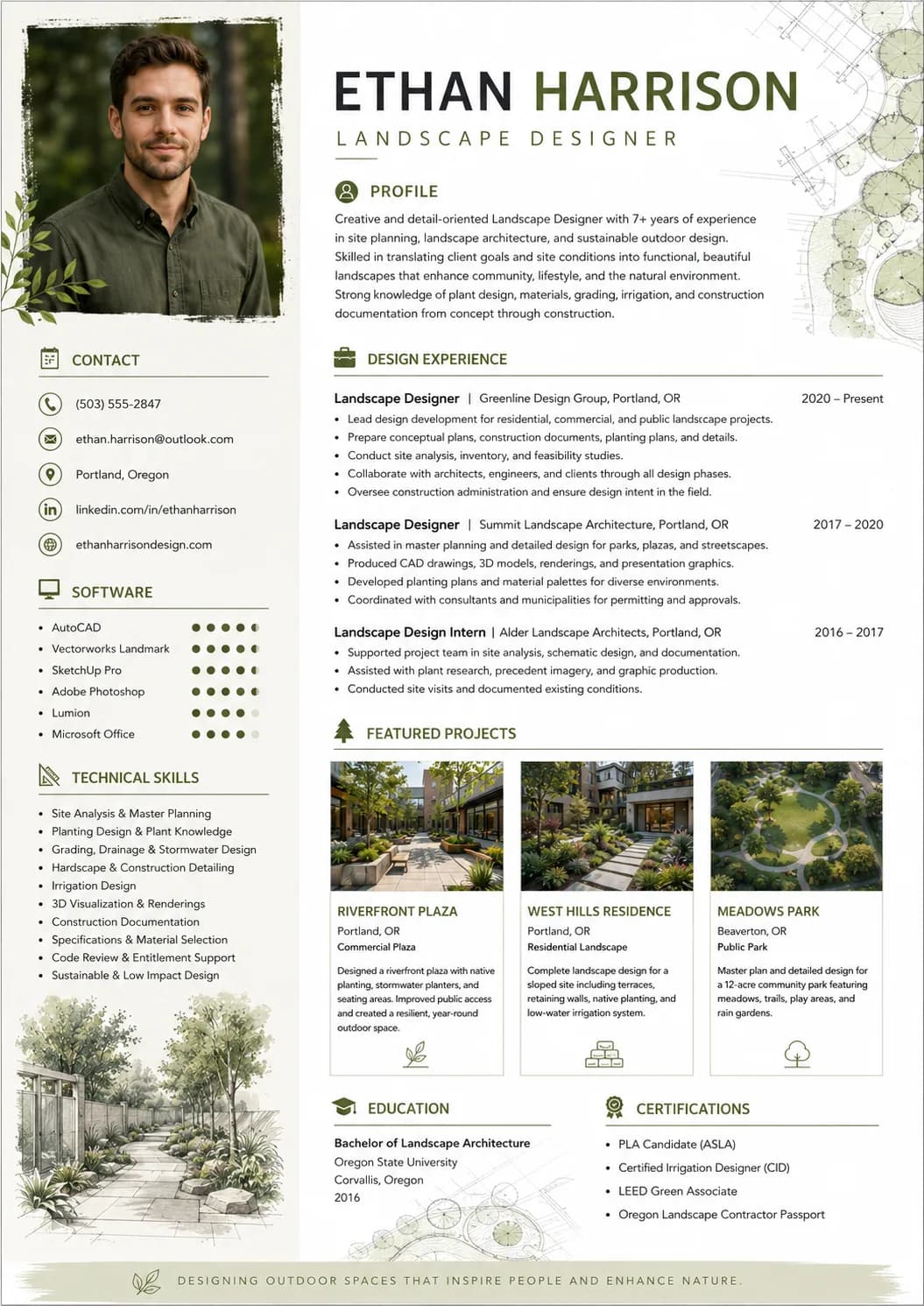
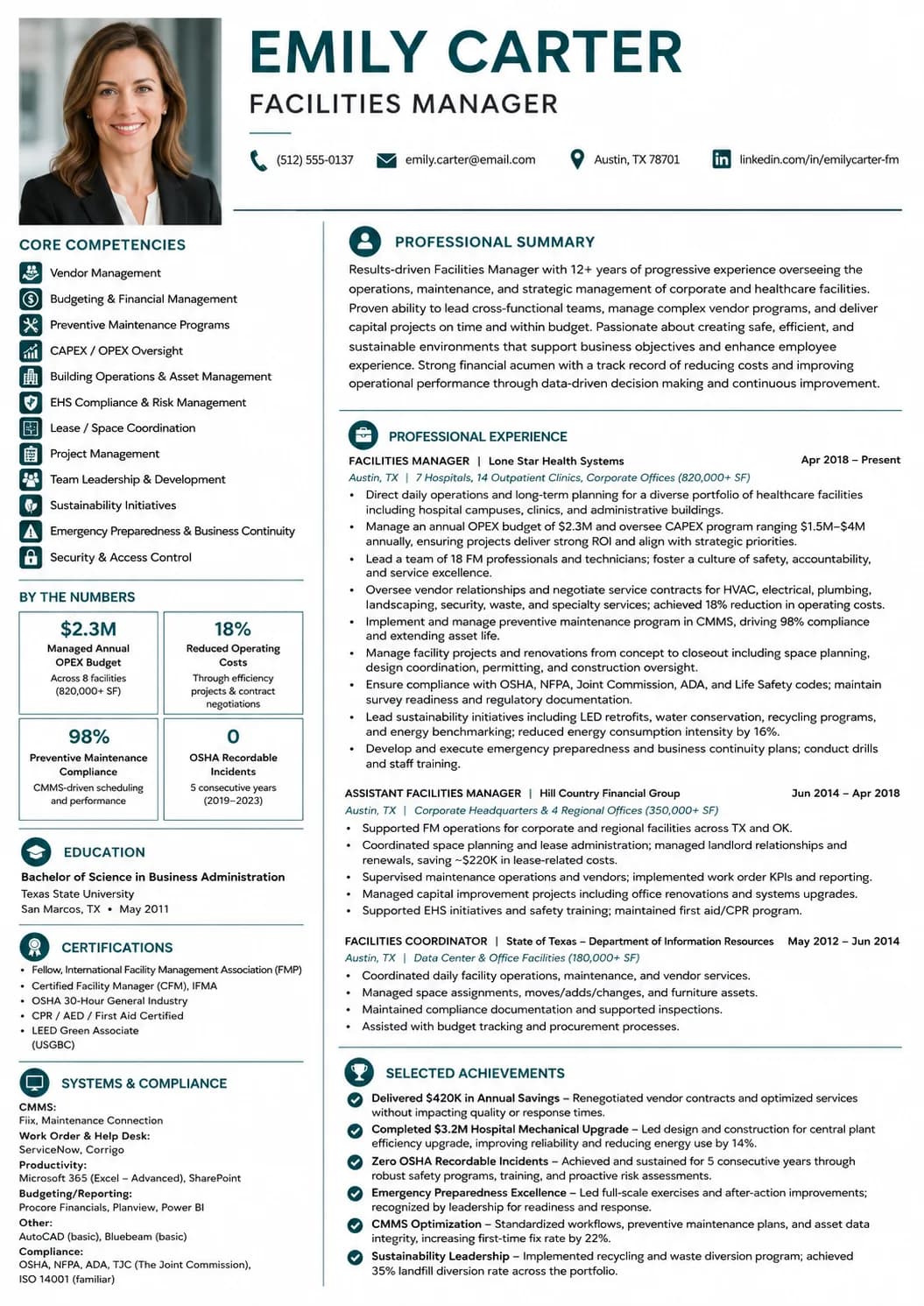
The architect skills section should reflect daily project work. It should help a principal, project architect, recruiter, or ATS tool see that you can design, model, draft, detail, coordinate, research, present, and support construction. Good architect resume skills are not random personality words. They are skills connected to actual architecture work: Revit, BIM modeling, AutoCAD, Rhino, SketchUp, Adobe Creative Suite, Bluebeam, construction documents, schematic design, design development, code analysis, accessibility review, permit coordination, consultant coordination, client presentations, construction administration, RFIs, submittals, and detailing.
Keep a longer master list outside your resume, then choose the skills that fit each firm posting. A good architect resume does not need every skill you have. It needs the skills that match the project type, design phase, software, and firm needs in the job description. For example, a residential architect may highlight code research, client presentations, interior elevations, zoning, and construction details. A commercial architect may highlight Revit, BIM coordination, construction documents, consultant coordination, and permit sets. A senior architect may highlight QA reviews, code strategy, construction administration, mentoring, and project leadership.
A strong architect skills section mixes design skills with technical and coordination skills. Do not separate skills in a way that makes the page confusing. Group them if your template allows it, or list the most important ones first. The most useful architect resume skills are usually the ones that also appear in your experience bullets. If you list Revit, show a bullet where you built or coordinated a model. If you list construction administration, show a bullet where you reviewed submittals, drafted RFI responses, or updated field notes. This makes your skills believable instead of decorative.