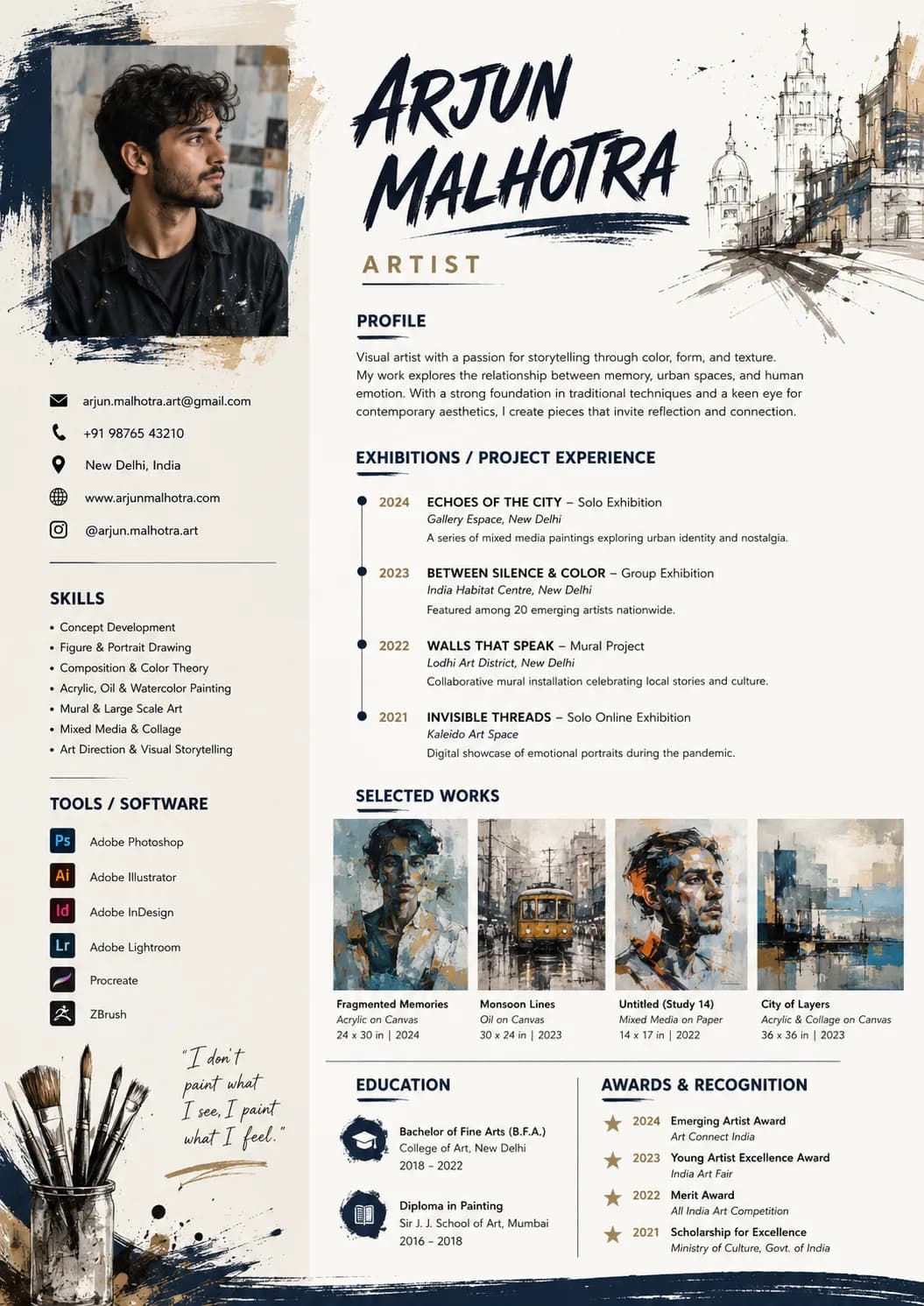
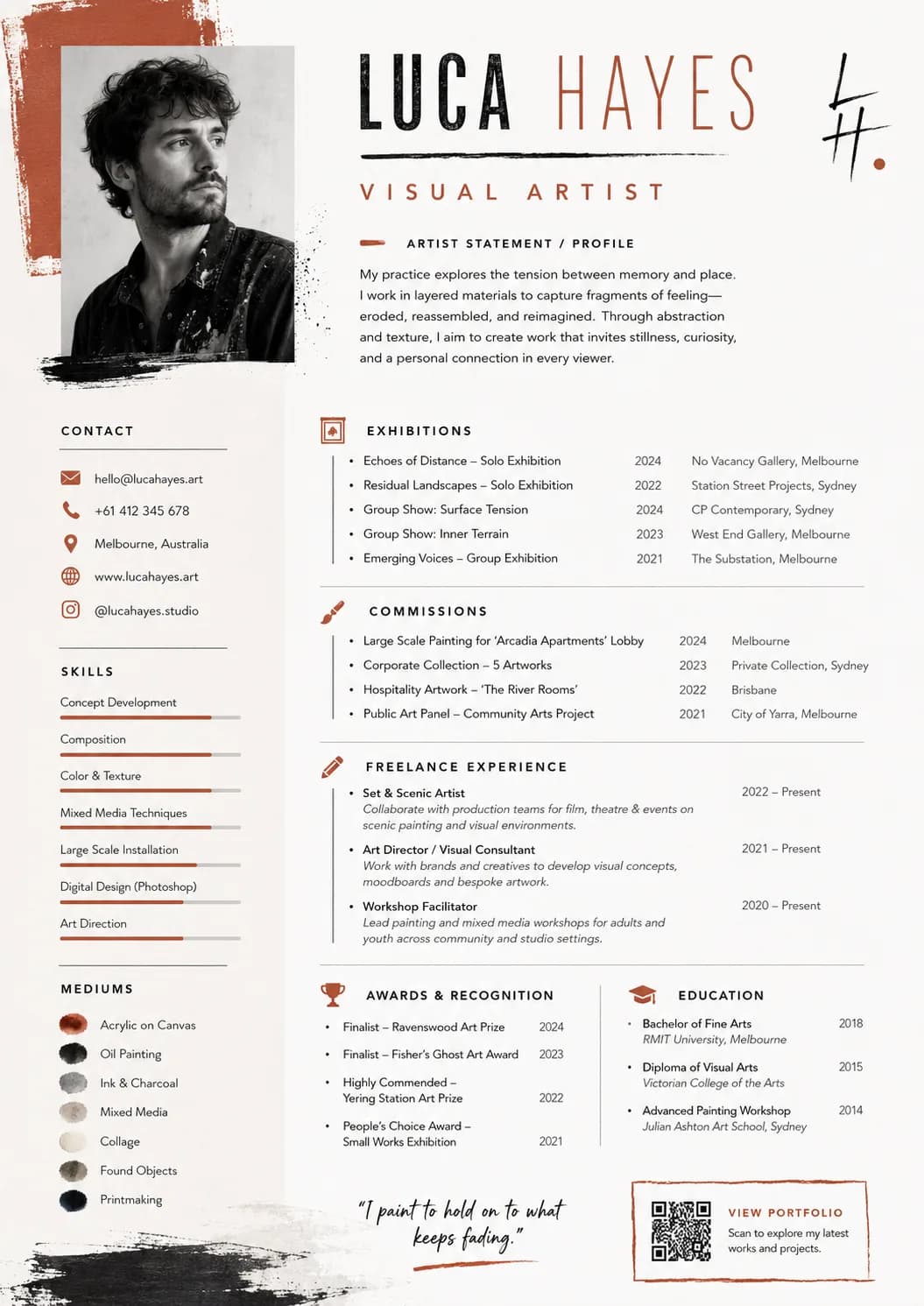
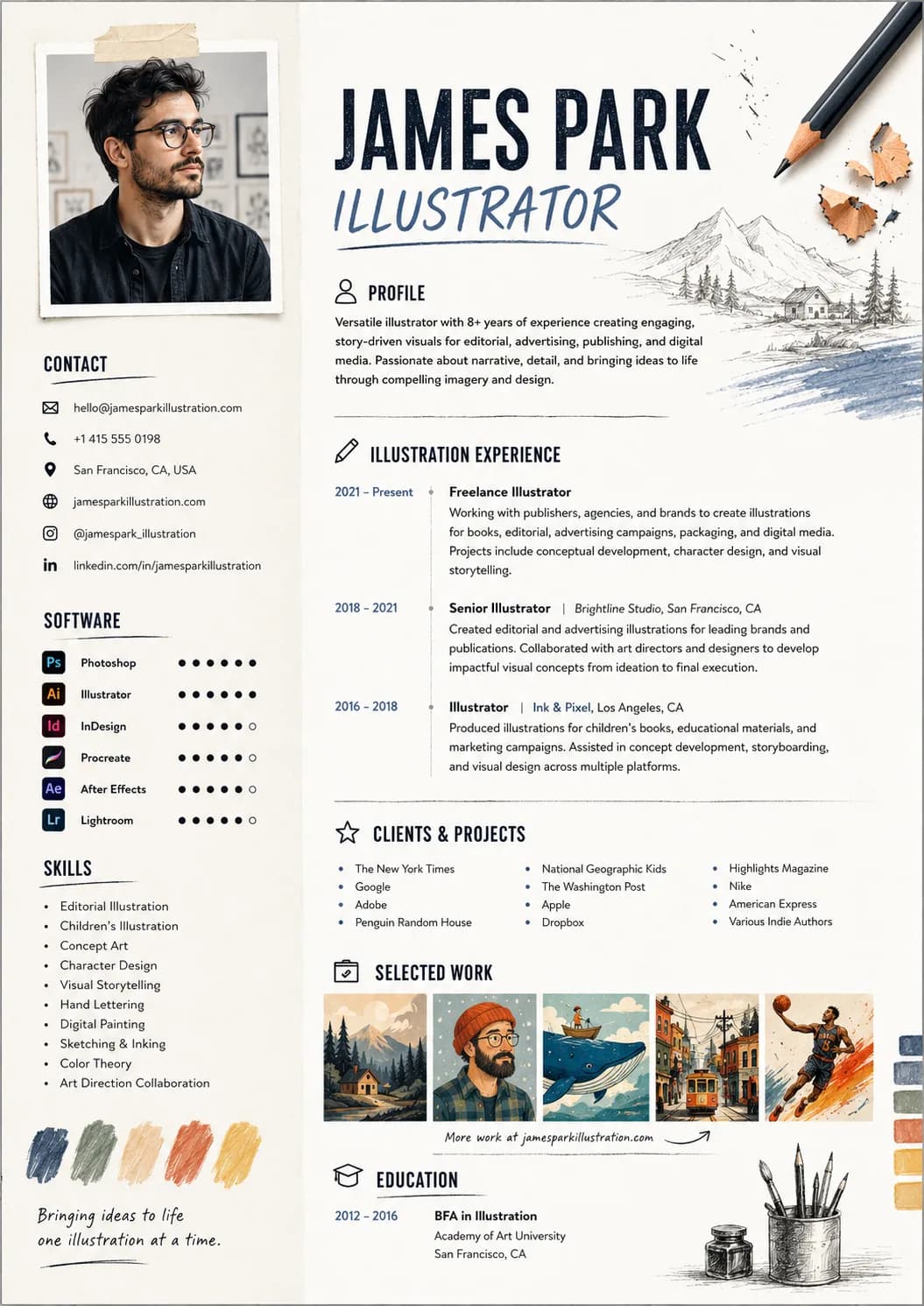
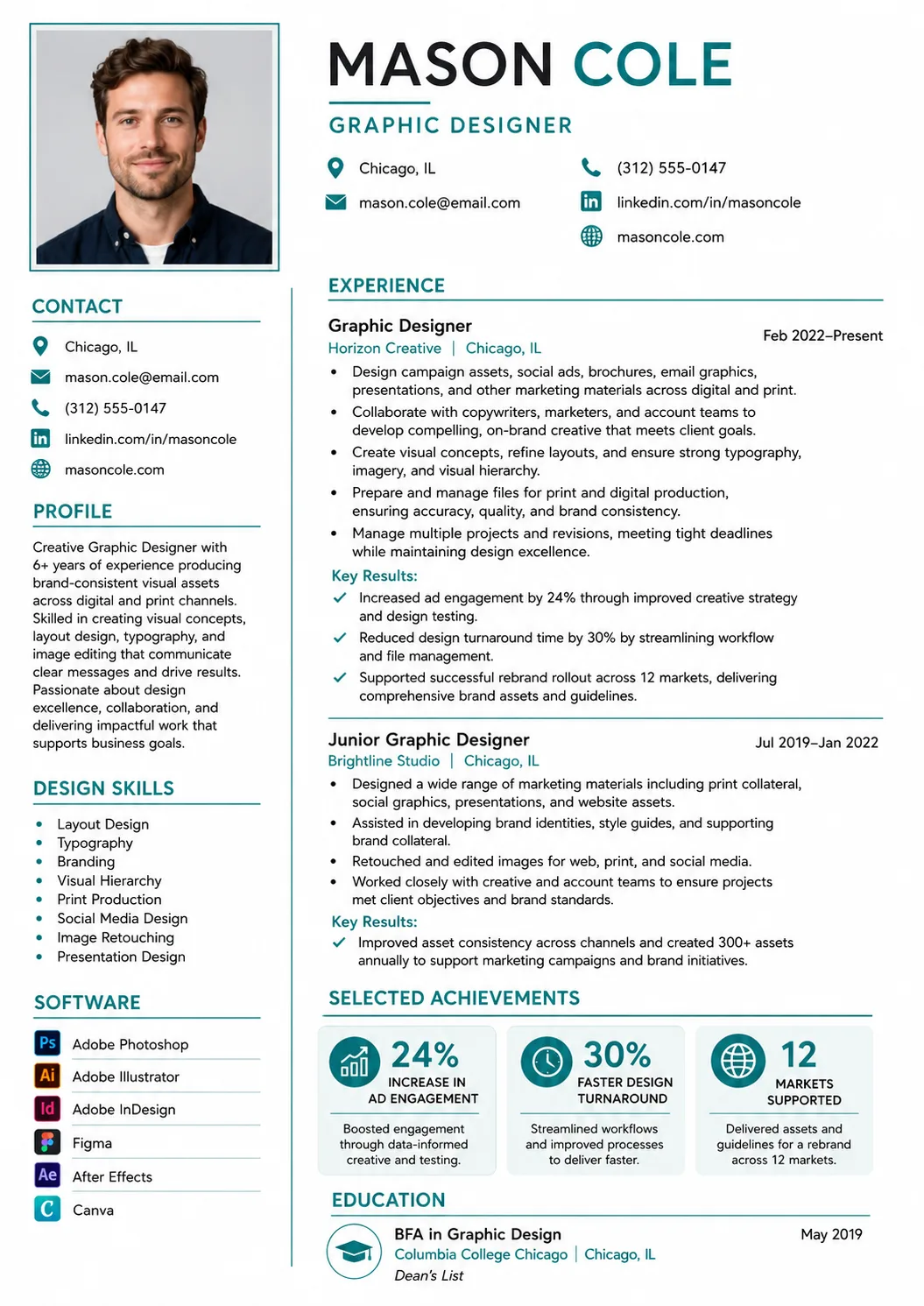
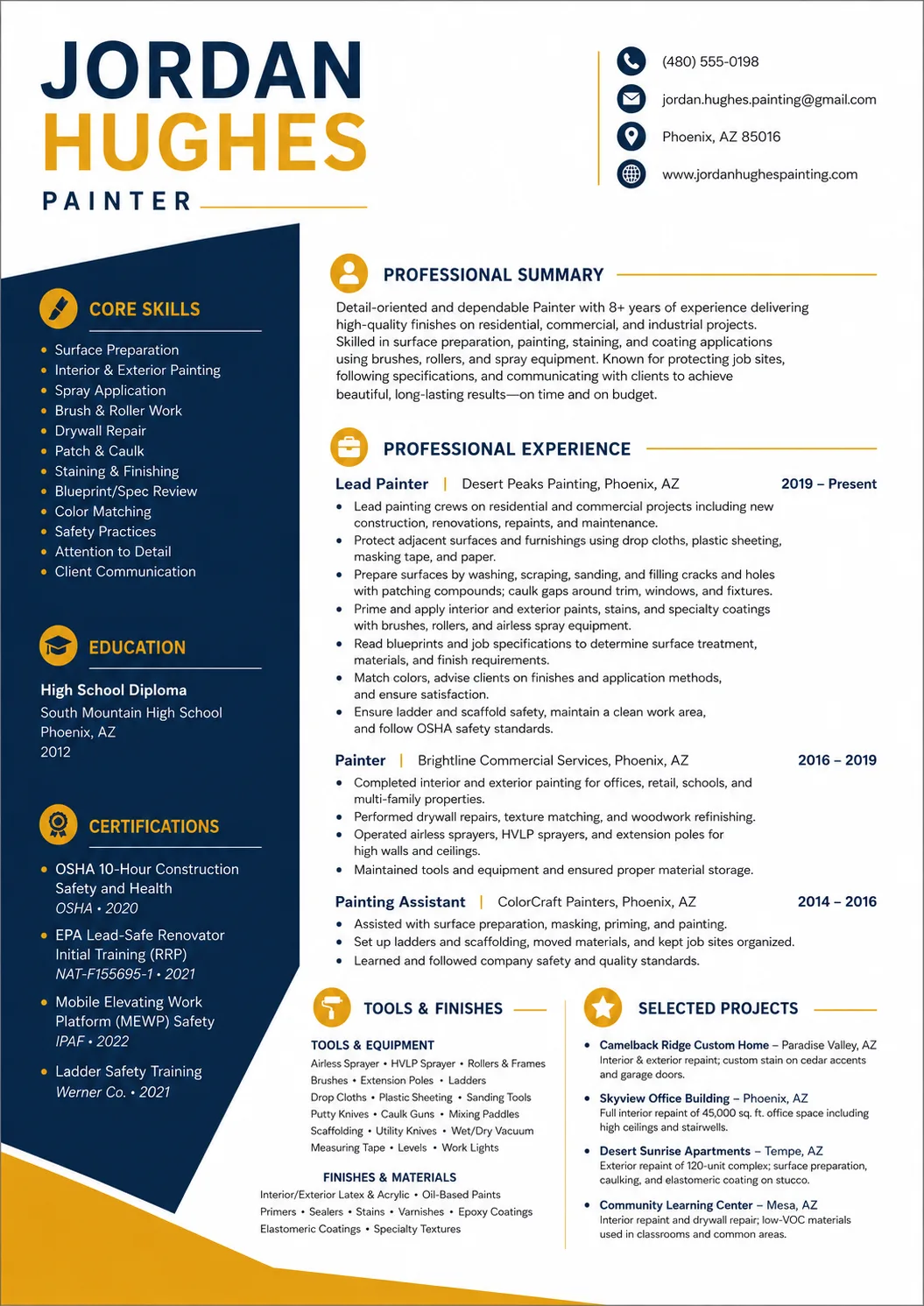
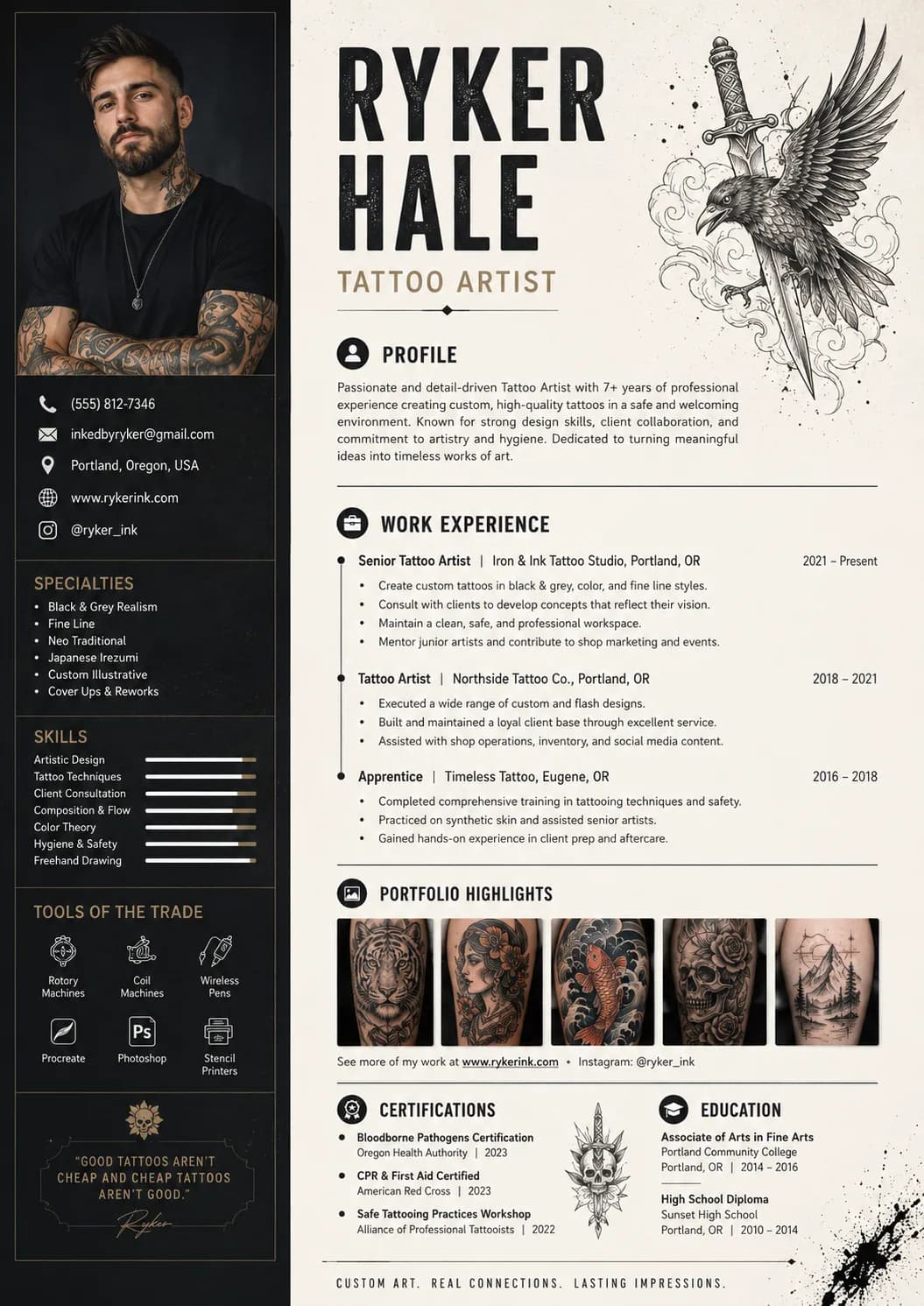
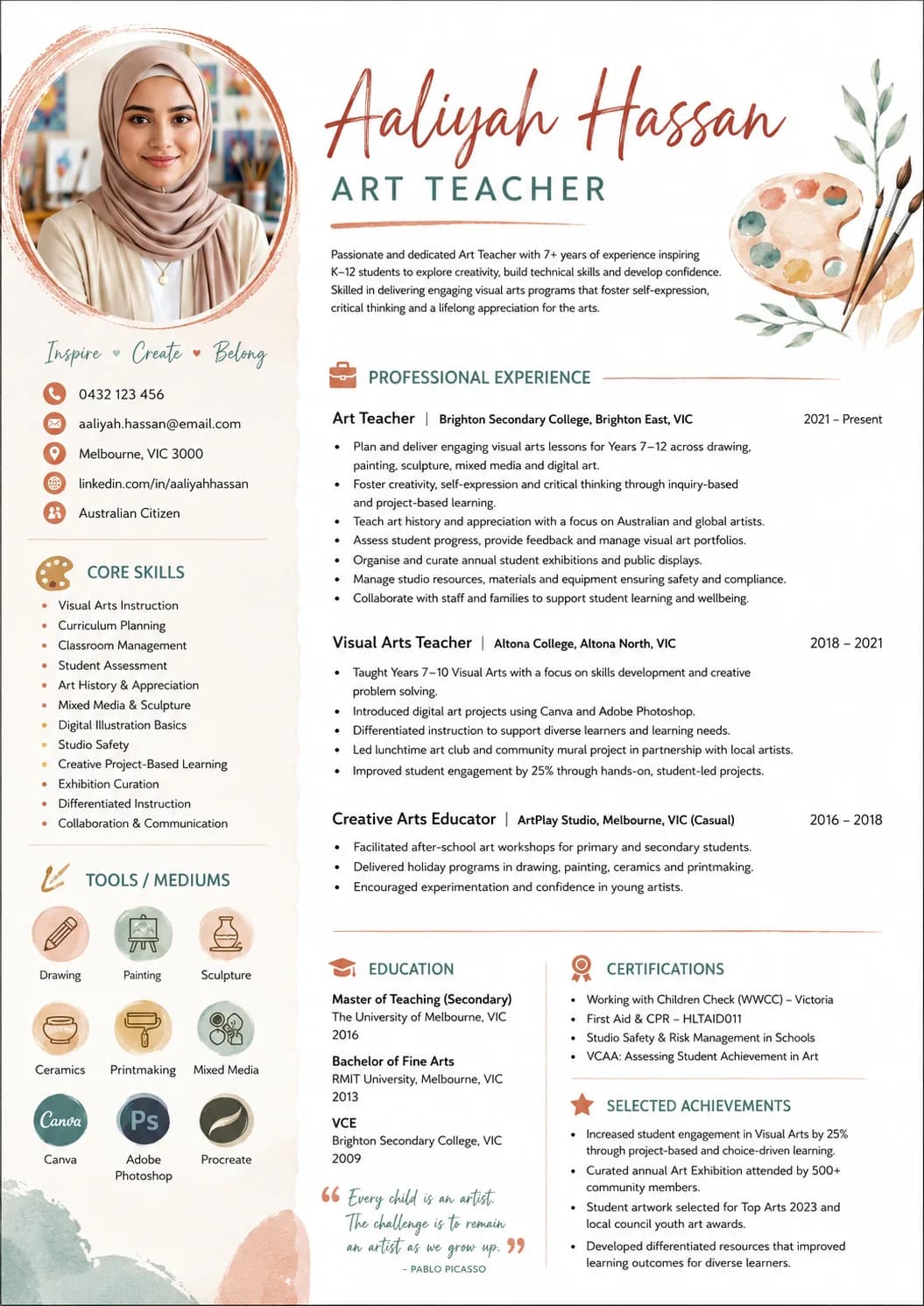
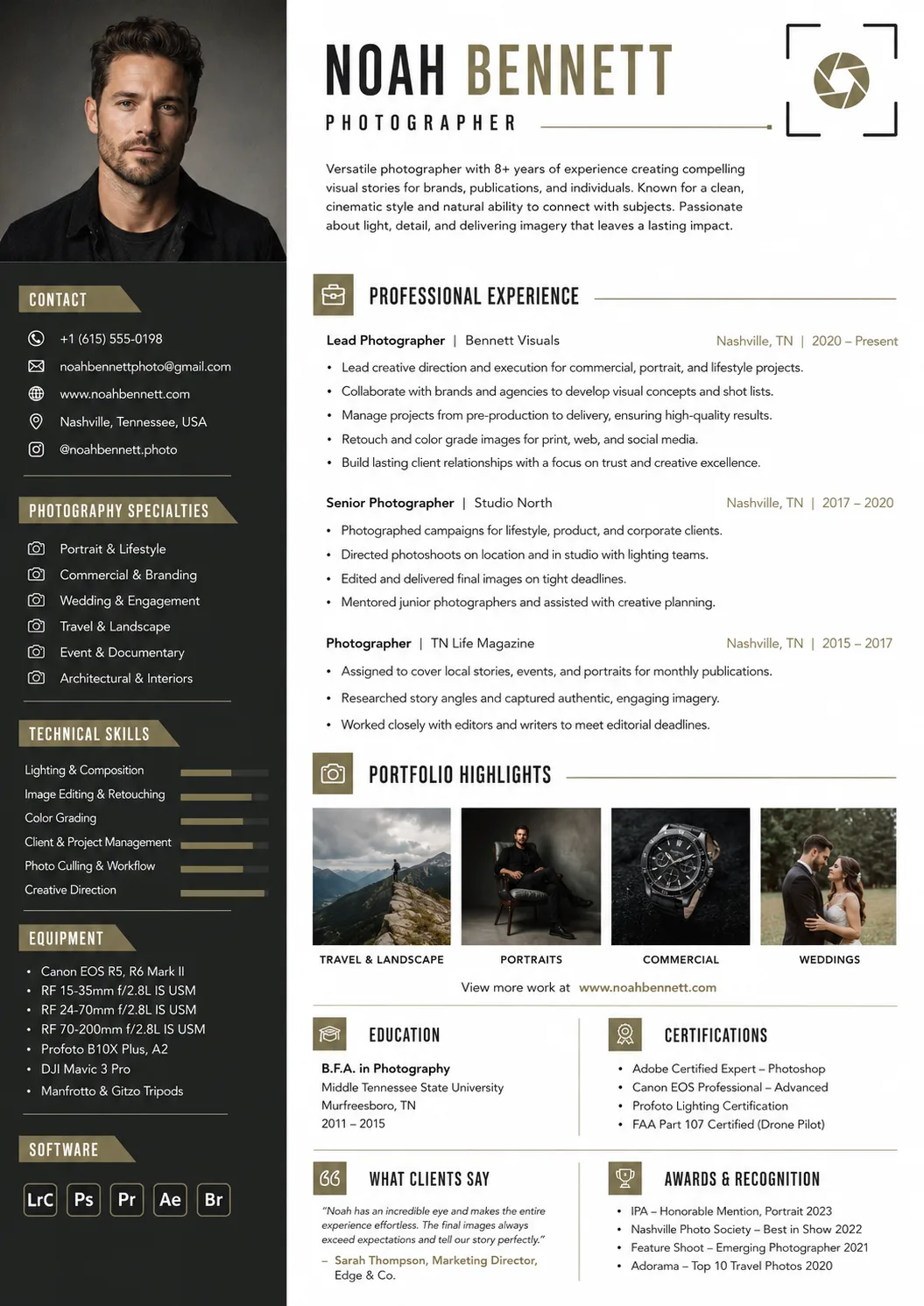
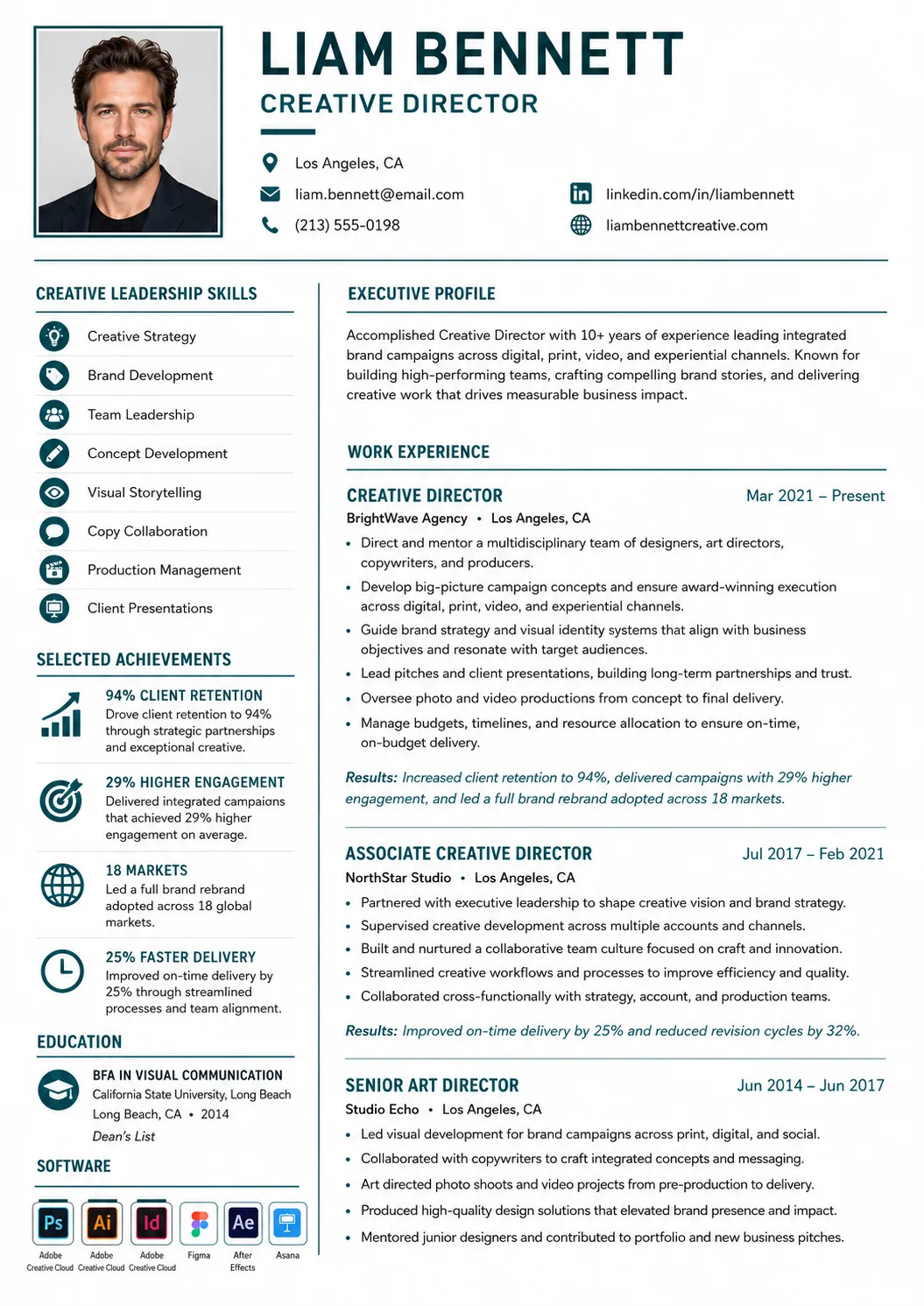
Artist experience resume example: prove finished creative work clearly
The experience section is where your artist resume becomes believable. It should prove that you can create finished work in real settings. For new artists, this can include student exhibitions, portfolio collections, freelance commissions, gallery volunteer work, murals, community projects, online shops, art fairs, design support, or studio assistant work. For experienced artists, it should show stronger exhibition history, client work, public art, commissions, residencies, grants, teaching, production planning, and portfolio depth. For senior artists, it should also show leadership, mentoring, proposal writing, installation planning, stakeholder communication, or managing creative teams. The title matters, but the finished work behind the title matters more.
Creative reviewers care about the work behind the title. If you developed concepts, created finished pieces, prepared artwork for exhibition, handled client revisions, used digital software, documented work, installed a show, managed materials, or helped participants in a workshop, that experience counts. The key is to write it clearly. A bullet like “made art for clients” is too thin. A stronger bullet says “created three custom digital illustrations for a wellness brand using Procreate and Photoshop, with sketches, two revision rounds, and print-ready exports.” The second version gives project type, tools, process, and delivery.
Use reverse-chronological order so your most recent and most relevant experience appears first. For each role, include the position title, studio, gallery, school, client type, organization, location, dates, and short bullets. Start each bullet with a creative action such as created, illustrated, painted, designed, installed, prepared, collaborated, revised, documented, exhibited, delivered, taught, or coordinated. Then add the creative context. Good context includes medium, project type, audience, software, number of works, exhibition setting, client need, deadline, or final use. Numbers can help, but only use them when they are true.
- Position title, artist role, or project type
- Studio, gallery, client, school, program, or organization name
- Location and dates
- Mediums, tools, exhibitions, clients, or project types you supported
- Short bullets that show what you created, prepared, installed, taught, revised, or delivered
The best artist resume bullets use clear creative actions. Instead of saying created artwork, explain the medium, project need, and finished result. Instead of saying worked on an exhibition, explain the labels, framing, hanging plan, inventory, or installation support you handled. Instead of saying completed commissions, explain the client brief, sketches, revision rounds, final files, or delivery timeline. An artist resume example should not make the candidate sound bigger than the truth. It should make the truth easy to understand. That is what makes the experience section credible.