Assembler skills section example: show what you do every day
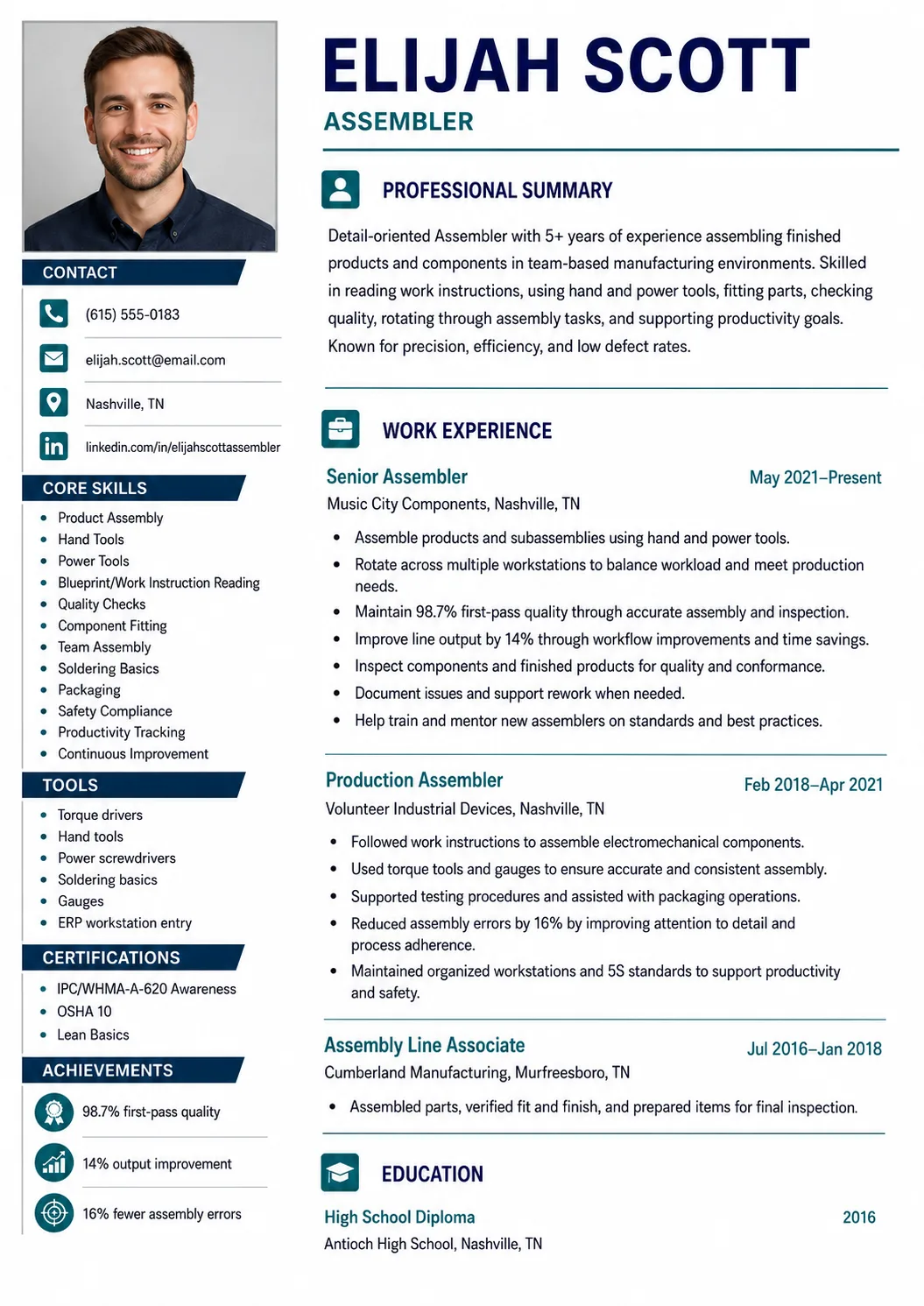
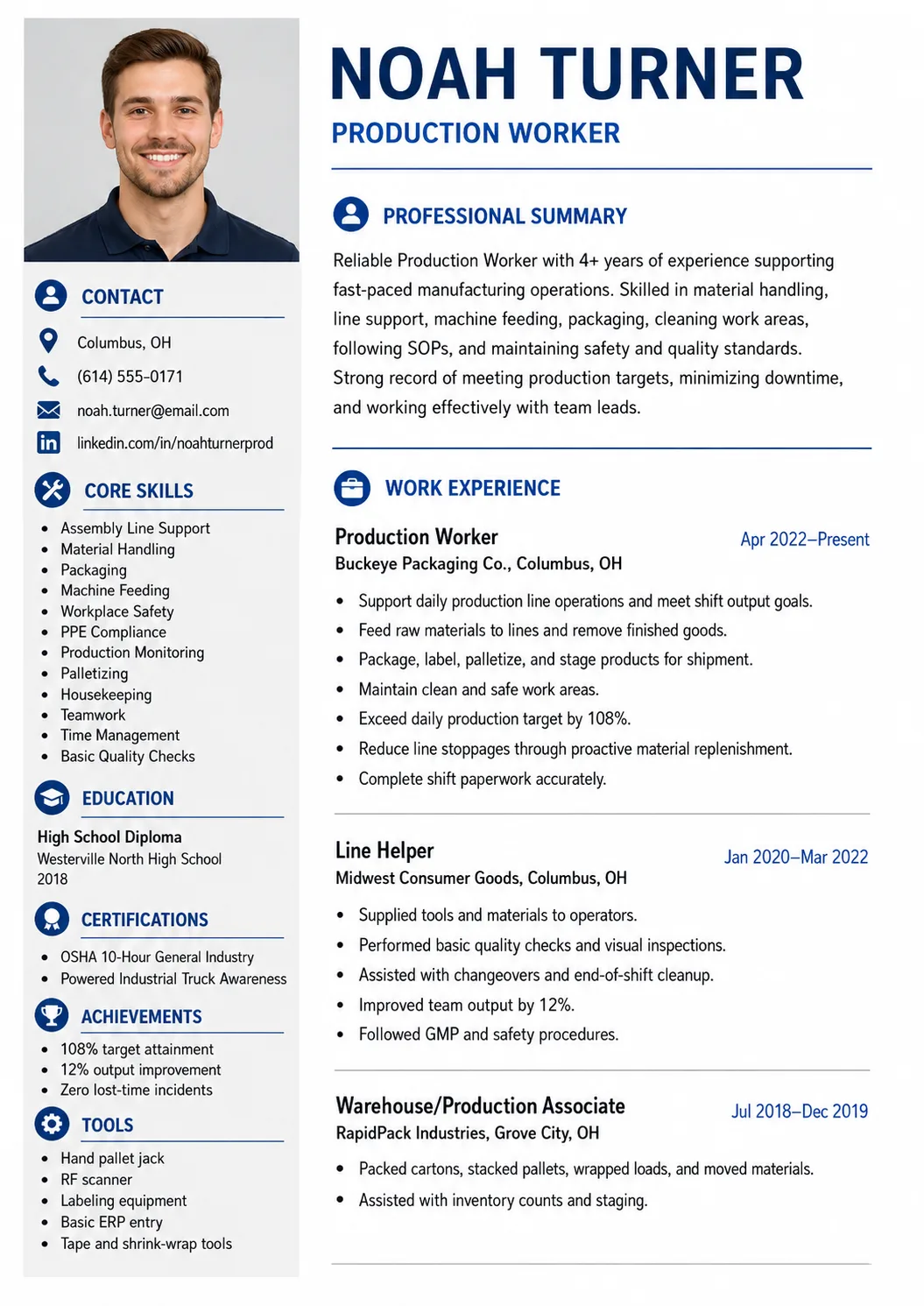
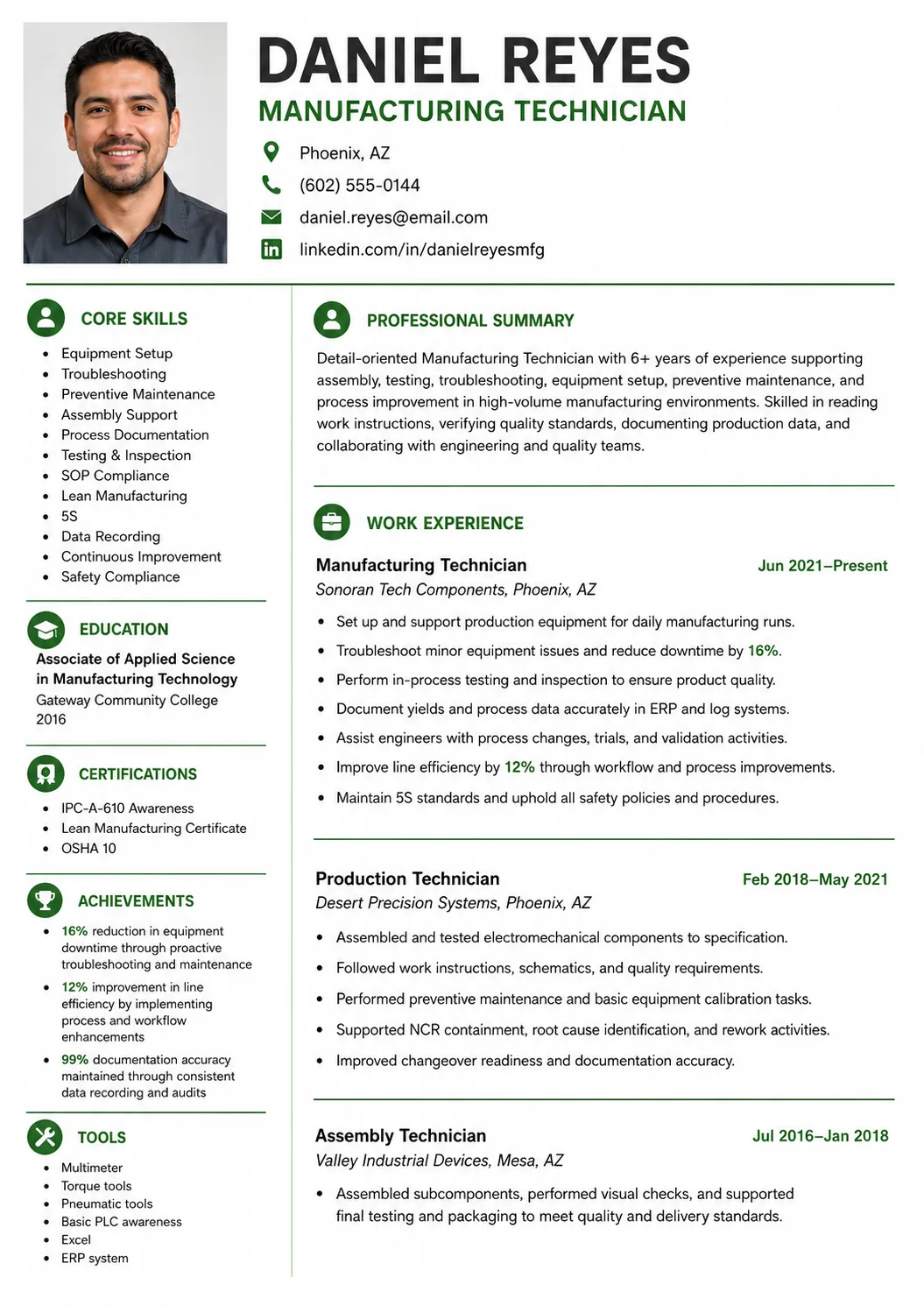
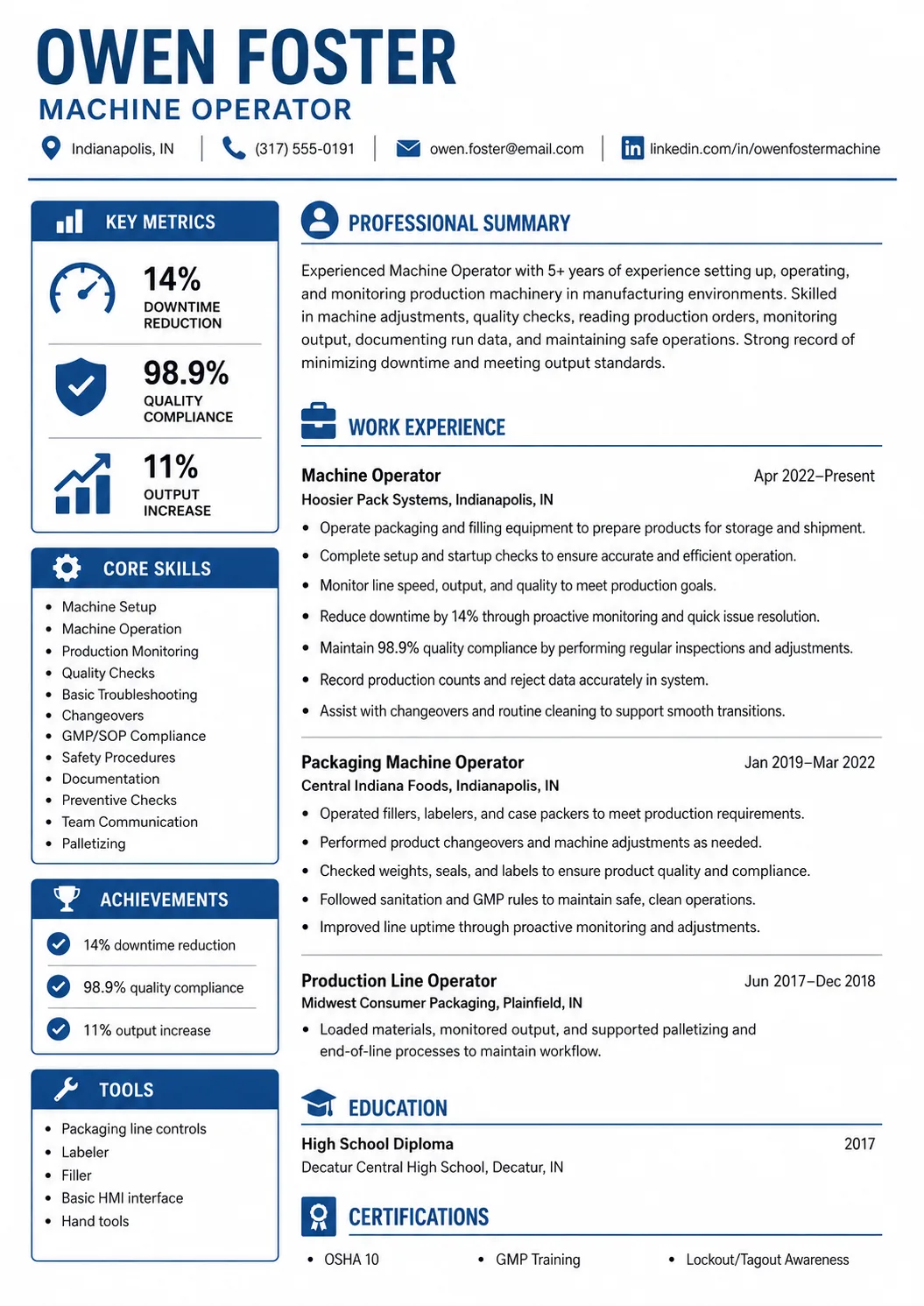
The assembler skills section should reflect daily production work. It should help a recruiter, staffing agency, production supervisor, or ATS tool see that you can build, inspect, document, and work safely. Good assembler resume skills are not random personality words. They are skills connected to actual assembly work: mechanical assembly, electrical assembly, work order reading, blueprint reading, hand tools, power tools, torque tools, soldering, wiring, parts inspection, quality control, production documentation, 5S, PPE, and teamwork.
Keep a longer master list outside your resume, then choose the skills that fit each posting. A good assembler resume does not need every skill you have. It needs the skills that match the product, tools, shift, and quality requirements in the job description. For example, a mechanical assembler may highlight torque tools, blueprints, fasteners, alignment, and mechanical subassemblies. An electronic assembler may highlight soldering, crimping, wiring, harnesses, ESD, IPC standards, and continuity checks. A production assembler may highlight line speed, kitting, parts staging, visual inspection, 5S, and safety. Match the role, but stay honest.
A strong assembler skills section mixes hands-on tool skills with quality, safety, and documentation skills. Do not separate skills in a way that makes the page confusing. Group them if your template allows it, or list the most important ones first. The most useful assembler resume skills are usually the ones that also appear in your experience bullets. If you list quality control, show a bullet where you inspected parts. If you list hand tools, show a bullet where you used them on actual assemblies. This makes your skills believable instead of decorative.