Attorney skills section example: show what you do every day
The attorney skills section should reflect daily legal work. It should help a partner, recruiter, general counsel, agency hiring manager, or ATS tool see that you can research, write, analyze, draft, negotiate, communicate, and manage legal risk. Good attorney resume skills are not random personality words. They are skills connected to actual legal practice: legal research, legal writing, litigation, motion practice, contract drafting, discovery, due diligence, client counseling, negotiation, regulatory compliance, case strategy, Westlaw, LexisNexis, Relativity, and document review.
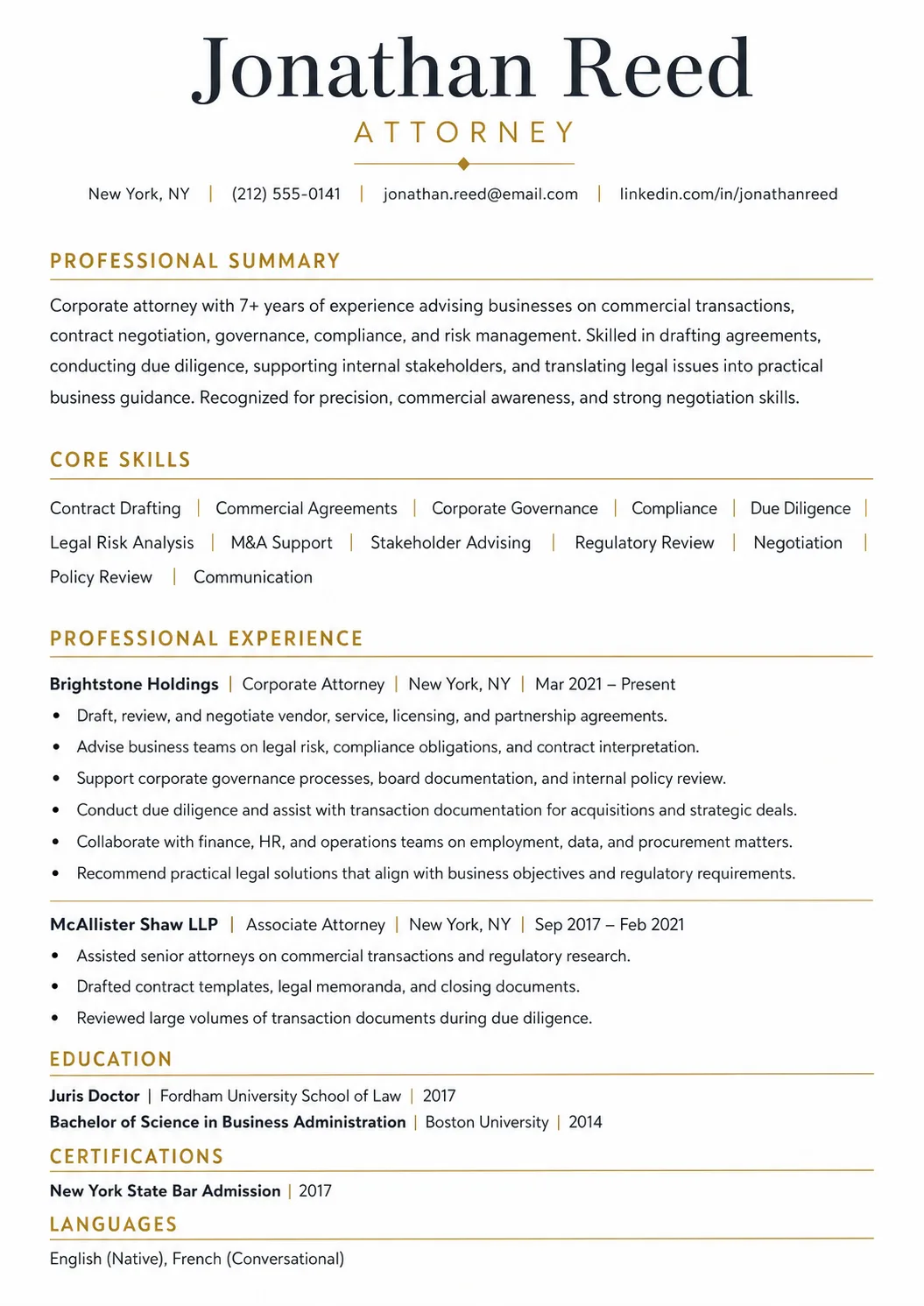
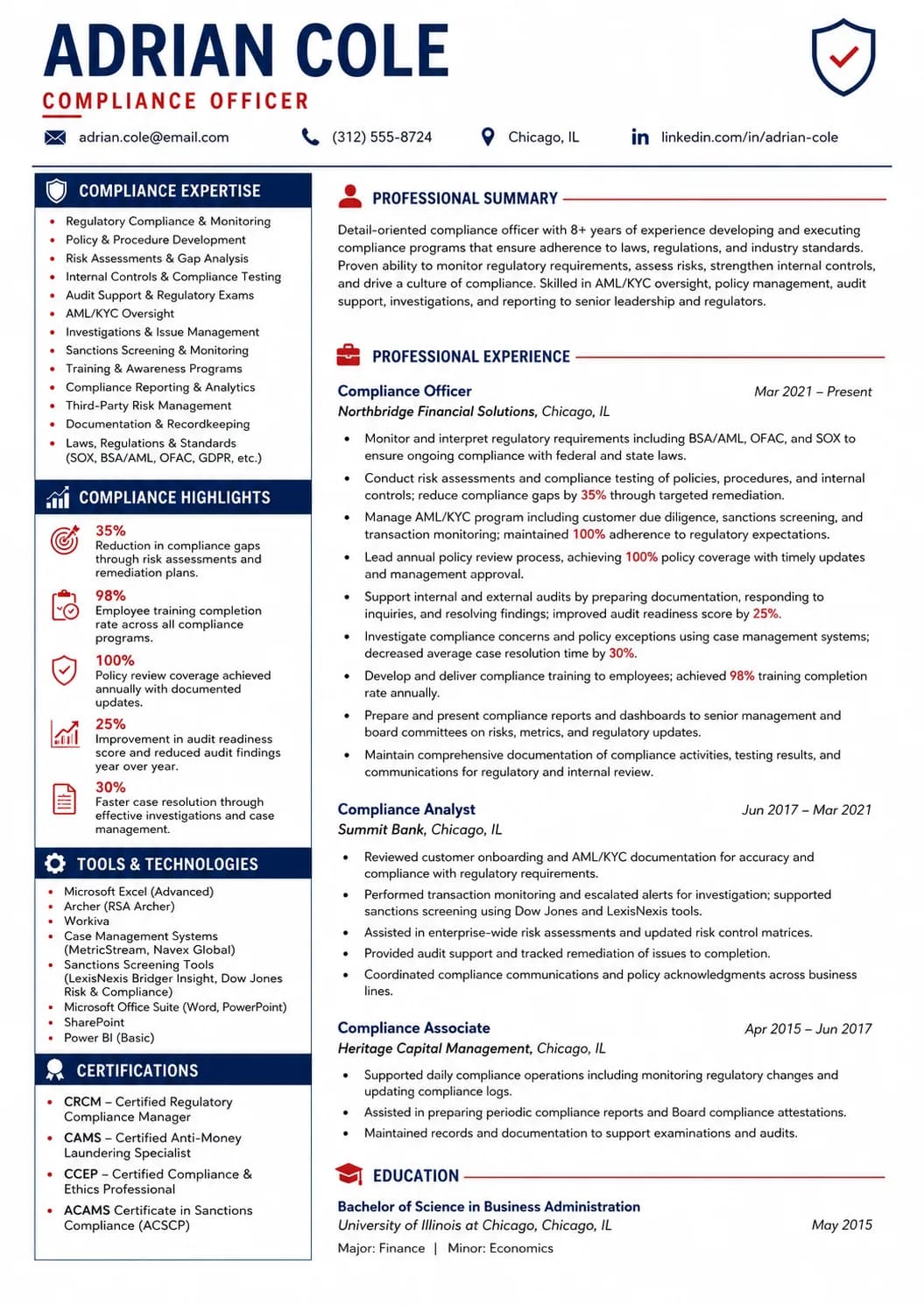
Keep a longer master list outside your resume, then choose the skills that fit each legal posting. A good attorney resume does not need every skill you have. It needs the skills that match the practice area, jurisdiction, employer type, and responsibilities in the job description. For example, a litigation attorney may highlight pleadings, motions, discovery, depositions, case strategy, and court rules. A corporate attorney may highlight contract drafting, redlines, due diligence, negotiation, governance, and risk review. A compliance attorney may highlight regulatory analysis, investigations, policy drafting, audit support, and training.
A strong attorney skills section mixes hard legal skills with communication and judgment skills. Do not separate skills in a way that makes the page confusing. Group them if your template allows it, or list the most important ones first. The most useful attorney resume skills are usually the ones that also appear in your experience bullets. If you list motion practice, show a bullet where you drafted or researched motions. If you list client counseling, show a bullet where you prepared updates, advised on options, or supported meetings. This makes your skills believable instead of decorative.