Audio engineer skills section example: show what you can operate and deliver
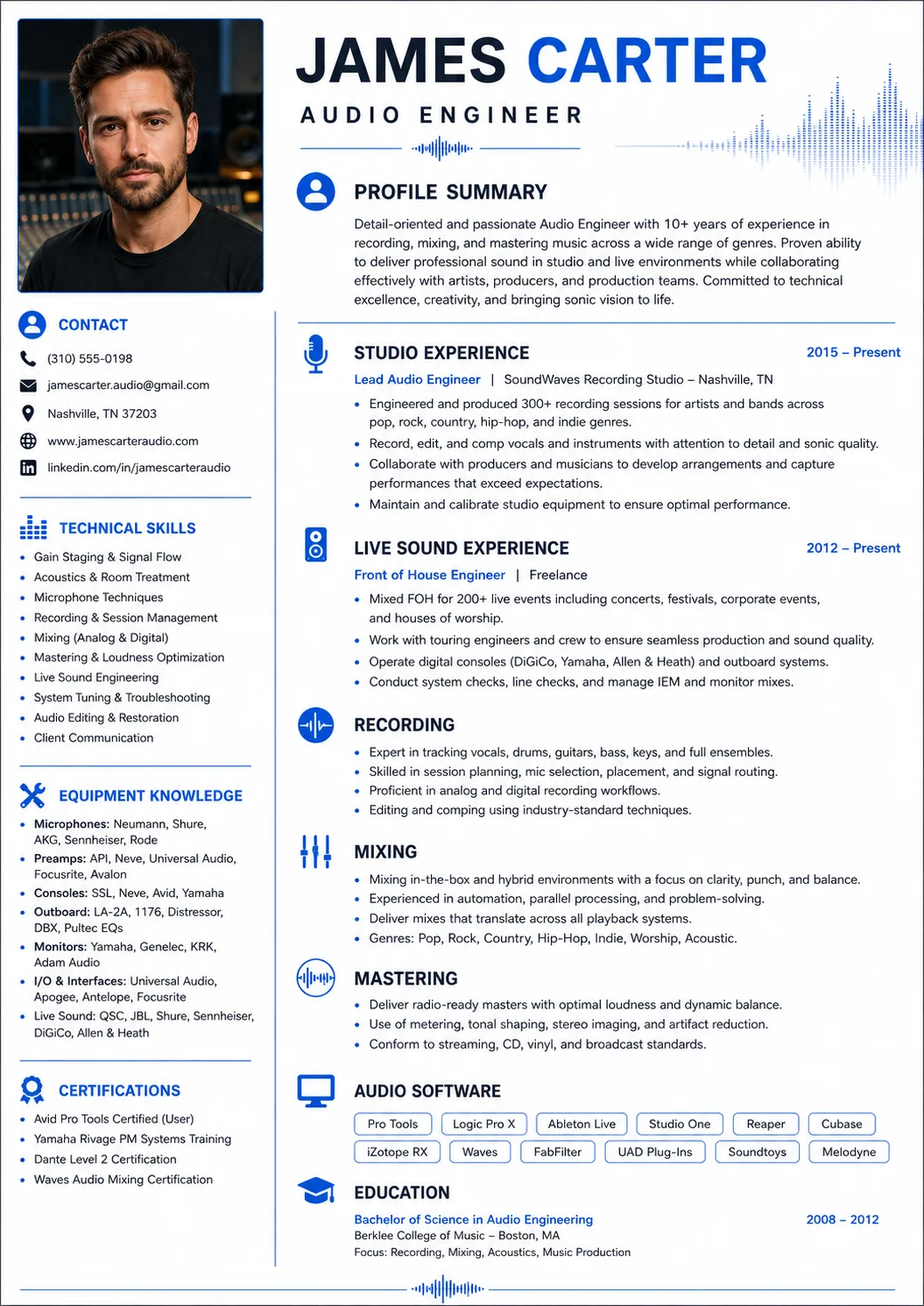
The audio engineer skills section should reflect real production work. It should help a studio manager, producer, technical director, or ATS tool see that you can record, route, edit, mix, troubleshoot, and deliver sound. Good audio engineer resume skills are not random personality words. They are skills connected to actual audio work: Pro Tools, Logic Pro, Ableton Live, Reaper, Adobe Audition, signal flow, gain staging, microphone placement, live sound, console operation, dialogue editing, noise reduction, Dante audio networking, RF basics, mixing, mastering preparation, file management, and client communication.
Keep a longer master list outside your resume, then choose the skills that fit each job posting. A good audio engineer resume does not need every tool you have touched. It needs the tools and skills that match the production setting. For example, a live sound engineer may highlight consoles, monitors, microphones, stage patching, wireless systems, Dante, soundcheck, and troubleshooting. A post-production audio engineer may highlight Pro Tools, dialogue editing, noise reduction, sound design, stems, loudness, and file delivery. A studio recording engineer may highlight microphone placement, signal chain, headphone mixes, session templates, vocal comping, and client workflow.
A strong audio engineer skills section mixes hard technical skills with communication and production support skills. Do not separate skills in a way that makes the page confusing. Group them if your template allows it, or list the most important ones first. The most useful audio engineer resume skills are usually the ones that also appear in your experience bullets. If you list Pro Tools, show a bullet where you used it. If you list live sound, show a bullet where you set up, patched, mixed, monitored, or troubleshot a live event. This makes your skills believable instead of decorative.