Automation tester skills section example: show what you do every day
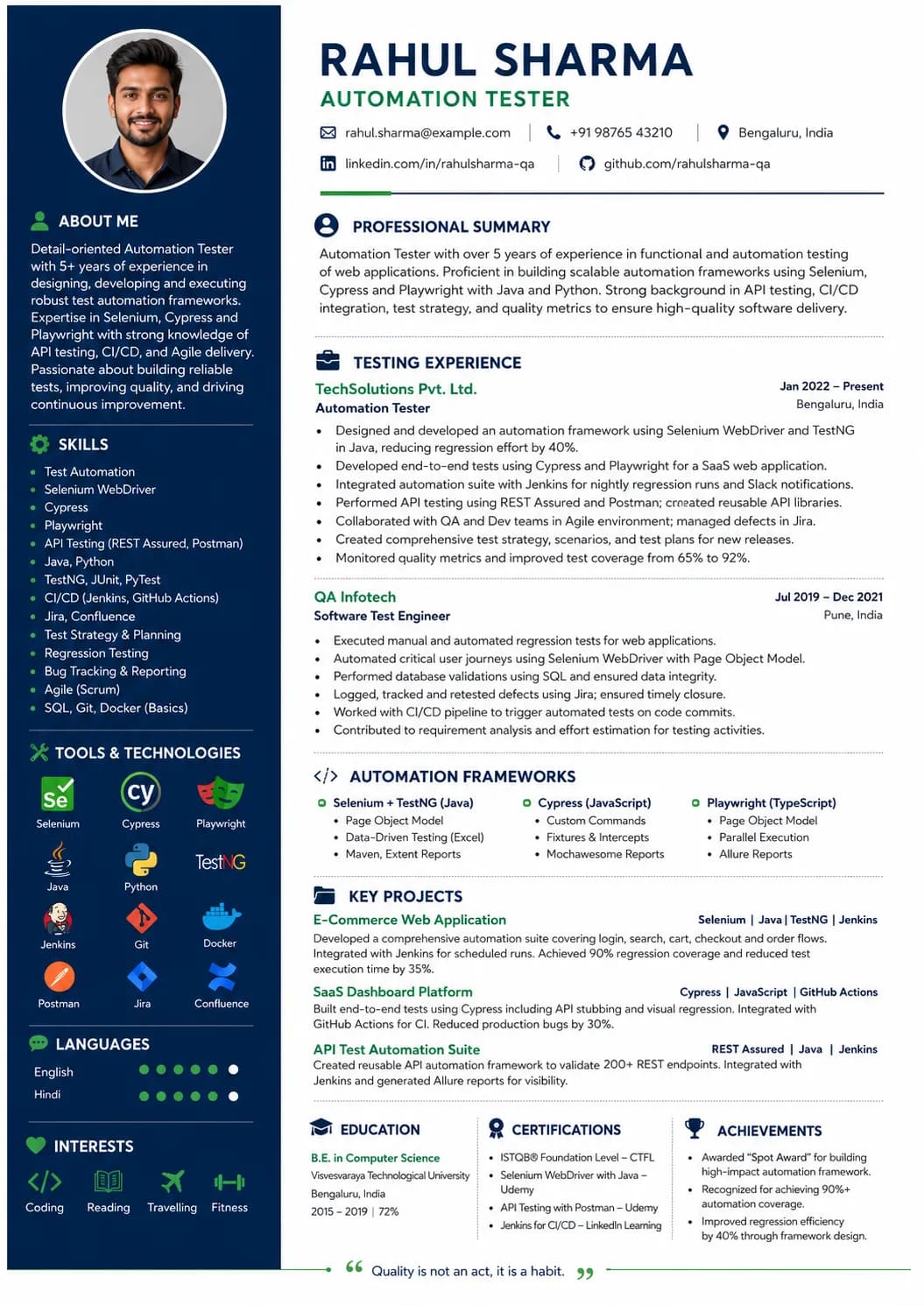
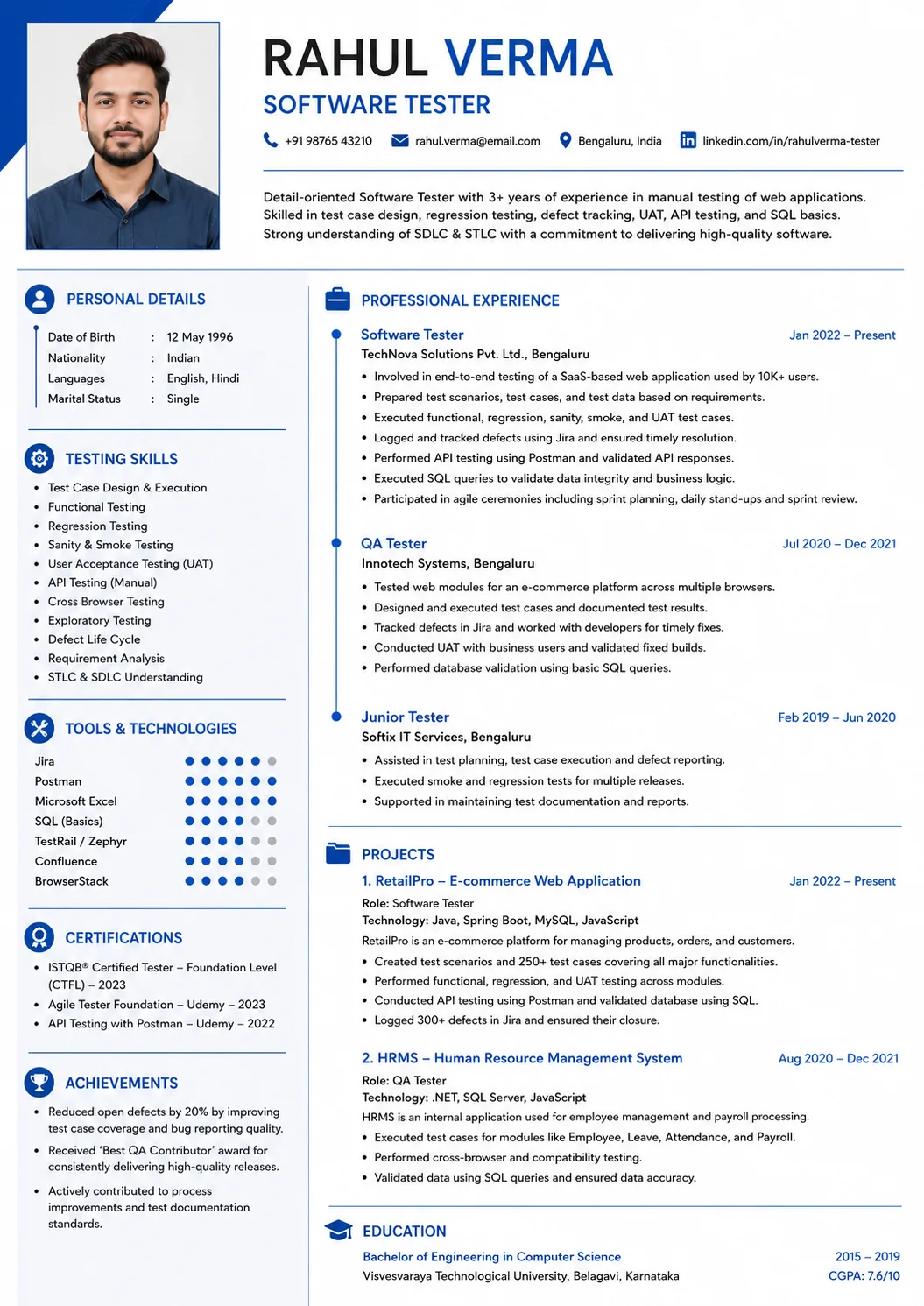
The automation tester skills section should reflect daily QA work. It should help a QA manager, engineering recruiter, or ATS tool see that you can design tests, automate scripts, validate APIs, report defects, use version control, and support releases. Good automation tester resume skills are not random personality words. They are skills connected to actual testing: Selenium WebDriver, Playwright, Cypress, Java, Python, JavaScript, API testing, REST Assured, Postman, regression testing, smoke testing, test case design, Jira, Git, Jenkins, GitHub Actions, SQL, Agile, and defect documentation.
Keep a longer master list outside your resume, then choose the skills that fit each company posting. A good automation tester resume does not need every tool you have tried. It needs the tools that match the framework, language, application, and testing process in the job description. For example, a Selenium role may highlight Java, TestNG, page object model, Maven, Jenkins, and Jira. A Playwright role may highlight JavaScript or TypeScript, API mocking, browser contexts, GitHub Actions, and trace reports. An API automation role may highlight REST Assured, Postman, JSON validation, schema checks, and CI smoke tests.
A strong automation tester skills section mixes technical skills with testing process skills. Do not separate skills in a way that makes the page confusing. Group them if your template allows it, or list the most important ones first. The most useful automation tester resume skills are usually the ones that also appear in your experience bullets. If you list Playwright, show a bullet where you built or maintained Playwright tests. If you list API testing, show a bullet where you validated response codes, fields, or deployment checks. This makes your skills believable instead of decorative.