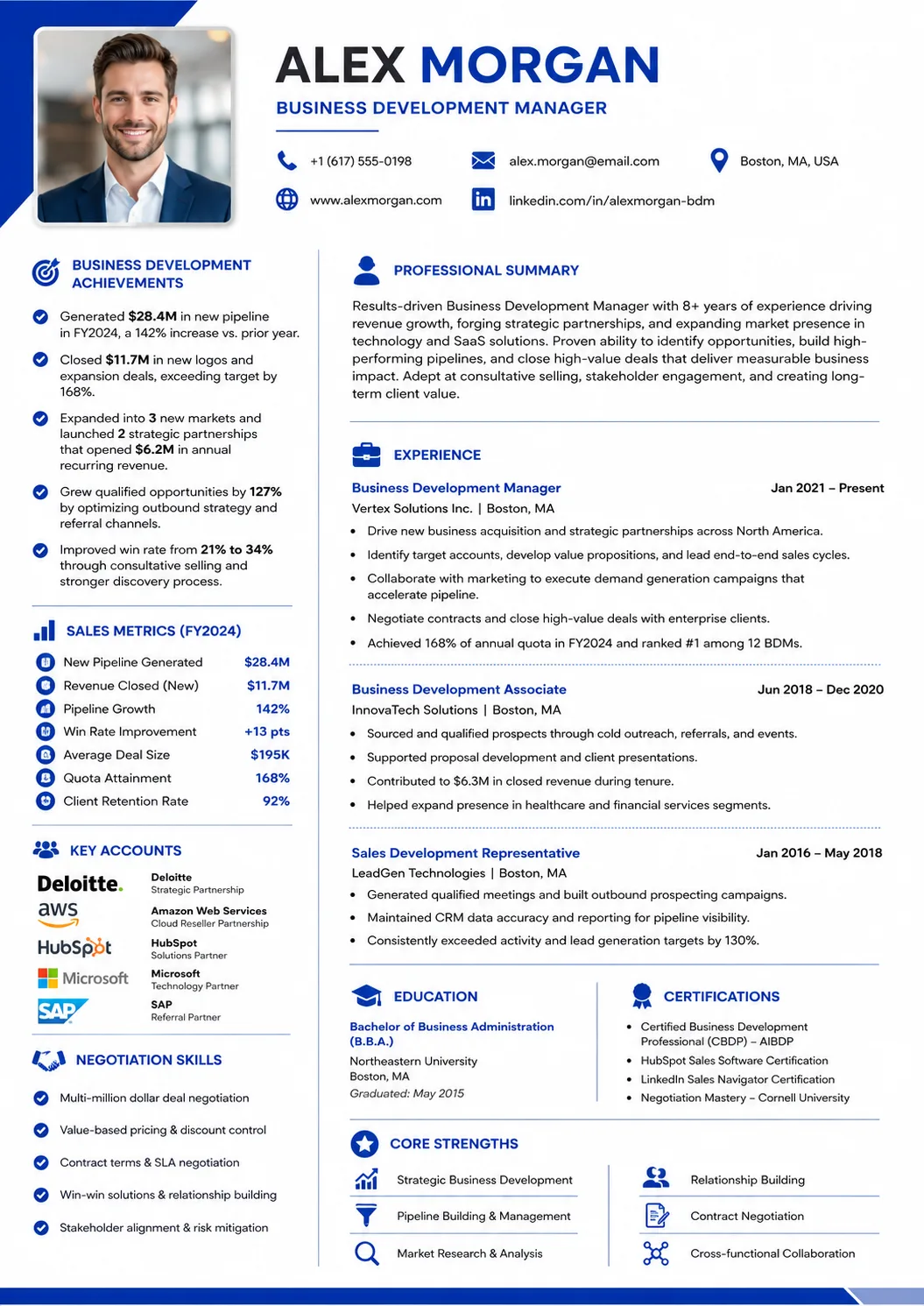
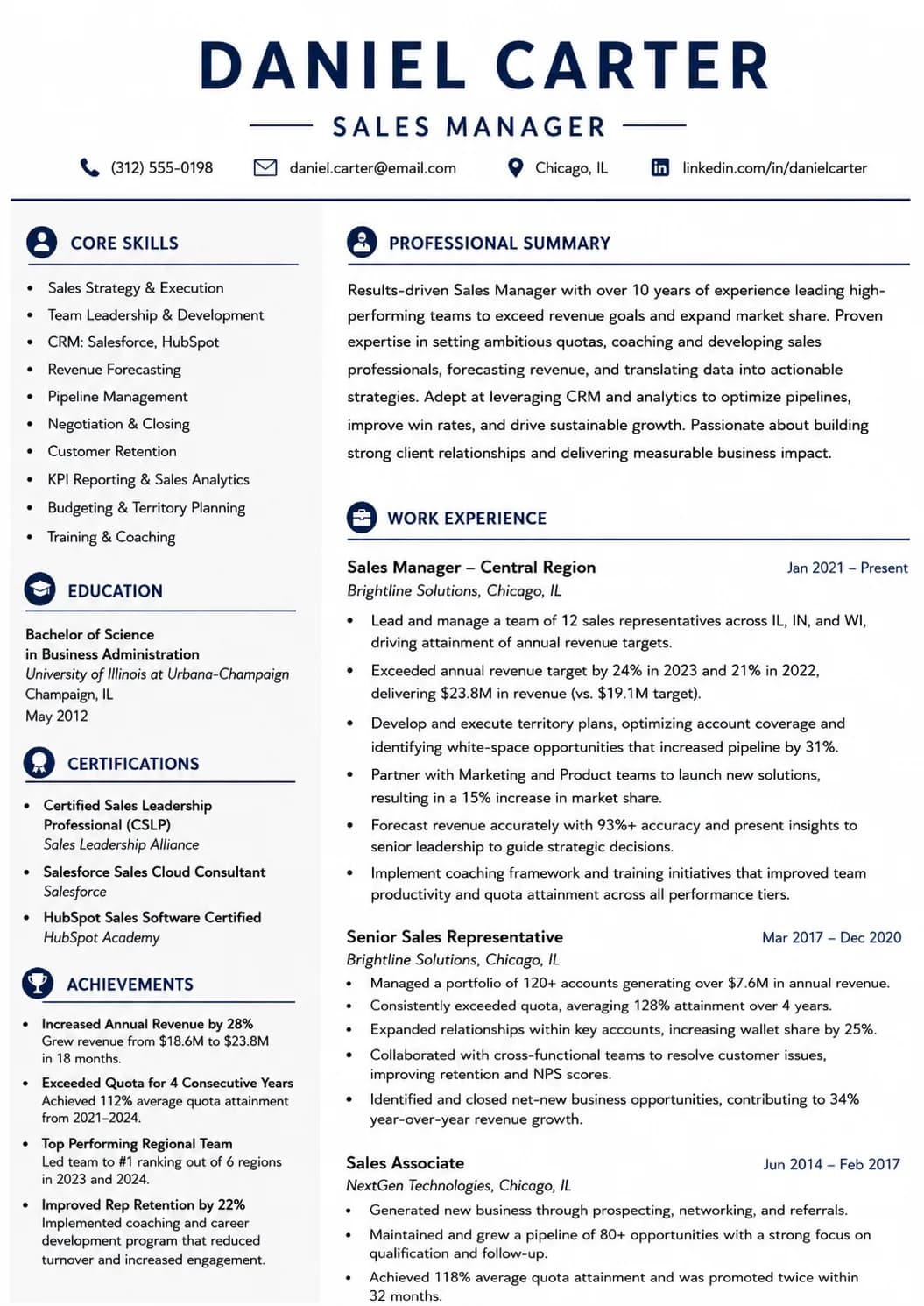
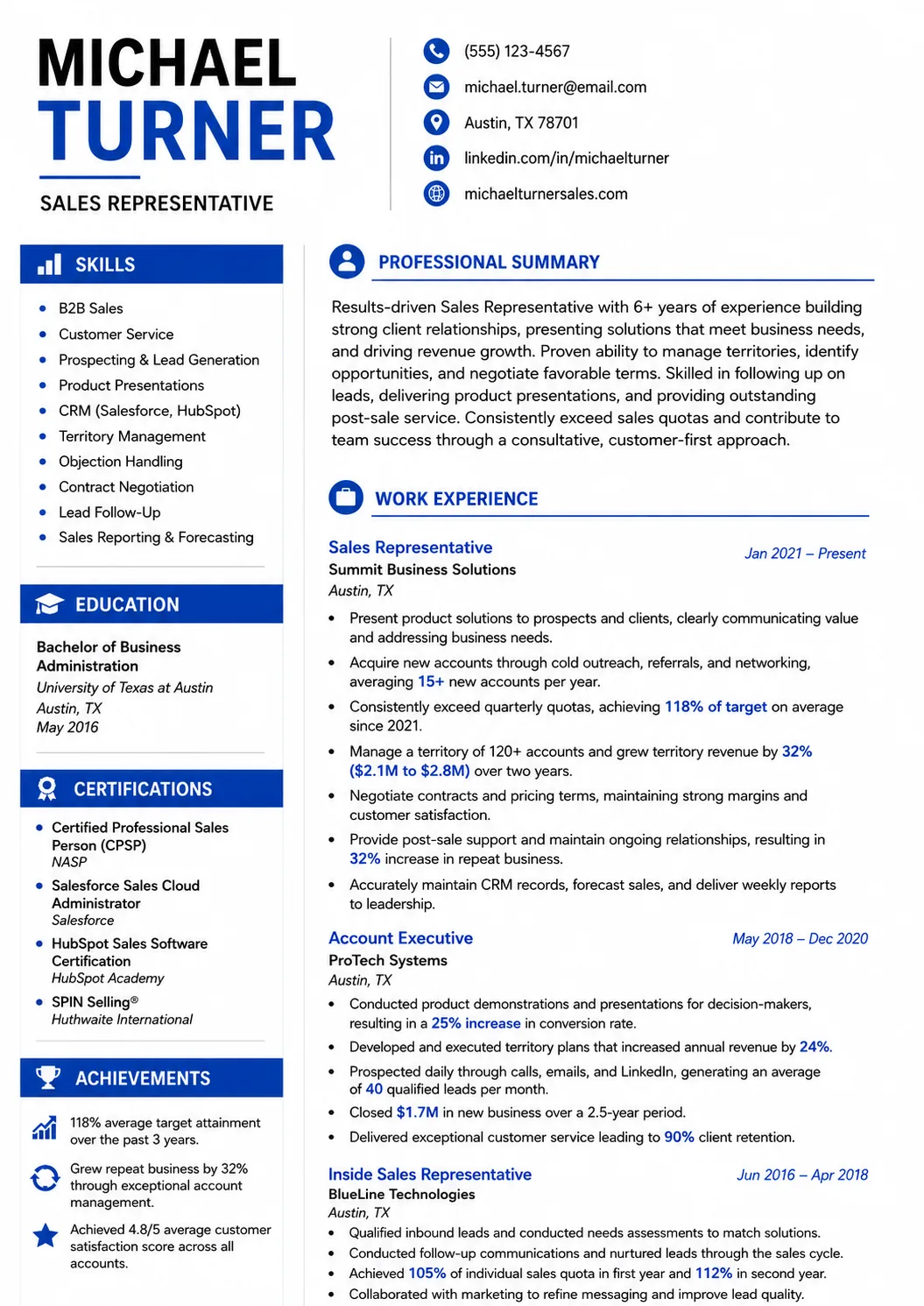
Business development skills section example: show how you create opportunities
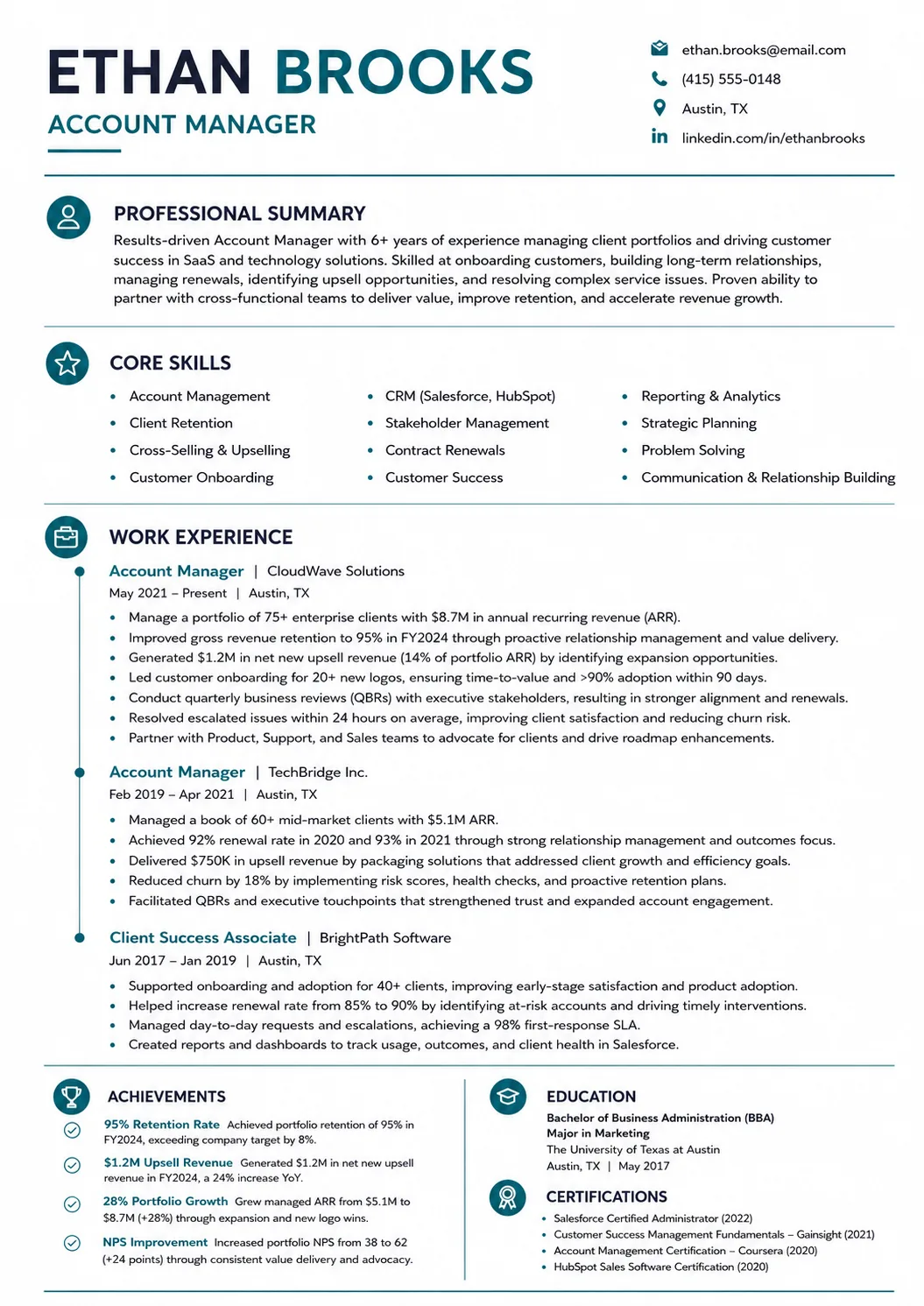
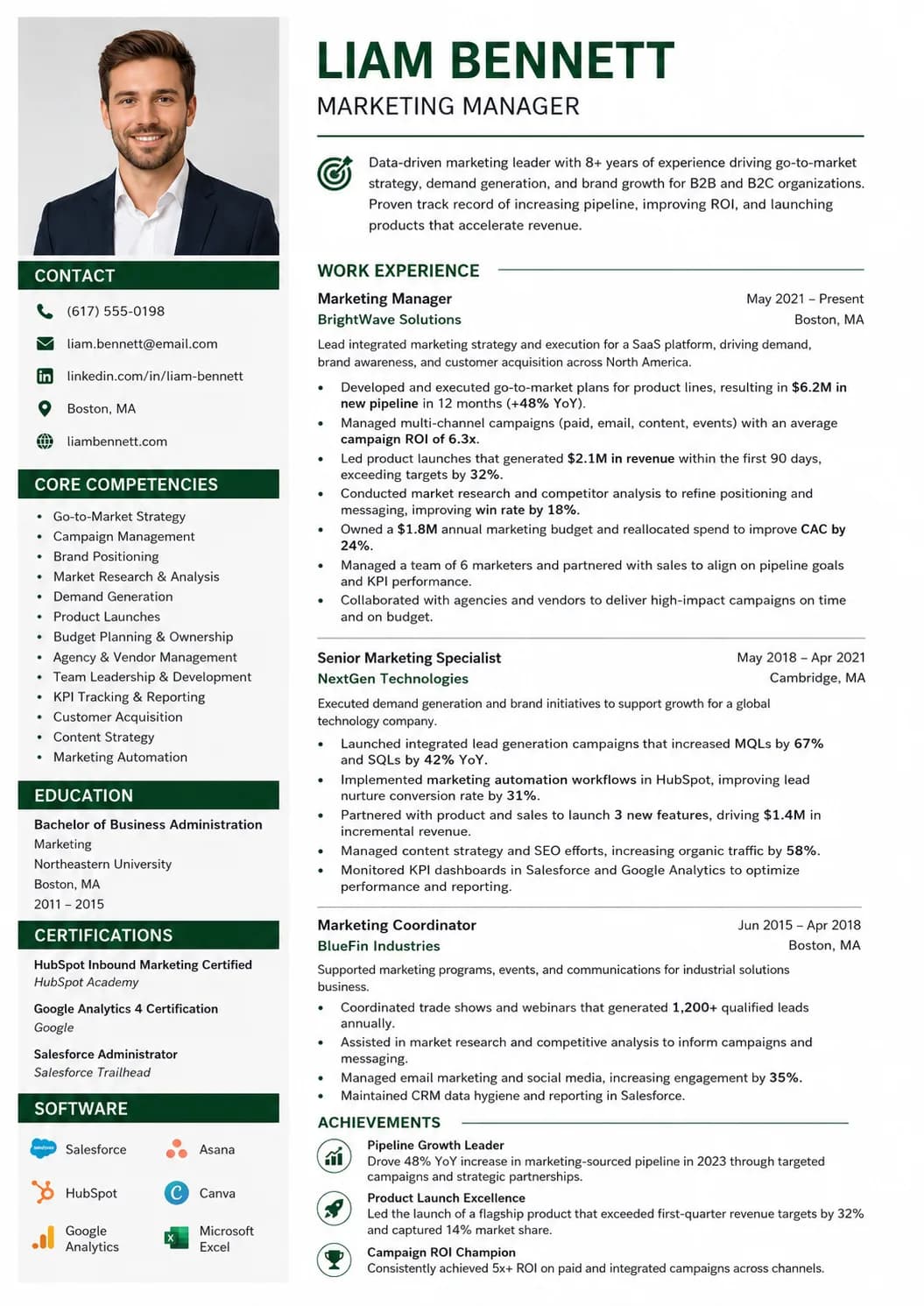
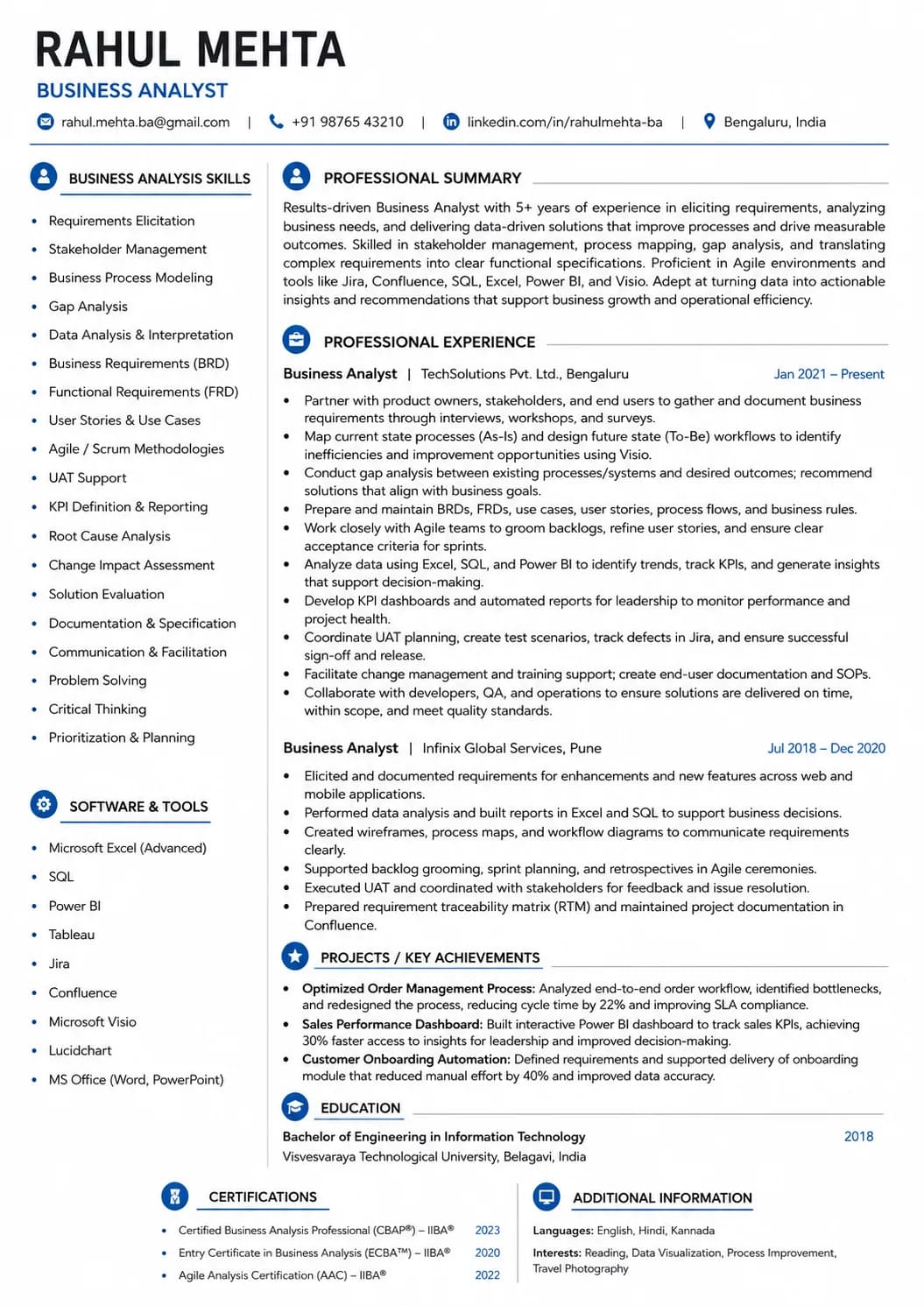
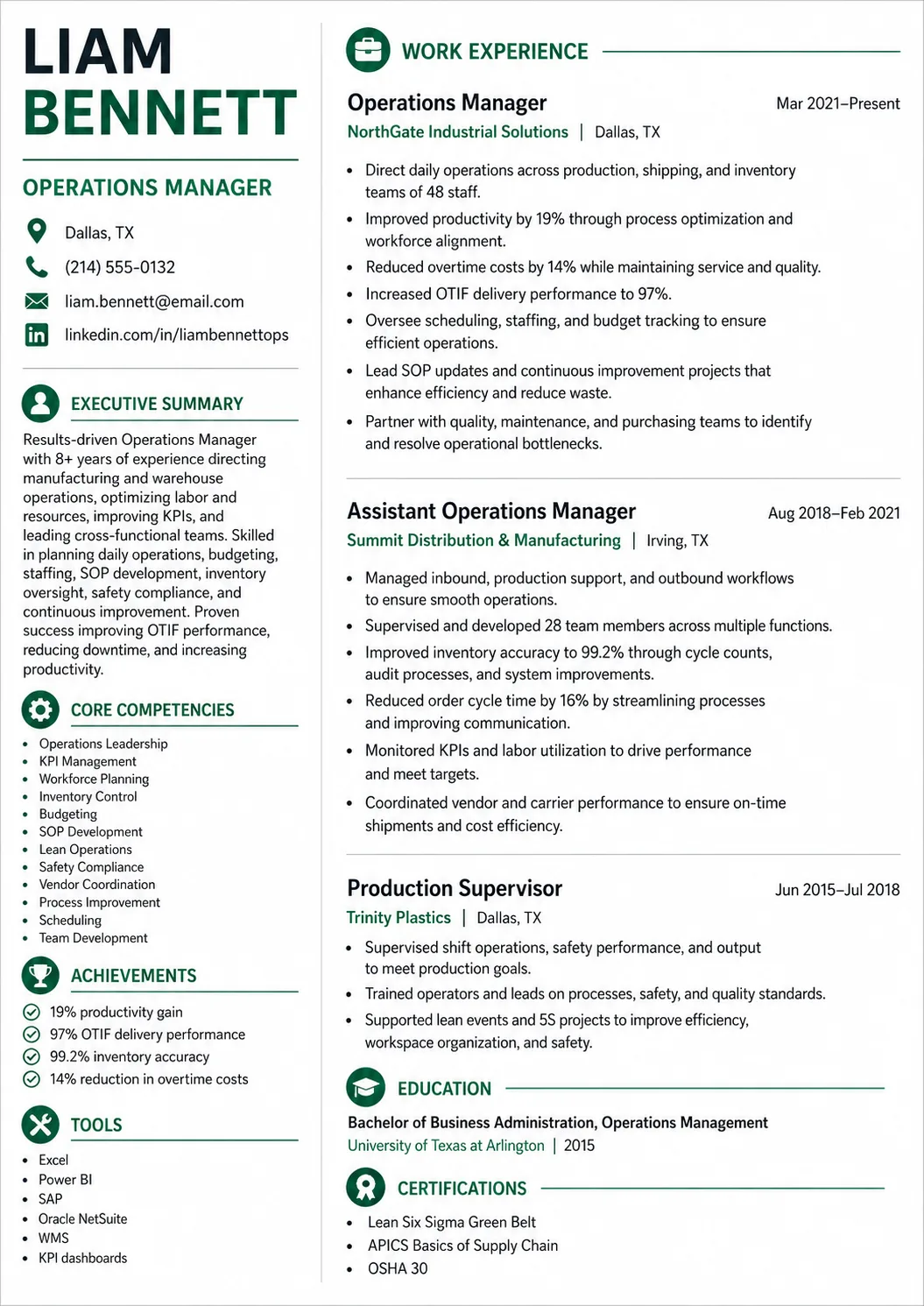
The business development skills section should reflect daily growth work. It should help a sales manager, recruiter, founder, or ATS tool see that you can research accounts, contact prospects, qualify leads, manage CRM data, communicate value, and support revenue. Good business development resume skills are not random personality words. They are skills connected to actual pipeline work: lead generation, outbound prospecting, account research, CRM management, lead qualification, discovery calls, sales presentations, proposal support, relationship building, negotiation, territory management, and revenue growth.
Keep a longer master list outside your resume, then choose the skills that fit each posting. A good business development resume does not need every sales skill you have. It needs the skills that match the company’s product, market, buyer, and sales process. For example, a SaaS business development resume may highlight Salesforce, HubSpot, LinkedIn Sales Navigator, email sequencing, cold calls, demos, and pipeline reporting. A partnership role may highlight relationship building, referral channels, partner onboarding, negotiation, and account planning. A local services role may highlight field prospecting, networking, proposals, territory management, and customer retention.
A strong business development skills section mixes sales process skills with tools, communication, research, and commercial judgment. Do not separate skills in a way that makes the page confusing. Group them if your template allows it, or list the most important ones first. The most useful business development skills are usually the ones that also appear in your experience bullets. If you list Salesforce, show a bullet where you used it to track leads or pipeline. If you list lead qualification, show a bullet where you used discovery questions or qualification notes. This makes your skills believable instead of decorative.