Caregiver skills section example: show what you do on every shift
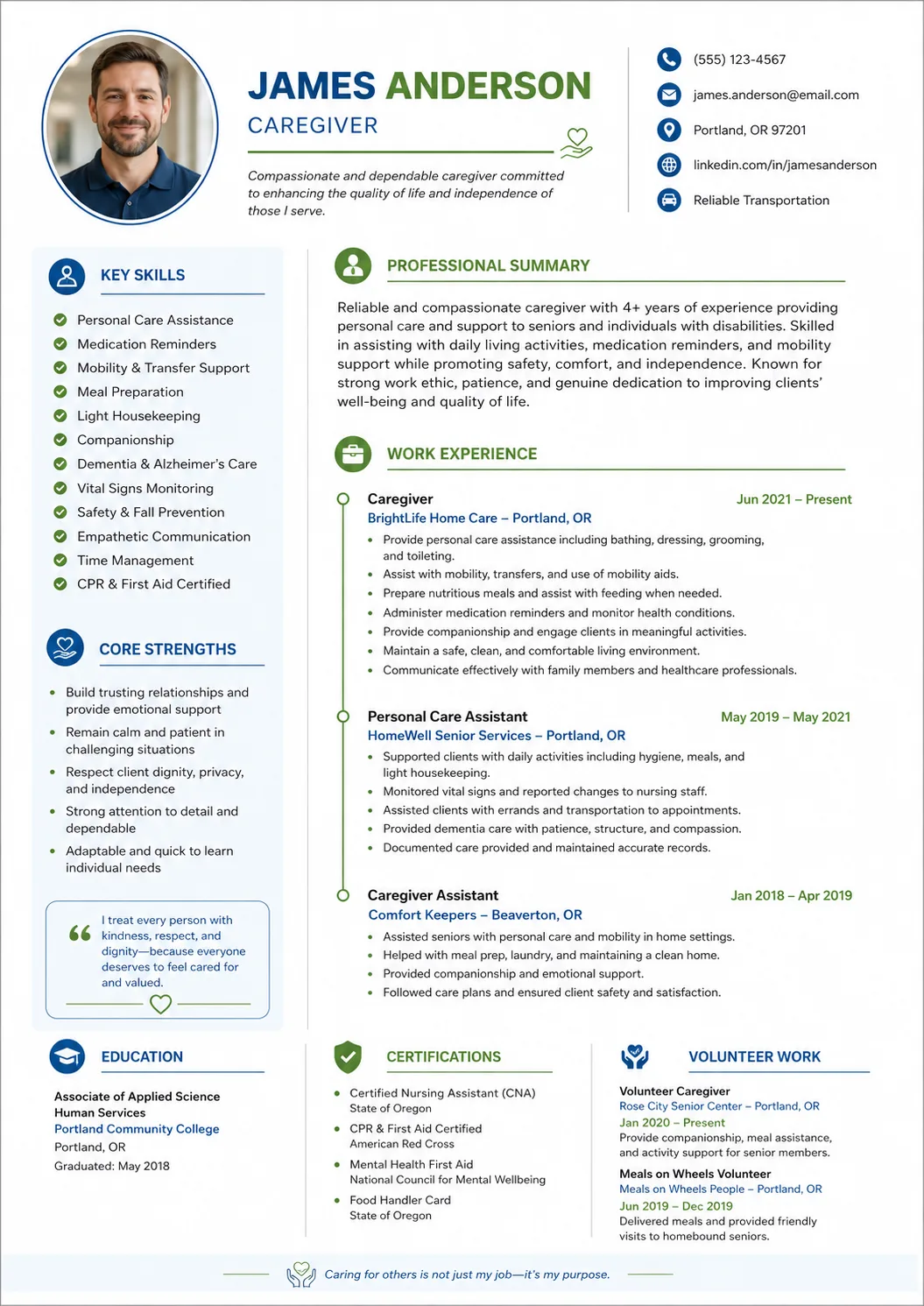
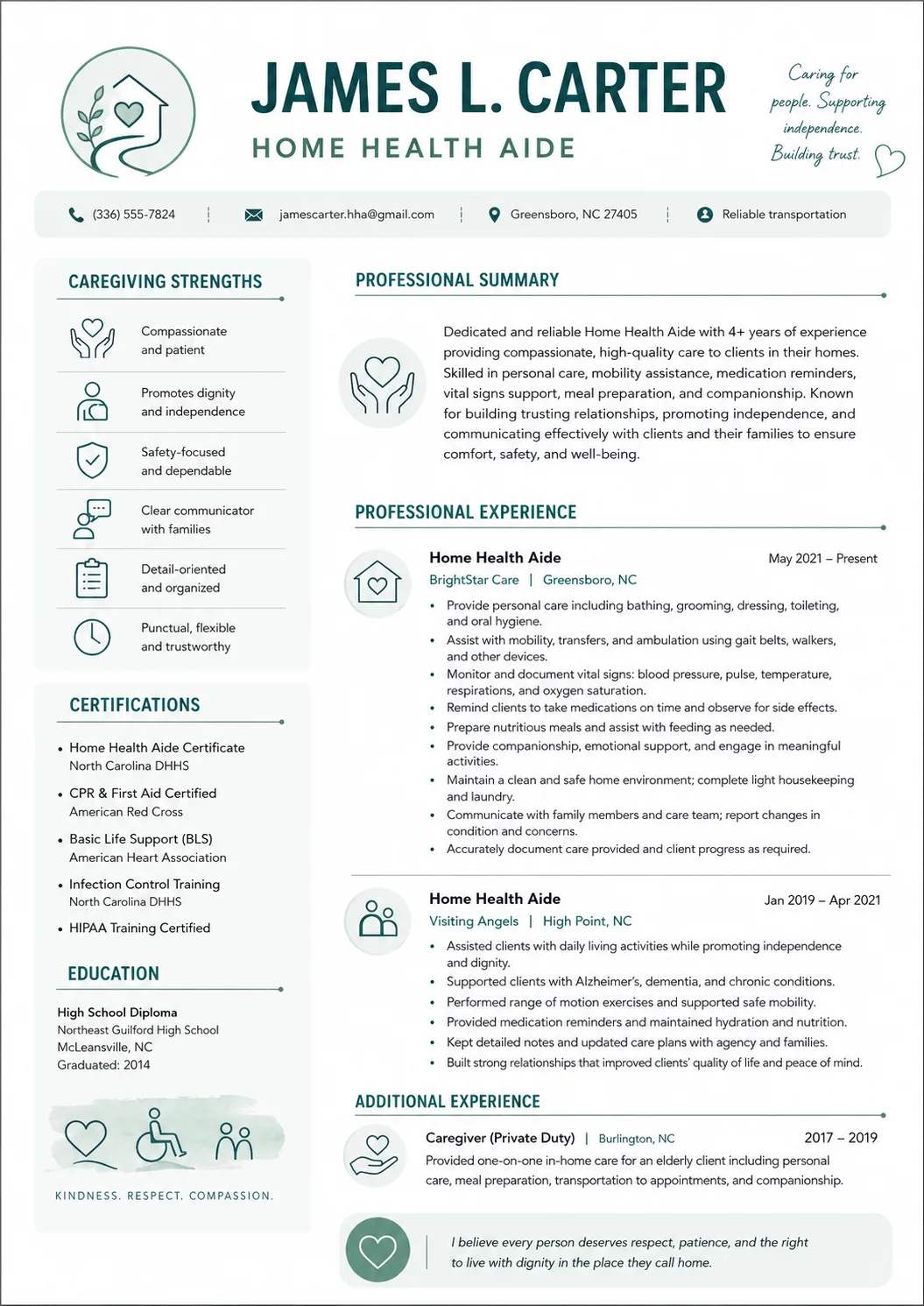
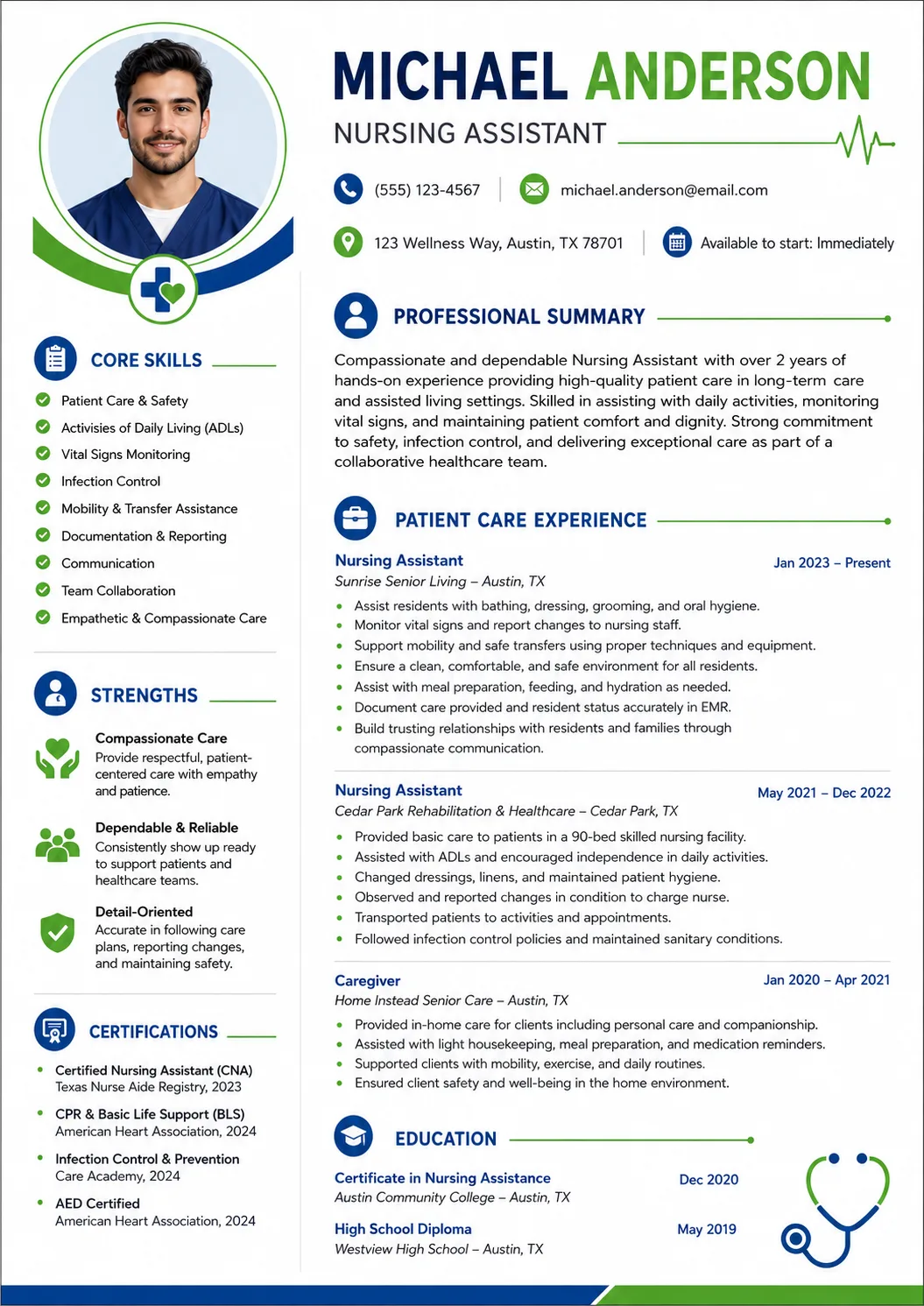
The caregiver skills section should reflect daily care work. It should help a care coordinator, facility recruiter, family, or ATS tool see that you can support personal needs, protect safety, document services, communicate clearly, and follow a care plan. Good caregiver resume skills are not random personality words. They are skills connected to actual caregiving: activities of daily living, personal care, bathing assistance, dressing support, grooming, toileting, ambulation, safe transfers, meal preparation, medication reminders, companionship, dementia care, fall prevention, infection control, and care documentation.
Keep a longer master list outside your resume, then choose the skills that fit each posting. A good caregiver resume does not need every skill you have. It needs the skills that match the care setting, client group, and duties in the job description. For example, a home care caregiver may highlight meal preparation, light housekeeping, companionship, transportation, medication reminders, and electronic visit notes. An assisted living caregiver may highlight resident care, toileting, transfers, hydration reminders, shift notes, and team communication. A dementia caregiver may highlight redirection, familiar routines, one-step prompts, safety awareness, and calm communication.
A strong caregiver skills section mixes hands-on care skills with communication and safety skills. Do not separate skills in a way that makes the page confusing. Group them if your template allows it, or list the most important ones first. The most useful caregiver resume skills are usually the ones that also appear in your experience bullets. If you list safe transfers, show a bullet where you used transfer precautions. If you list dementia care, show a bullet where you used redirection or routines. This makes your skills believable instead of decorative.