Carpenter skills section example: show what you do every day
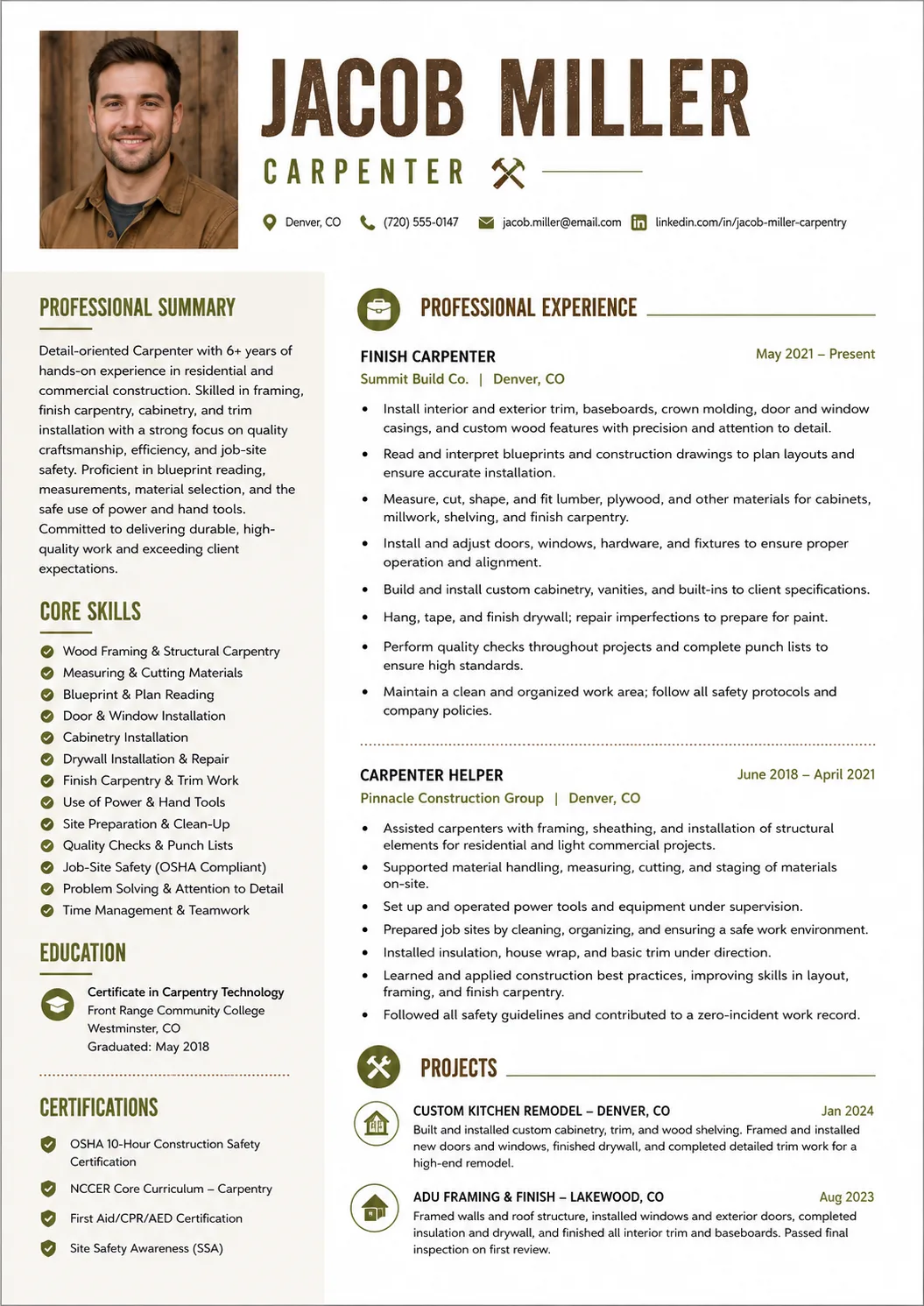
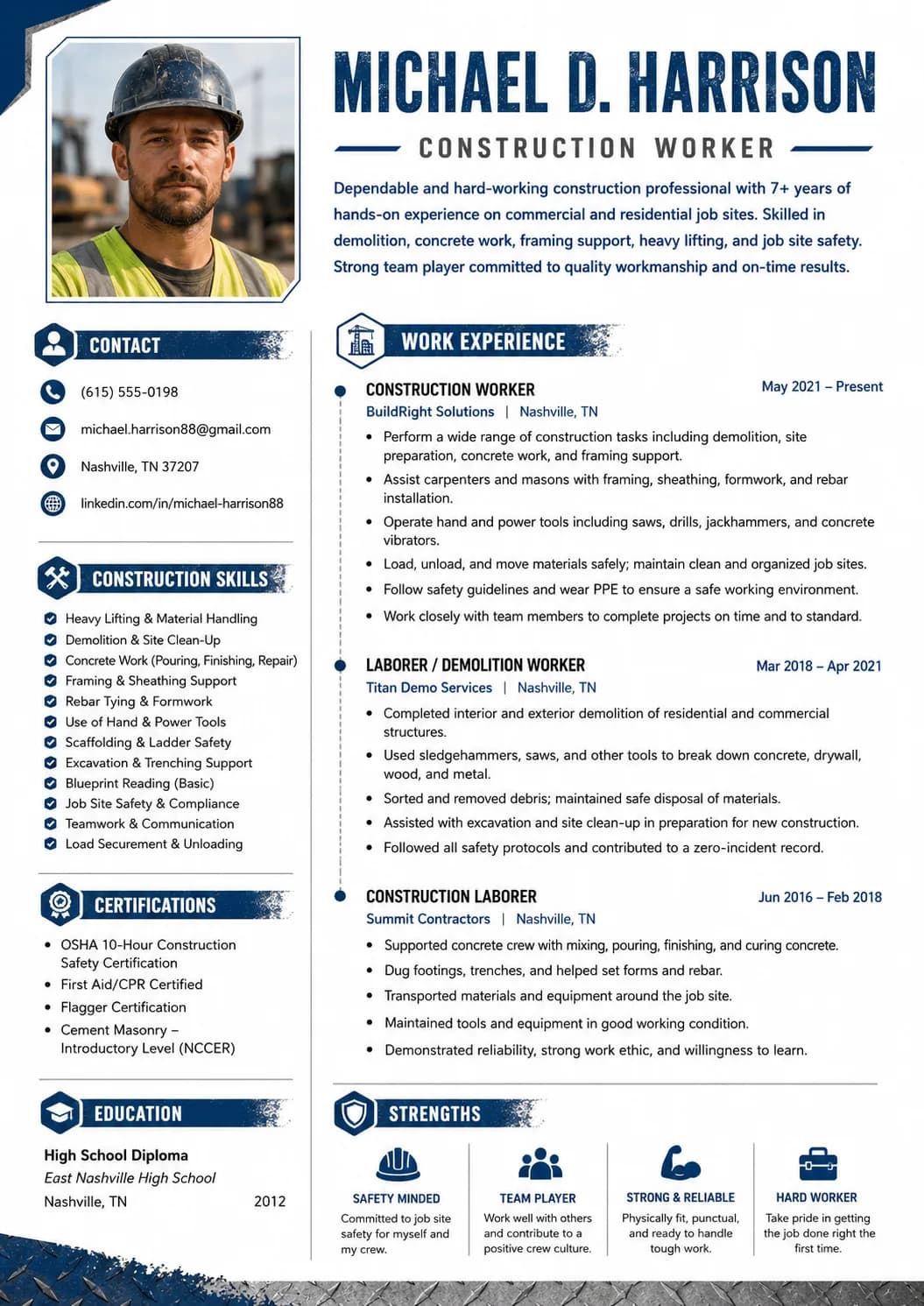
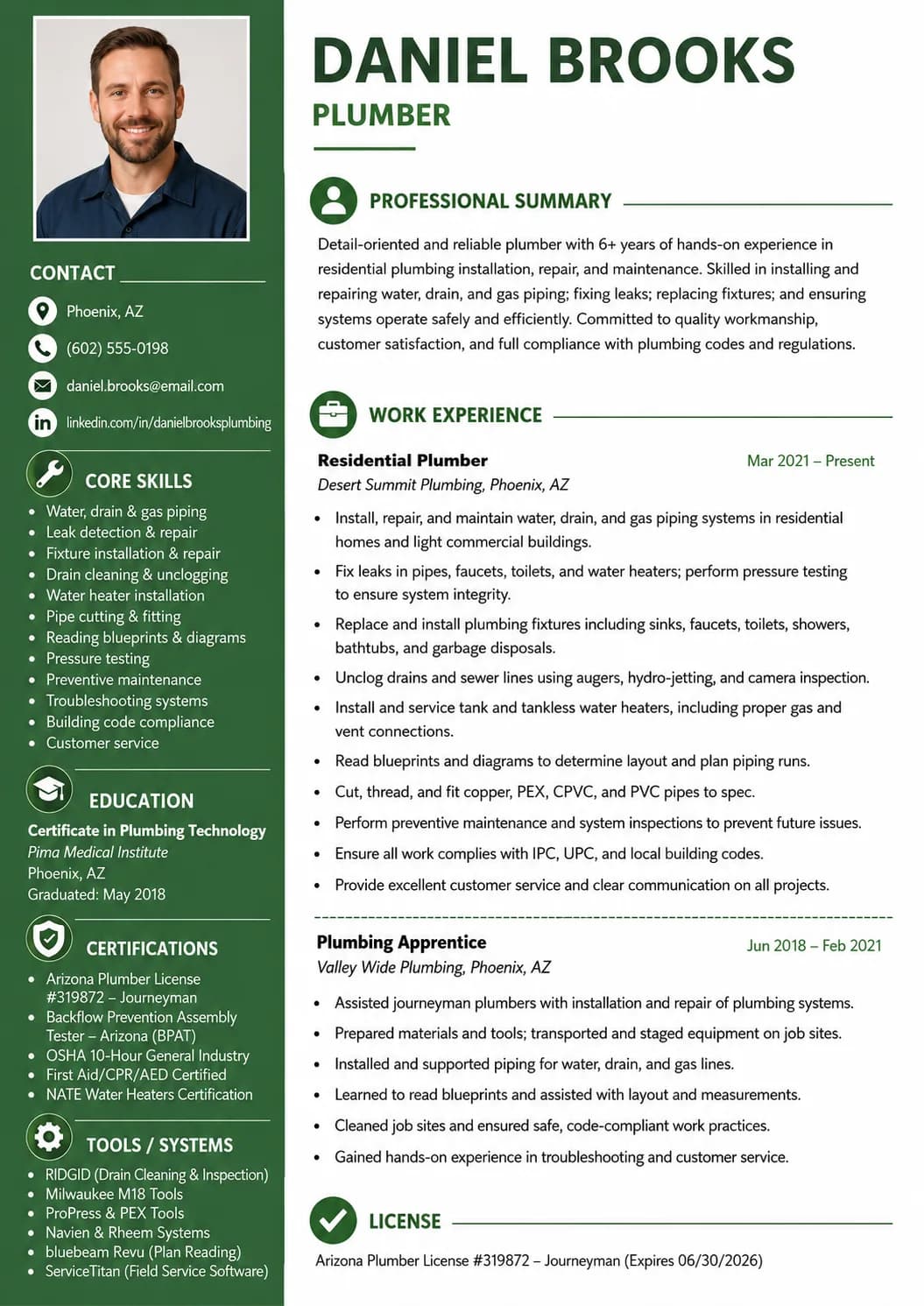
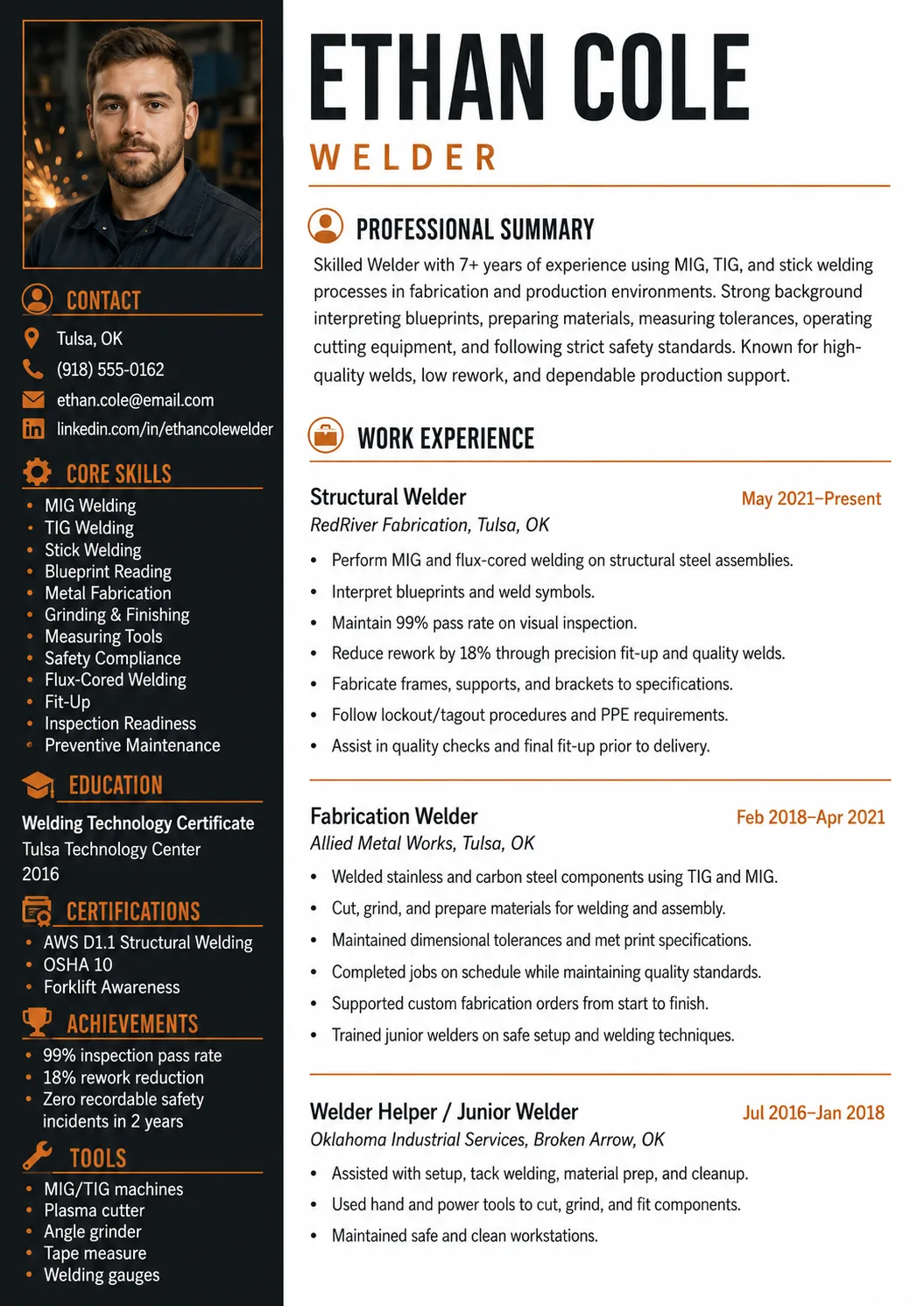
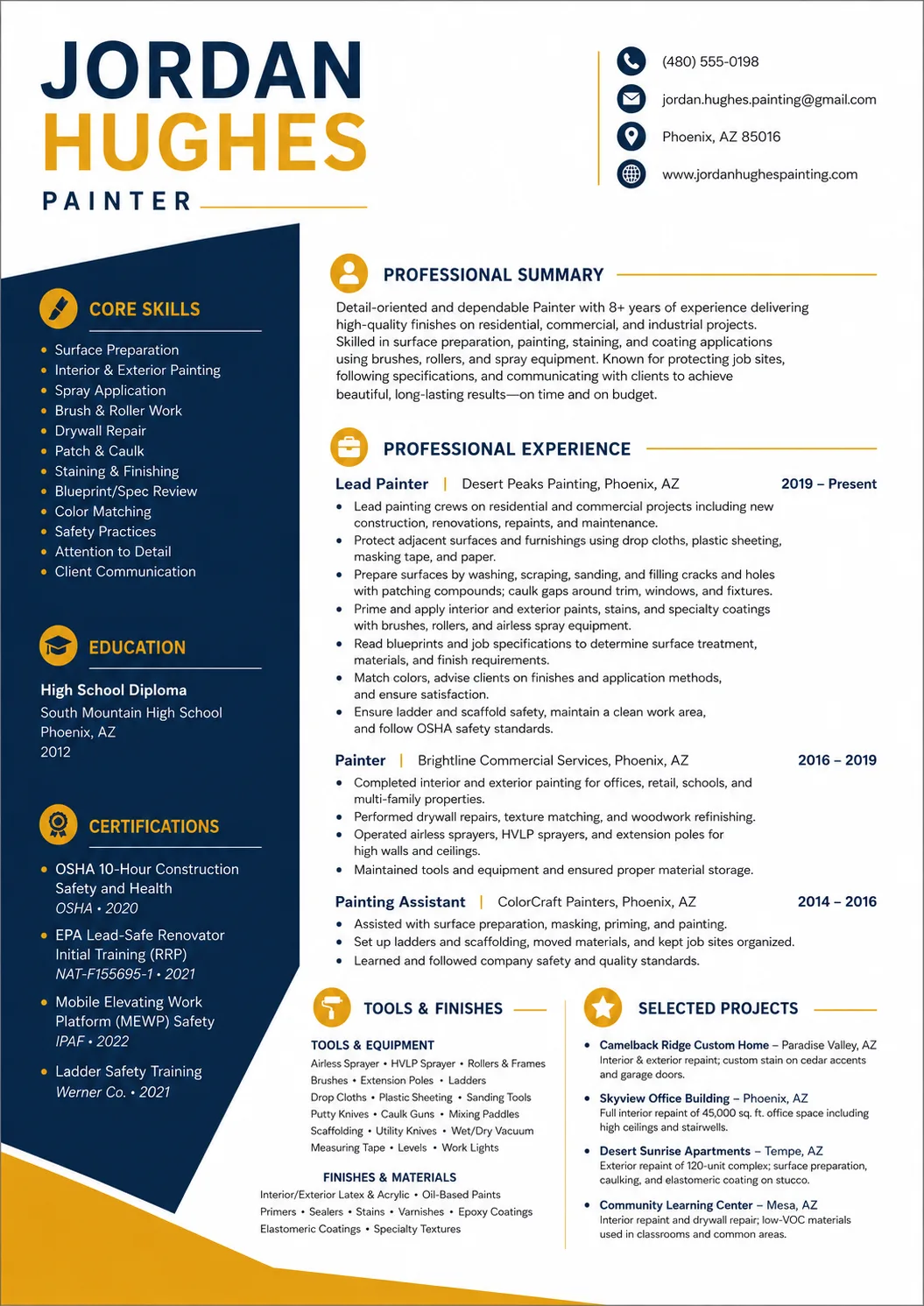
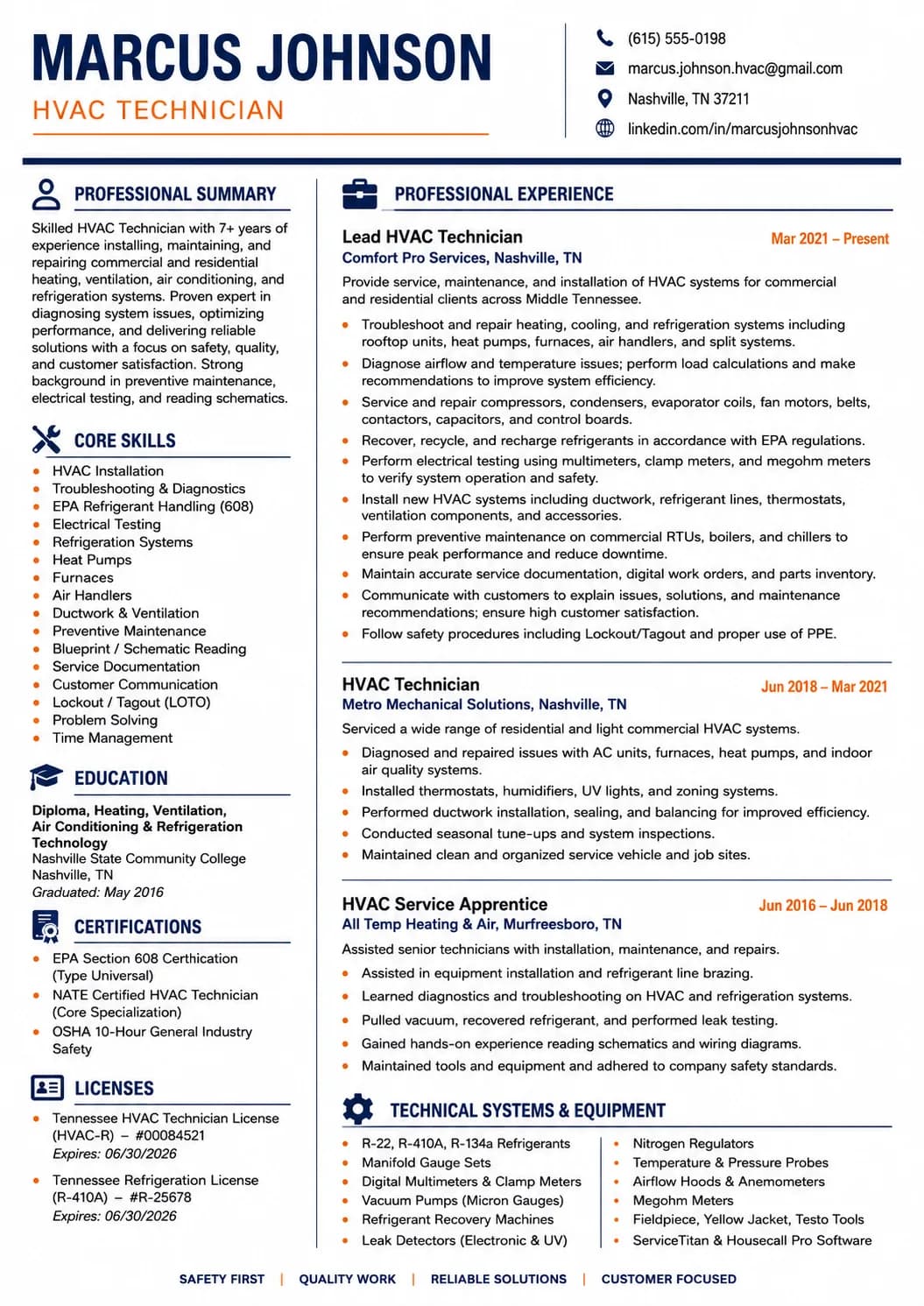
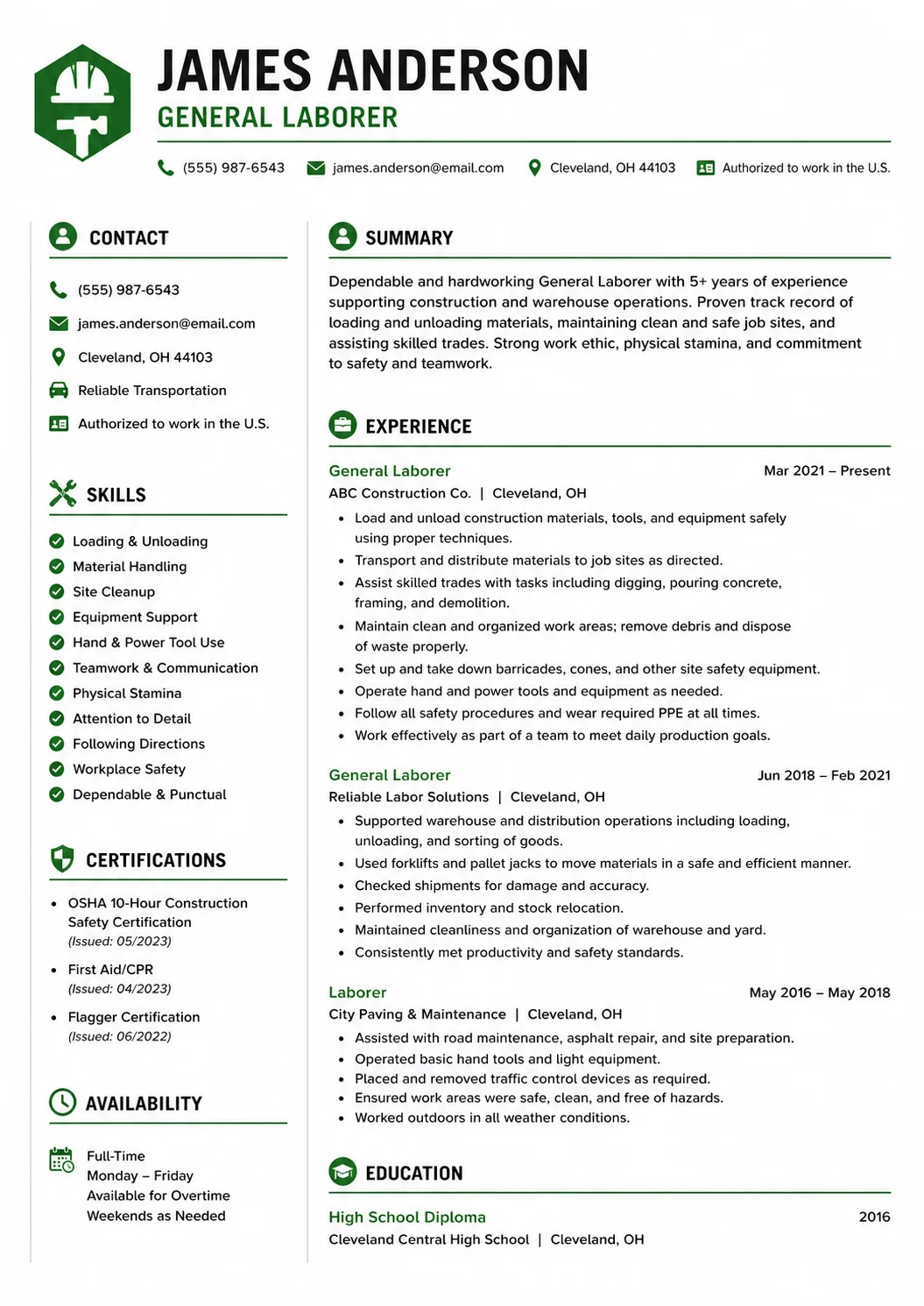
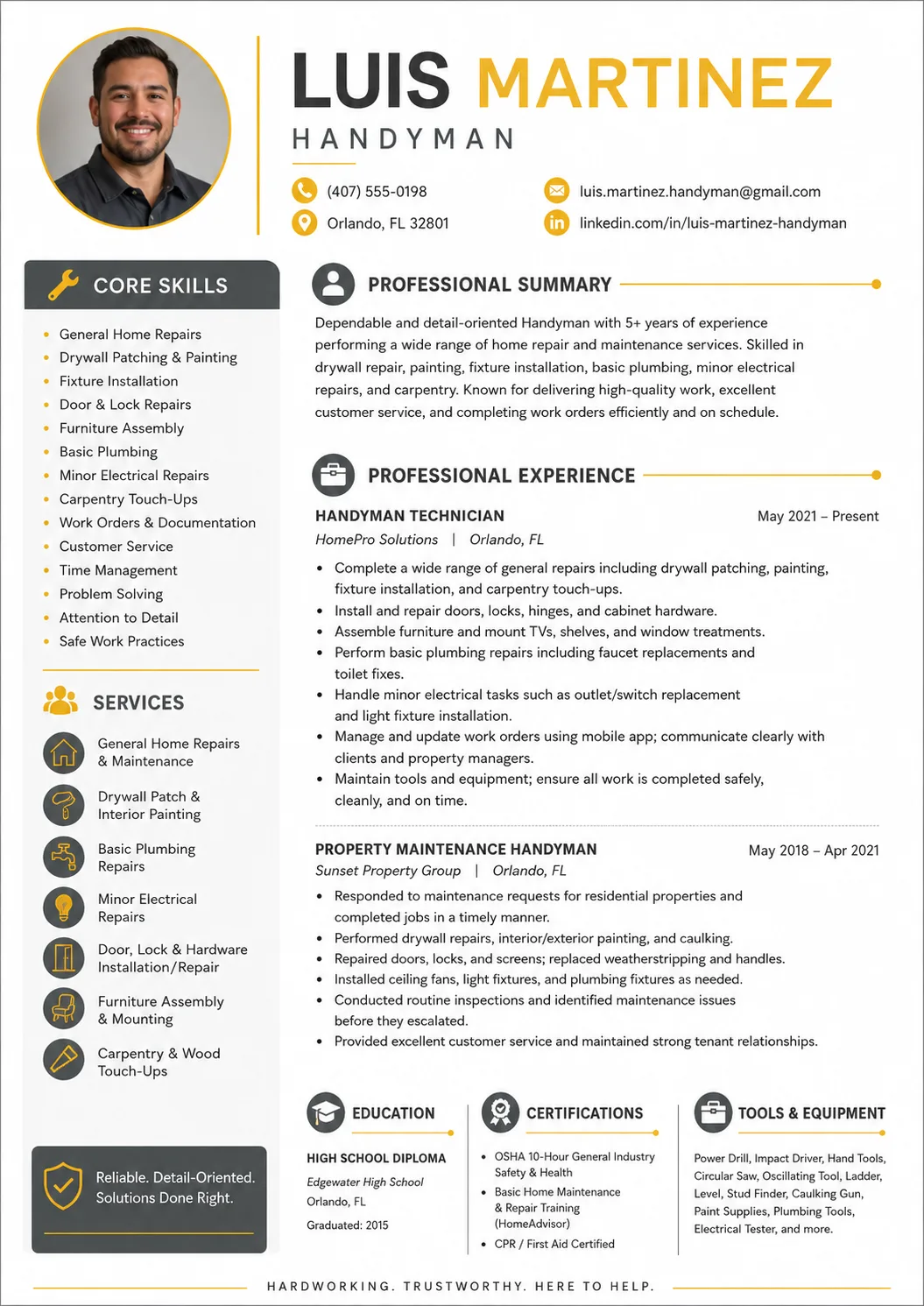
The carpenter skills section should reflect daily jobsite work. It should help a foreman, contractor, maintenance manager, recruiter, or ATS tool see that you can read plans, measure, cut, assemble, install, repair, check quality, use tools safely, and communicate with a crew. Good carpenter resume skills are not random personality words. They are skills connected to actual carpentry: blueprint reading, framing, finish carpentry, measuring and cutting, layout, formwork, trim installation, doors, windows, cabinets, drywall, decking, repairs, material takeoffs, power tools, hand tools, jobsite safety, and punch-list completion.
Keep a longer master list outside your resume, then choose the skills that fit each job posting. A good carpenter resume does not need every skill you have. It needs the skills that match the project type, tools, materials, and site requirements in the job description. For example, a framing carpenter may highlight wall layout, studs, joists, rafters, sheathing, nail guns, saws, and plans. A finish carpenter may highlight trim, molding, doors, cabinets, hardware, sanding, fit, and final detail. A maintenance carpenter may highlight repairs, replacements, tenant work orders, doors, locks, drywall patches, and customer-ready cleanup.
A strong carpenter skills section mixes technical trade skills with safety and communication skills. Do not separate skills in a way that makes the page confusing. Group them if your template allows it, or list the most important ones first. The most useful carpenter resume skills are usually the ones that also appear in your experience bullets. If you list finish carpentry, show a bullet where you installed trim or doors. If you list blueprint reading, show a bullet where you worked from drawings, plan notes, or field measurements. This makes your skills believable instead of decorative.