Cement mason skills section example: show what you do on site
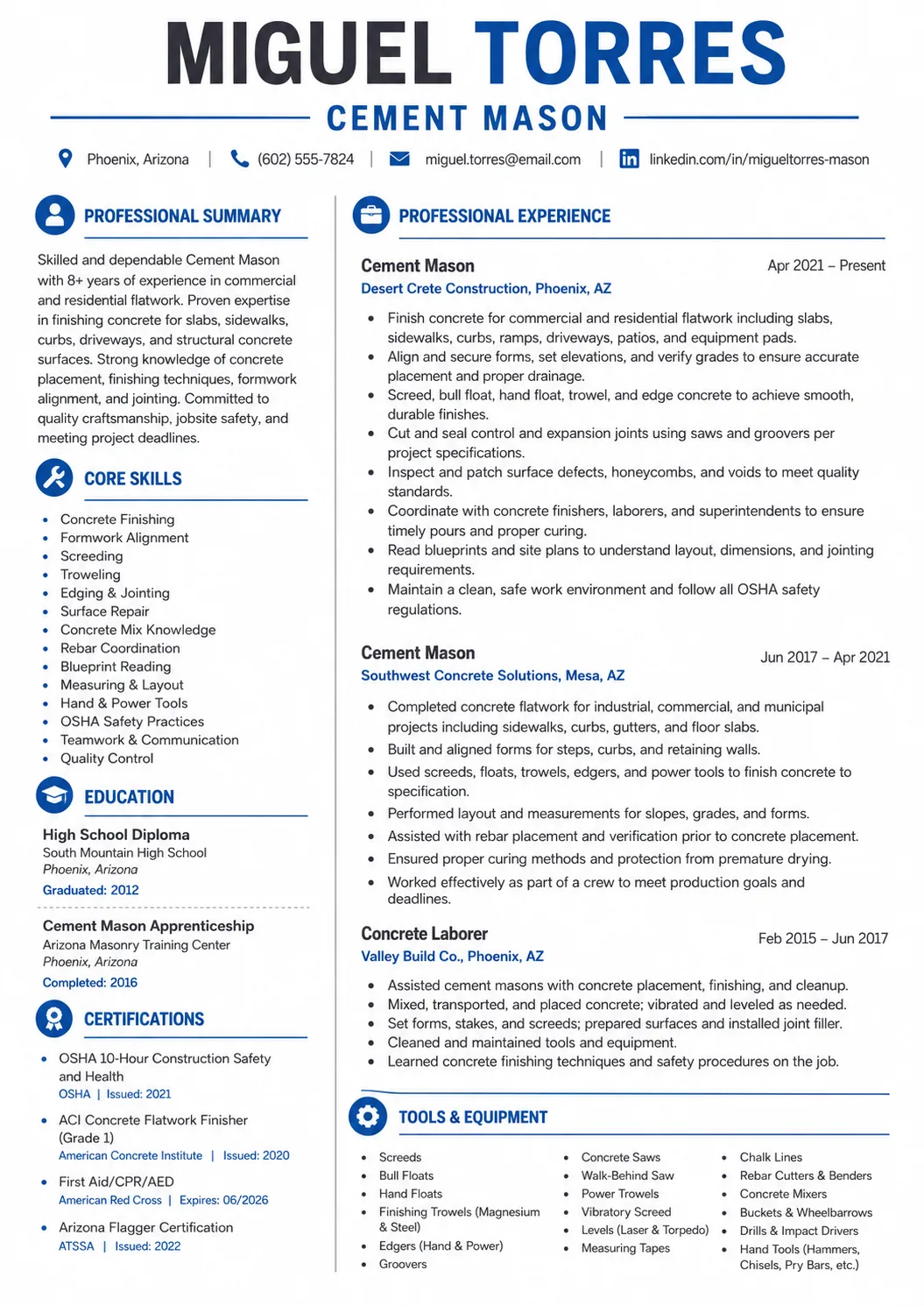
The cement mason skills section should reflect daily concrete work. It should help a foreman, recruiter, union office, or ATS tool see that you can prepare, place, finish, repair, clean, and work safely. Good cement mason resume skills are not random personality words. They are skills connected to actual field work: concrete finishing, screeding, floating, troweling, form setting, expansion joints, flatwork, curb and gutter work, concrete repair, power trowel use, saw cutting, grinding, curing, surface prep, and jobsite safety.
Keep a longer master list outside your resume, then choose the skills that fit each job posting. A good cement mason resume does not need every skill you have. It needs the skills that match the project type, surface, tool list, and crew need in the job description. For example, a residential flatwork role may highlight driveways, sidewalks, broom finishes, edging, and cleanup. A commercial role may highlight slabs, power trowel operation, form checks, joint layout, curing protection, and crew coordination. A repair role may highlight patching, grinding, saw cutting, surface preparation, and epoxy or repair mortar experience.
A strong cement mason skills section mixes hard trade skills with safety and teamwork. Do not separate skills in a way that makes the page confusing. Group them if your template allows it, or list the most important ones first. The most useful cement mason resume skills are usually the ones that also appear in your experience bullets. If you list power trowel operation, show a bullet where you used a power trowel. If you list concrete repair, show a bullet where you patched voids, ground high spots, or cut joints. This makes your skills believable instead of decorative.