
Entry-level technical project manager
- Contact information
- Resume summary
- Education
- Technical or project experience
- Certifications and training
- Skills
- Projects, internships, or analyst work
Use these technical project manager resume examples to show delivery leadership, Agile project work, technical coordination, risk management, and stakeholder communication in a clear way.
Technical Project Manager
alex.morgan@email.com | (415) 555-2841 | San Francisco, California | linkedin.com/in/alex-morgan-tpm
Technical project manager with 5+ years of experience delivering SaaS, API, and cloud projects across engineering, QA, DevOps, product, and business teams. Skilled in Agile delivery, Jira, Confluence, SDLC, roadmap tracking, release planning, risk management, and stakeholder communication.
Technical Project Manager, NovaCloud Systems
San Francisco, California | Mar 2021 - Present
IT Project Coordinator, BrightStack Solutions
San Jose, California | Jun 2018 - Feb 2021
Your technical project manager resume should show that you can deliver technical work through people, process, and clear communication. This role sits between engineering, product, operations, security, vendors, and business stakeholders, so the resume needs to prove both project control and technical understanding. A strong technical project manager resume example should show SDLC knowledge, Agile or hybrid delivery, risk management, release planning, stakeholder updates, technical requirements, and real project outcomes. Do not only list meetings or tools. Show the scope of the projects you managed, the teams you coordinated, the blockers you removed, and the business or engineering result. The best resume for this role makes technical work feel organized. It explains how you manage scope, clarify requirements, control risks, prepare releases, and keep non-technical leaders informed without slowing engineers down. It should also make your level clear. A coordinator supports project delivery, a mid-level TPM owns delivery across teams, and a senior TPM manages larger programs, budgets, vendors, and executive communication.
Quick breakdown
It leads with technical delivery proof instead of generic project management language.
It uses real keywords hiring teams expect for this role, including Agile, SDLC, risk management, roadmap tracking, stakeholder communication, and Jira.
It shows both sides of the job: managing people and timelines while understanding technical teams, systems, dependencies, and release work.
It keeps metrics, tools, certifications, and project scope easy to scan for recruiters, engineering managers, and ATS tools.
Fast template guide
Do not copy the resume word for word. Copy the structure, the section order, and the level of specificity. A strong technical project manager resume example shows project scope, delivery method, tools, technical teams, risks, dependencies, and measurable outcomes. Your version should use your real project types, systems, tools, budgets, timelines, team sizes, and results. The best technical project manager resume examples make the reader feel the project clearly. They do not hide behind abstract phrases like managed deliverables. They show what was delivered, what made it hard, and how the candidate helped the team move forward.
A clear header and summary that name the role, delivery environment, project type, and strongest technical project management strengths.
Project experience written around scope, timeline, budget, sprint delivery, release planning, risk control, and cross-functional coordination.
Tools and methods such as Jira, Confluence, Agile, Scrum, SDLC, Azure DevOps, MS Project, Smartsheet, and cloud platforms used in a natural way.
Bullets that connect technical work to business outcomes, such as faster releases, fewer blockers, lower risk, cleaner handoffs, and better stakeholder visibility.
Certifications, technical training, and domain knowledge placed where hiring teams can verify project management credibility quickly.
Build the right structure
A strong technical project manager resume should include the sections employers expect to scan quickly, plus optional sections that prove technical delivery depth. The goal is to show that you can manage timelines, risks, and stakeholders while understanding enough technical detail to coordinate engineering work without slowing the team down. Optional sections can help when they add proof. A project portfolio, selected projects, certification list, or technical tools section can strengthen the page when it shows delivery scope. Avoid optional sections that do not connect to the job.
Must-have sections
Optional sections that strengthen the resume
A technical project manager resume should show more than task tracking. It needs to prove that you can manage project scope, technical dependencies, delivery timelines, risks, stakeholders, and engineering communication. If you are moving into this role from software development, QA, business analysis, product operations, or IT support, show the projects you helped deliver, the teams you coordinated with, and the tools you used. For a mid-level technical project manager resume, the strongest sections usually show Agile delivery, SDLC knowledge, cross-functional work, release planning, reporting, and measurable project outcomes.
Smarter ordering
The best section order depends on your level. A new technical project manager should not hide technical analyst work, project coordination, tool skills, and certifications. A senior technical project manager should not bury portfolio scope, budget ownership, executive reporting, vendor management, and high-risk delivery results.
If you are new to technical project management, move project coordination, technical analyst work, internships, and certifications higher. If you already manage delivery, lead with project outcomes, technical scope, team size, release impact, risk control, and stakeholder visibility.
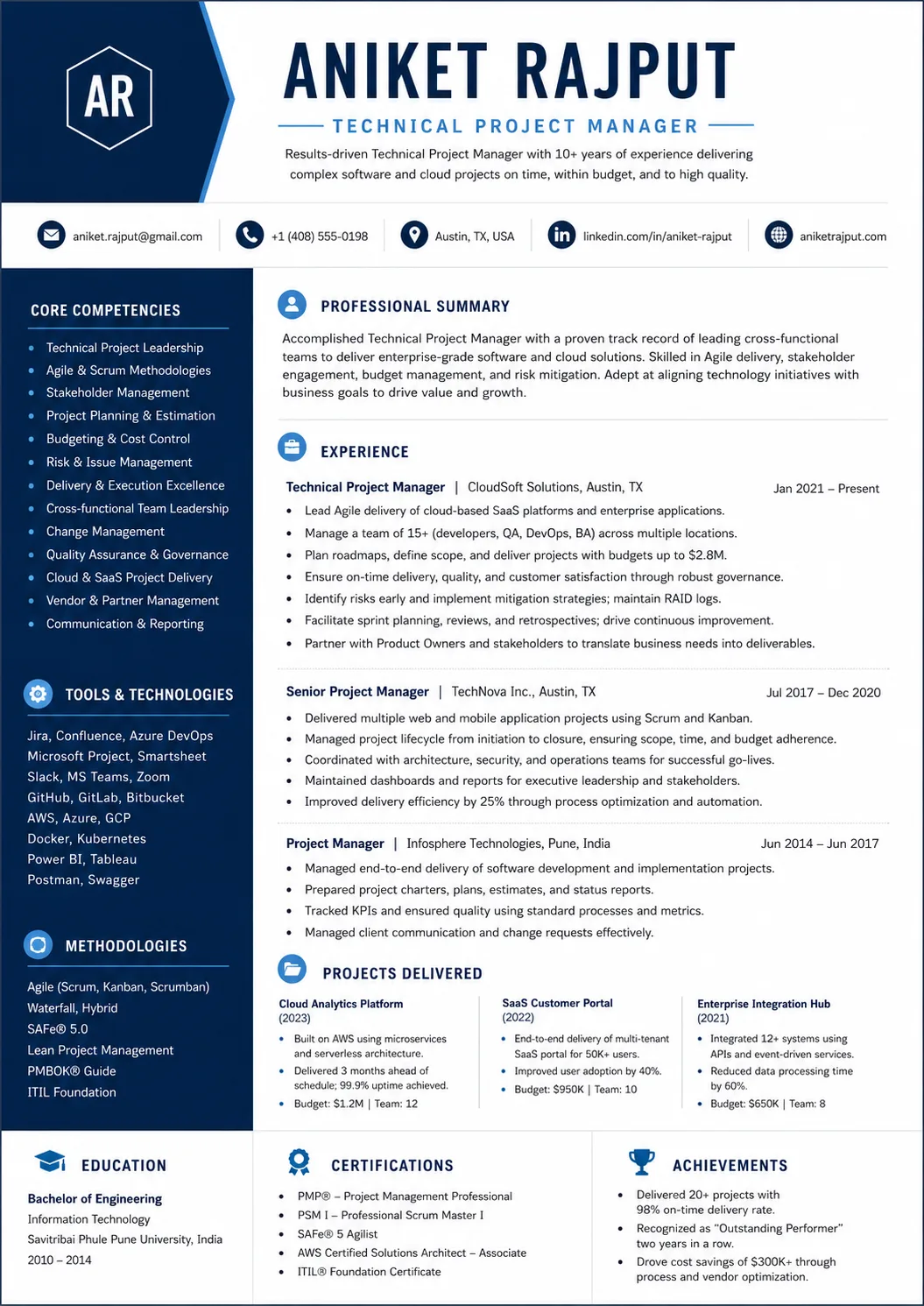
Use this mid-career technical project manager example to study how delivery ownership, technical scope, Agile execution, risk control, and stakeholder reporting should lead the page.
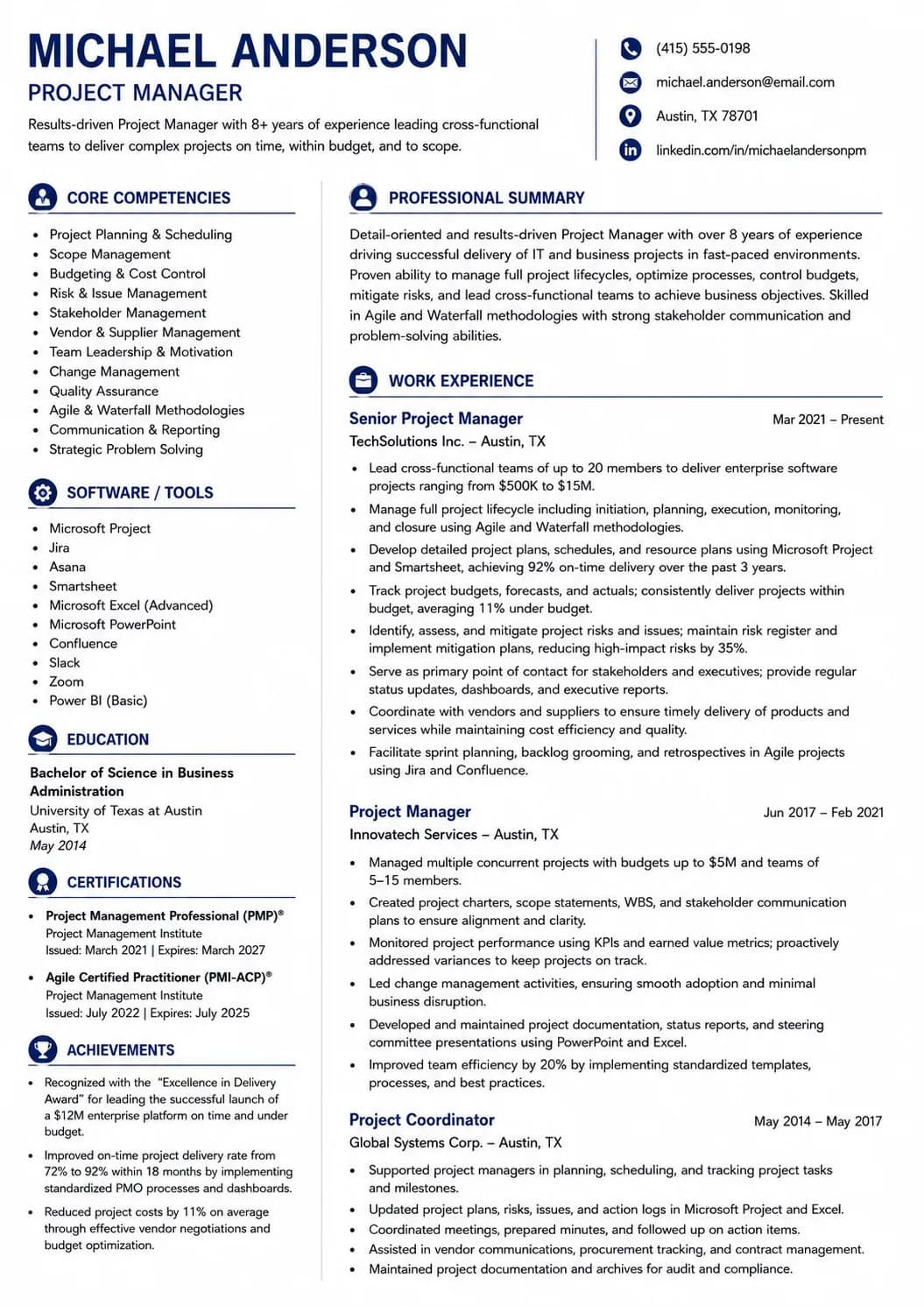
Use this project manager resume example to show scope control, timelines, stakeholder updates, risks, and measurable delivery outcomes.
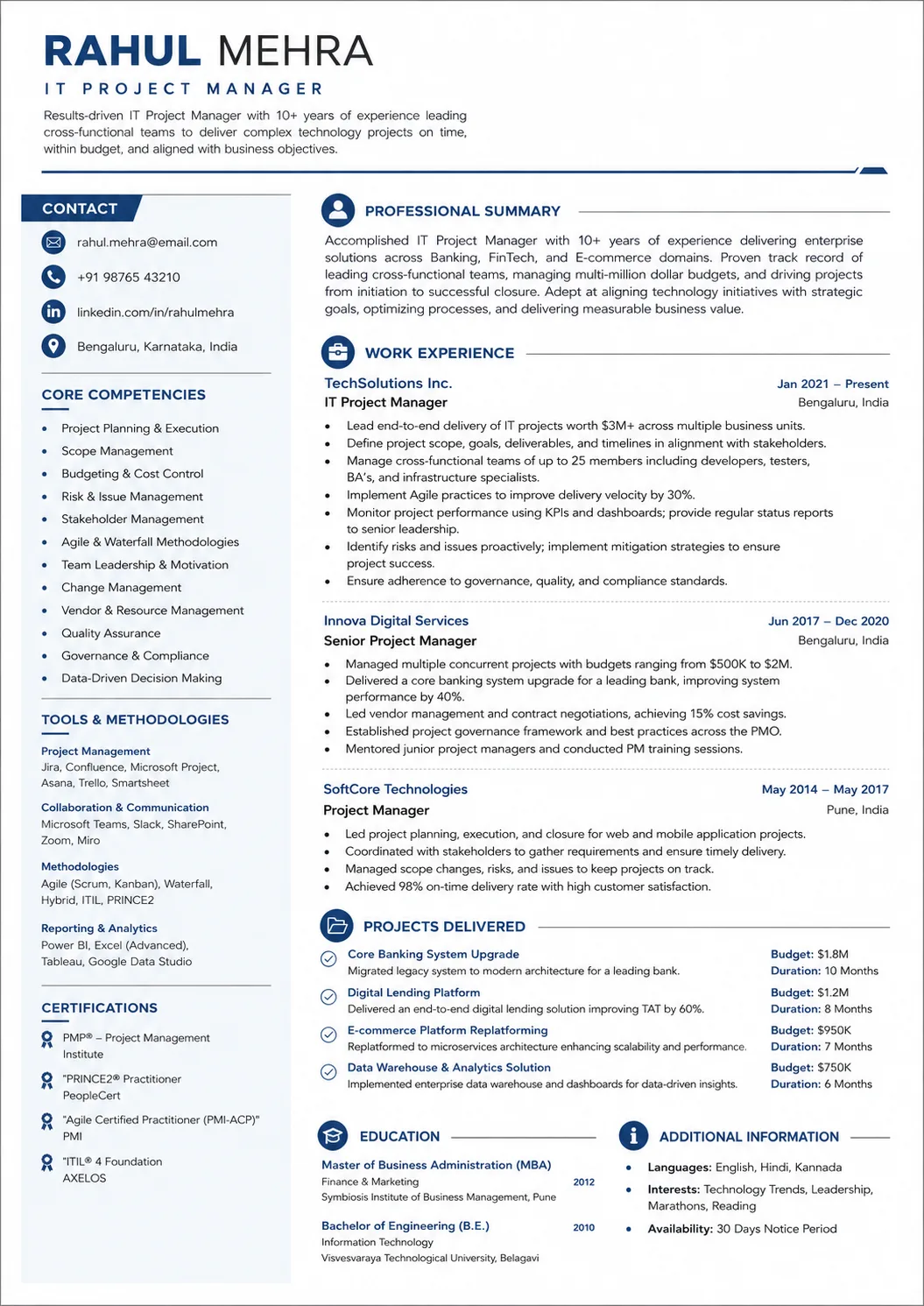
See how an IT project manager resume can present infrastructure projects, system rollouts, vendor coordination, and technical delivery results.

Use this product manager resume example to show roadmaps, customer problems, prioritization, product discovery, and launch outcomes.
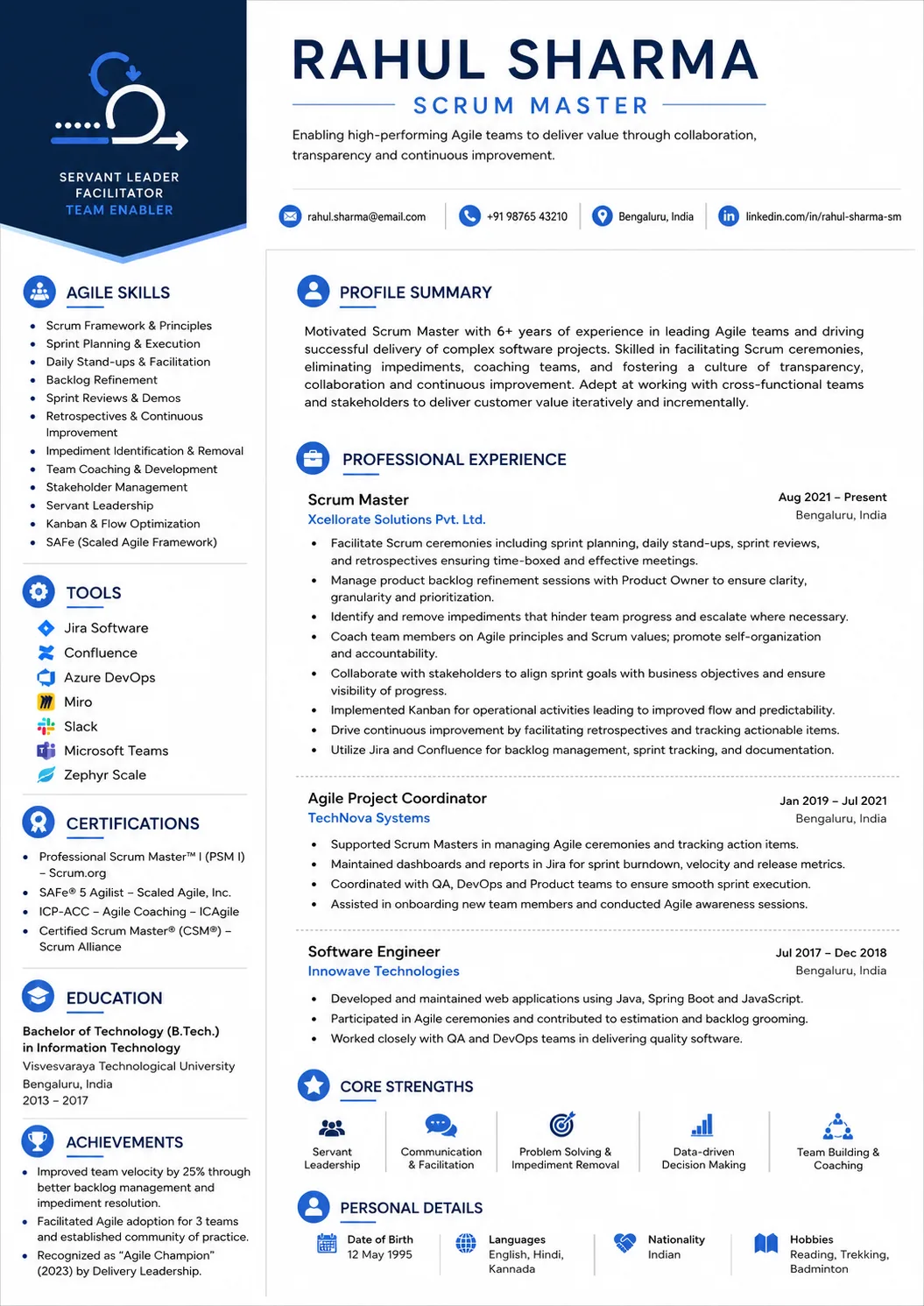
See how a Scrum Master resume can show Agile ceremonies, team facilitation, impediment removal, sprint health, and continuous improvement.
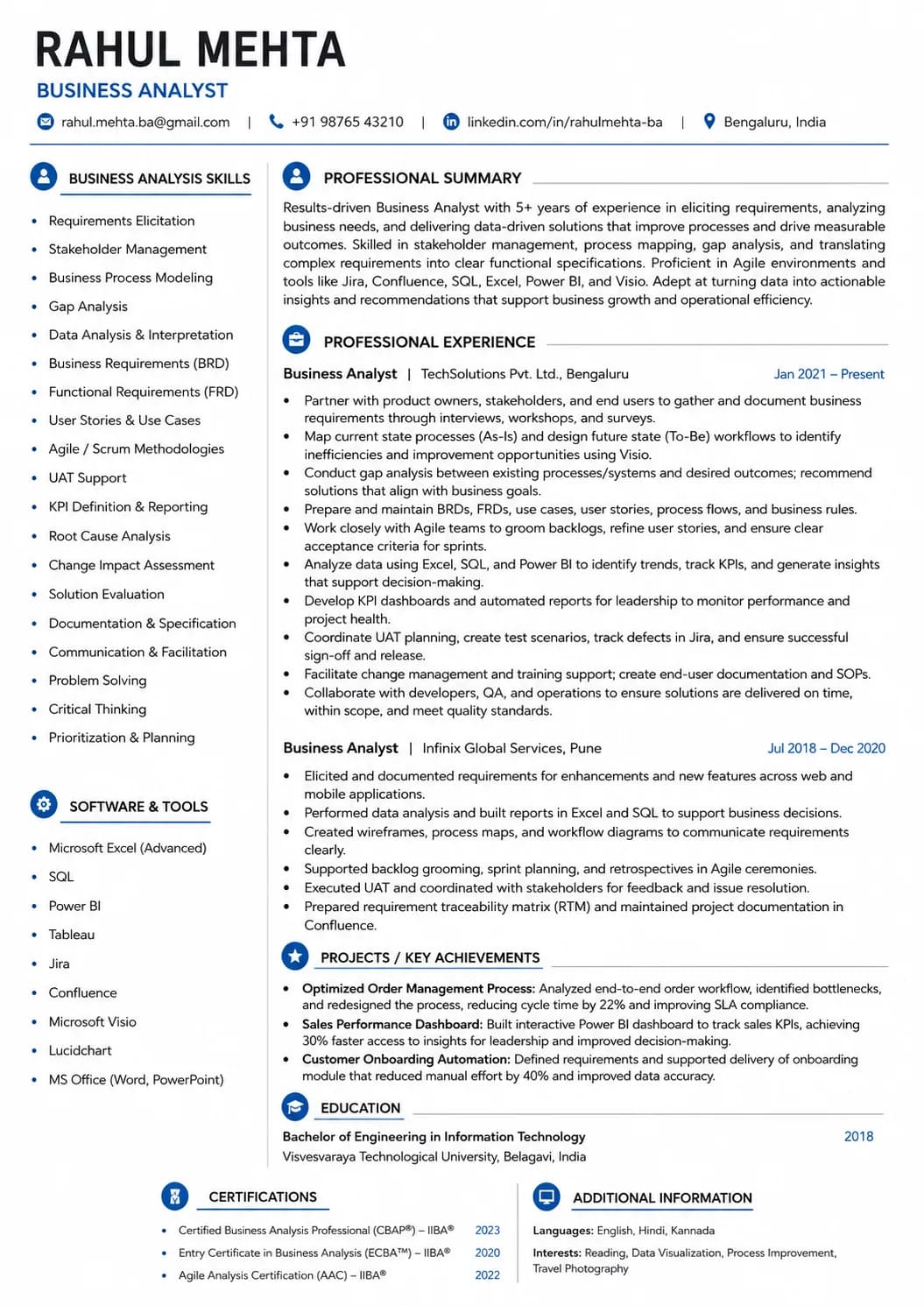
Use this business analyst resume example to show requirements gathering, process mapping, stakeholder analysis, and UAT support.
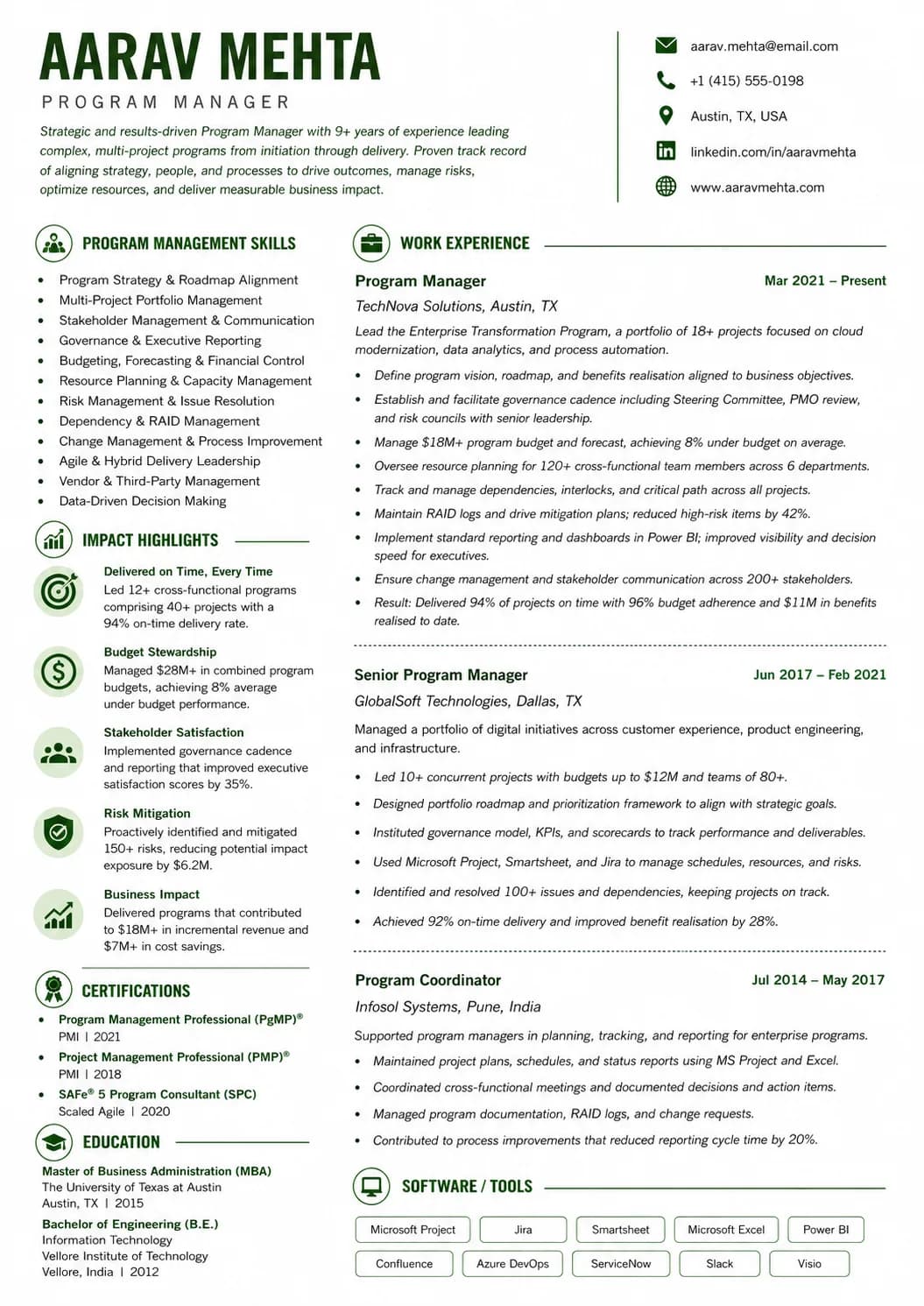
See how a program manager resume can show portfolio scope, cross-team alignment, governance, risk control, and executive reporting.
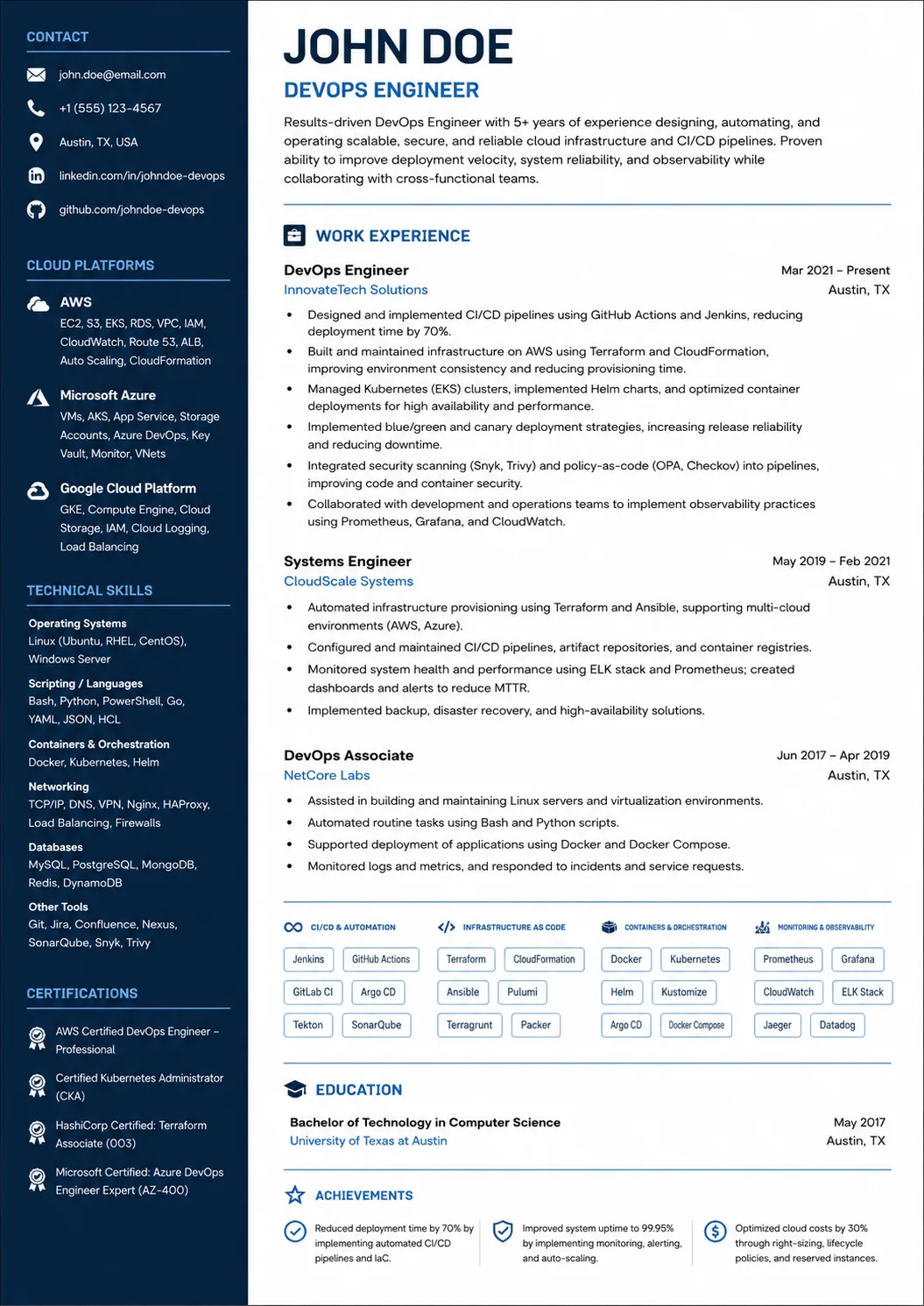
See how a DevOps engineer resume can show CI/CD, cloud infrastructure, automation, monitoring, and release reliability.
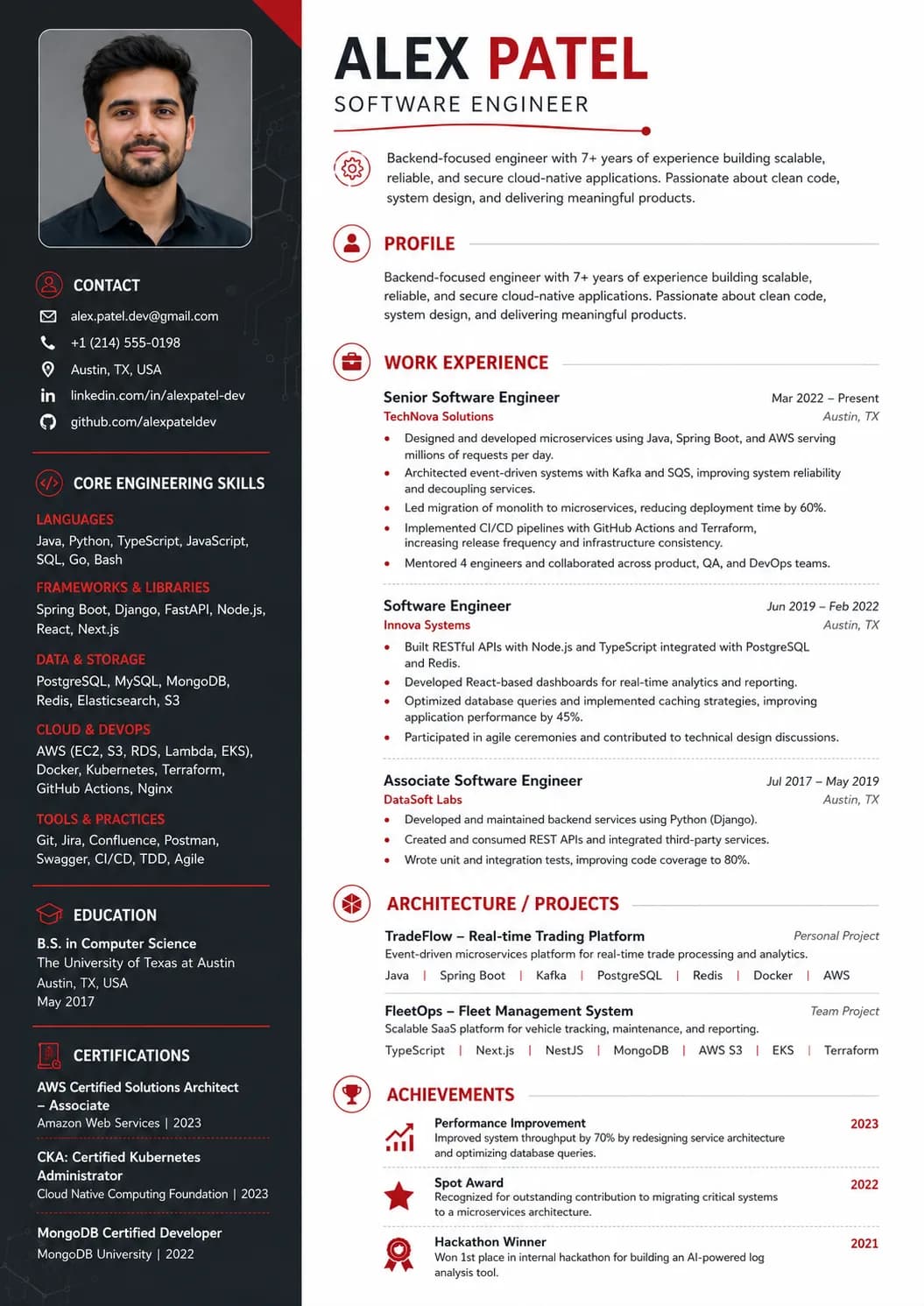
See how a software engineer resume can present technical skills, system design, coding impact, and shipped product work.
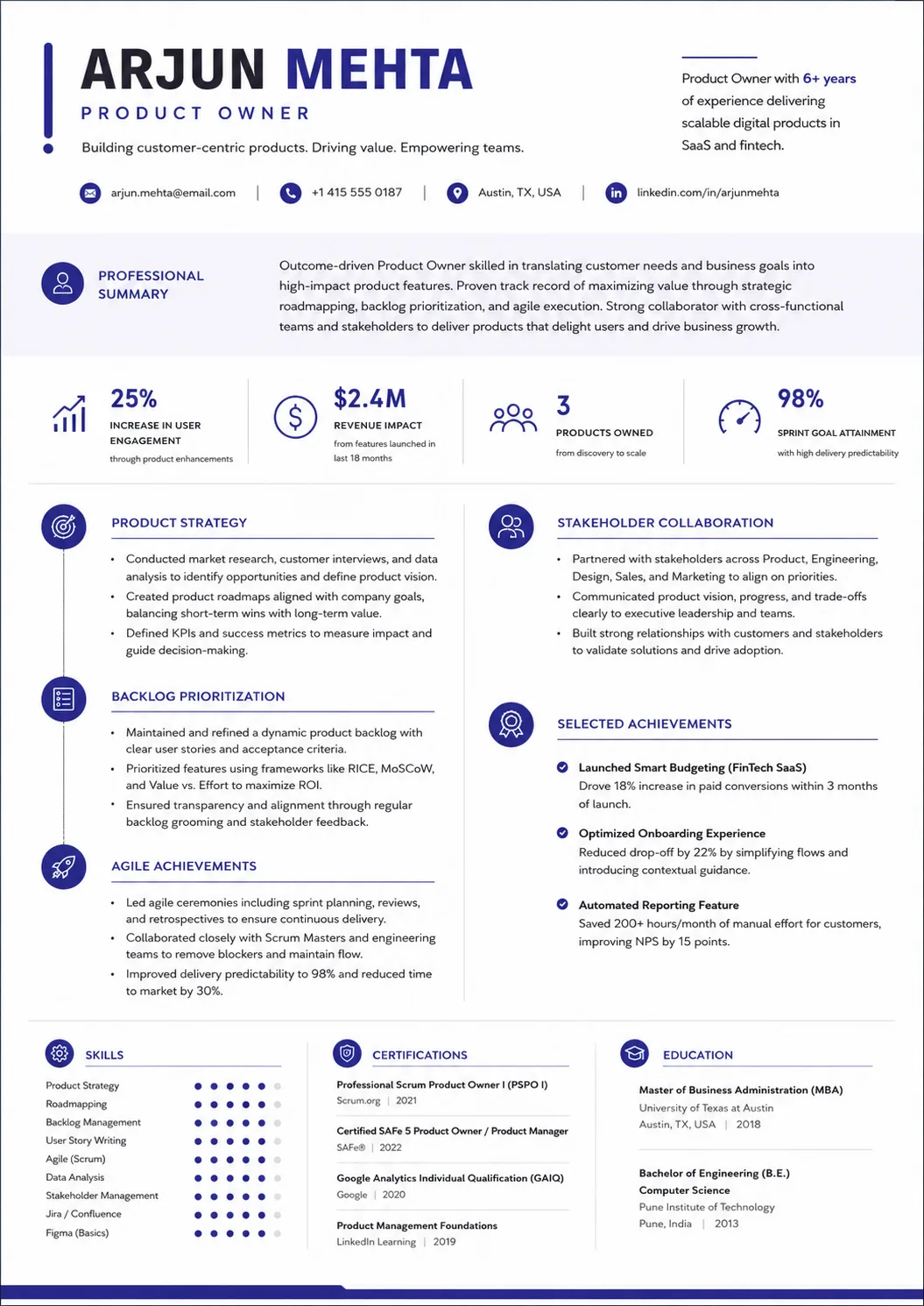
Use this product owner resume example to show backlog ownership, user stories, sprint planning, prioritization, and stakeholder alignment.
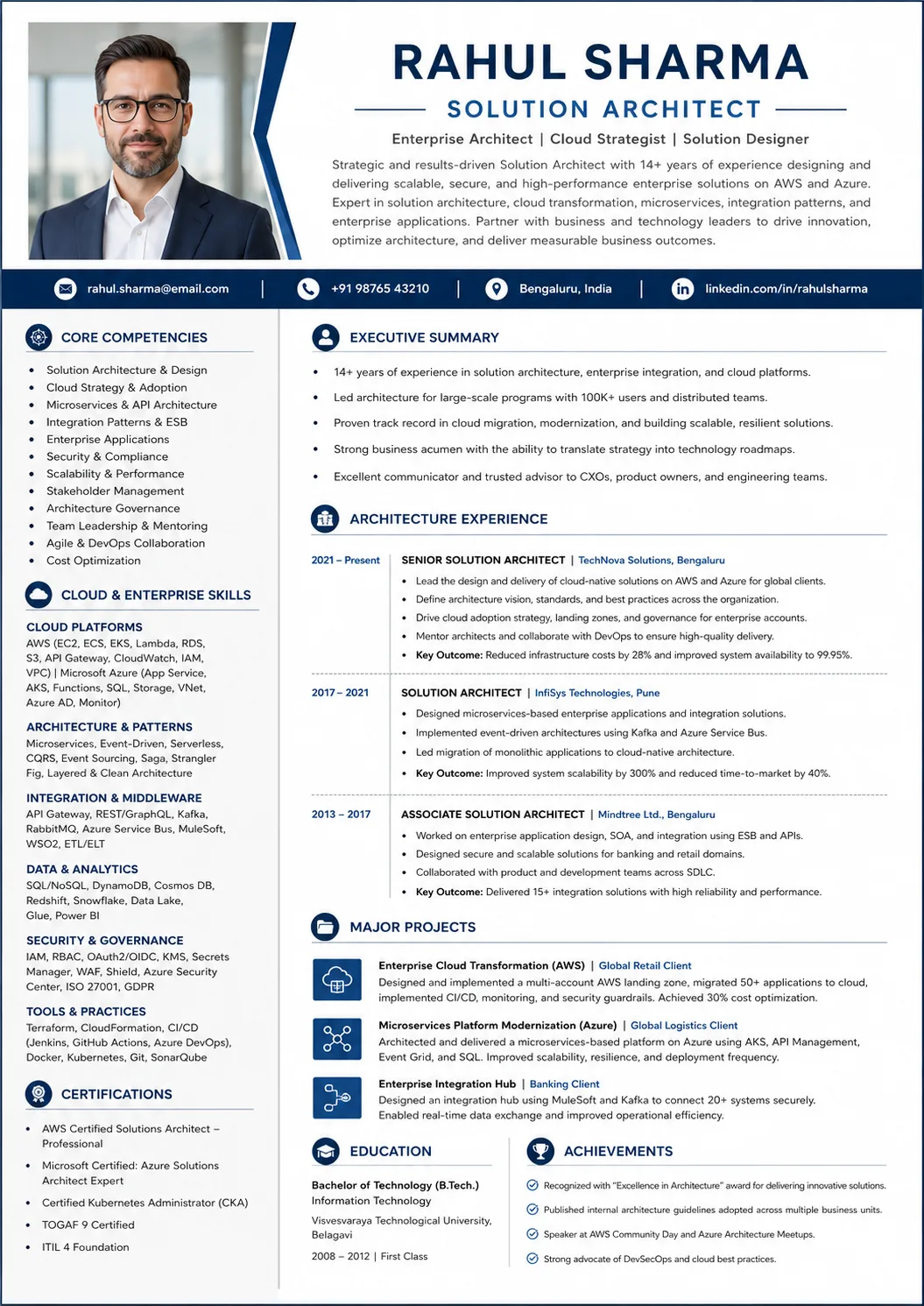
See how a solution architect resume can show technical design, system integration, cloud platforms, and business-to-technology alignment.
Technical Project Manager Resume Playbook
Technical project manager hiring teams scan quickly, but they scan for details. They want to see whether you can manage technical projects without needing every engineering detail explained from zero. They look for project scope, delivery method, system type, team size, tools, timelines, risks, dependencies, and business impact. A recruiter may search for keywords such as Agile, Scrum, SDLC, Jira, release planning, stakeholder management, roadmap tracking, technical requirements, cloud migration, API integration, SaaS implementation, or vendor management. An engineering manager may look for proof that you can keep delivery moving without creating noise for the team. This role often appears under different titles, including IT project manager, software project manager, delivery manager, technical program manager, implementation project manager, or Agile project manager. The exact title matters less than the proof. If the job is technical, the resume should show that you can speak clearly with engineers and still translate progress for customers, executives, vendors, and business teams.
You do not need to sound like a senior engineer to write a strong technical project manager resume. You need to show that you understand how technical work moves from discovery to delivery. That can include requirements, backlog planning, sprint coordination, status reporting, QA handoffs, UAT, release readiness, change control, post-launch review, risk tracking, and stakeholder updates. This guide will show you how to: A good technical project manager resume also shows judgment. Employers want to see that you know when a risk needs escalation, when scope needs clarification, when a dependency will affect a release, and when a stakeholder update needs to be simplified. These details separate a real TPM resume from a generic project manager resume.
A strong technical project manager resume should make three things easy to see: the type of technical projects you deliver, the teams and tools you work with, and the results your project leadership creates. This role is not only about schedules. It is about turning technical goals into organized delivery across engineering, QA, DevOps, product, security, vendors, and business stakeholders. The strongest resumes show the full delivery picture. They explain how requirements were gathered, how work was broken into milestones or sprints, how risks were tracked, how QA and UAT were handled, how releases were prepared, and how stakeholders were kept aligned. This helps the reader see that you are not only a meeting organizer. You are the person who helps technical teams finish work with fewer surprises.
Most employers look for a mix of project management discipline and technical fluency. They want someone who can build a plan, track risk, manage dependencies, report status, and lead meetings, but they also want someone who understands software delivery, infrastructure change, data work, security reviews, integrations, testing, and releases. A technical project manager resume example should not only say managed projects. It should show what kind of projects, how complex they were, who was involved, which tools were used, and what changed because of your leadership. Employers also look for the ability to reduce uncertainty. Technical projects often fail because requirements are unclear, systems have hidden dependencies, teams have competing priorities, or stakeholders do not understand tradeoffs. Your resume should show how you created visibility, clarified ownership, raised risks early, and helped teams make decisions before problems became delays.
High-priority proof points
Good proof for newer TPMs
Many employers use ATS tools before a recruiter or hiring manager reads the resume. These systems may look for job titles, tools, delivery methods, certifications, technical domains, and industry terms. That means your resume should use clear wording from the posting when it is true for you. If the job asks for Jira, Agile, SDLC, risk management, stakeholder communication, cloud migration, SaaS implementation, API integration, or vendor management, those terms should appear naturally in your summary, skills, and experience bullets. Do not hide strong project proof behind vague words like coordinated, supported, or helped without explaining the technical context. ATS-friendly writing should still sound natural. A strong bullet might say that you coordinated sprint planning and release readiness for a cloud migration team using Jira and Confluence. That single sentence gives a tool, delivery method, technical domain, and real responsibility without keyword stuffing.
If your resume uses vague language, strong delivery experience can look weaker than it is. Clear terms like release planning, dependency tracking, risk register, UAT coordination, sprint planning, roadmap tracking, technical requirements, and stakeholder reporting help both software and human readers understand your fit. The best technical project manager resume example connects those terms to actual projects, not just a keyword list.
Start with your strongest base resume, then tailor it for each role. A technical project manager for cloud migration should not sound exactly like one for mobile apps, cybersecurity, ERP implementation, data platforms, or infrastructure upgrades. The structure can stay the same, but the examples should change. Look for repeated words in the posting, then decide which parts of your background match honestly.
If a posting feels broad, look for clues around delivery method, technical domain, tools, team structure, compliance, customer impact, and reporting level. A role that mentions executive updates, roadmap alignment, vendors, budget, and portfolio reporting is likely more senior. A role that mentions Jira tickets, standups, QA, UAT, and release notes may need stronger hands-on delivery coordination. You can also look at who the role reports to. A TPM reporting to engineering may need stronger SDLC, release, API, or architecture language. A TPM reporting to PMO may need governance, budget, risk, status reporting, and portfolio language. A TPM reporting to product may need roadmap, backlog, sprint, launch, and customer impact language.
The best technical project manager resume format is clean, direct, and easy to scan. A technical hiring team should be able to find your project scope, tools, delivery method, outcomes, certifications, and technical domain without digging through dense paragraphs. Most candidates should use a reverse-chronological layout because recent project delivery matters most. Use short paragraphs and strong bullets. A technical project manager resume can become hard to read if every bullet includes every tool and every stakeholder. Keep each bullet focused on one result or one project control. For example, one bullet can cover risk management, another can cover release planning, and another can cover stakeholder reporting.
For the ATS
For recruiters and hiring teams
Keep the resume straightforward. Technical project manager resumes win with clear project scope, tools, and outcomes.
Make each section easy to scan in one quick pass, especially your summary, latest role, skills, certifications, and project achievements.
Do not stretch the resume with every meeting, ticket, or report you ever handled. Focus on delivery value.
Avoid tables, charts, heavy icons, and unusual formatting that can confuse ATS tools or distract from technical project proof.
Most technical project managers move faster with a tested template. Choose one that keeps the summary near the top, gives enough space for project bullets, and makes tools and certifications easy to find. A good template should not force you to cut important project context. You need room for project type, team size, timeline, tools, risks, and results. If you have many tools, group them in the skills section instead of forcing every tool into the experience section. If you have strong metrics, place the strongest one in the first bullet of your most recent role. Recruiters often read the top third of the resume first, so make that space count.
Browse our resume templates or jump straight into the resume builder when you are ready to turn these technical project manager resume examples into a finished draft.
The summary gives the employer a quick picture of the technical projects you can deliver. It should name your strongest delivery environment, your best project management strengths, and the value you bring to engineering and business teams. For this role, the summary should feel technical but not overloaded. Mention tools and methods only if they help the reader understand your fit. A clean summary can include years of experience, project types, delivery method, key teams, tools, and one or two strengths such as risk control, release planning, or stakeholder management.
Keep the tone professional and specific. Strong summaries use real technical project language, not broad claims about being organized or a team player. A mid-level technical project manager might lead with SaaS delivery, Agile teams, Jira, release planning, risk management, and stakeholder communication. A senior candidate might lead with program scope, cloud migration, portfolio reporting, budget tracking, executive communication, and vendor governance. Avoid writing a summary that could belong to any project manager. Technical project manager resume examples should include at least one signal that the candidate works with technical delivery. That signal could be SDLC, cloud, API, SaaS, infrastructure, data, cybersecurity, DevOps, QA, UAT, Jira, Confluence, or Azure DevOps.
Skip empty phrases like “excellent communicator,” “strong leader,” or “detail-oriented professional” unless you prove them with delivery context. Employers expect a project manager to communicate and stay organized. Use the space to explain the type of technical work you manage and the outcomes you produce. A stronger summary says that you deliver SaaS integrations across engineering, QA, and DevOps, manage release readiness, and improve stakeholder visibility through Jira dashboards and risk reports.
If you are not sure what to emphasize, start with the strongest proof you have: project type, team size, tools, delivery method, timeline, budget, release impact, risk reduction, customer impact, or executive reporting. A technical project manager resume summary should help the reader understand your level. Entry-level candidates can show coordination and tool fluency. Mid-level candidates should show delivery ownership. Senior candidates should show program leadership, governance, and business impact. If you have no impressive numbers, use scope instead. Scope can be just as useful as a metric. Mention a 12-person squad, three workstreams, four vendors, 20 integrations, a six-month migration, or weekly executive reporting if those details are true. Scope helps the reader understand complexity.
When it fits the posting, reuse the employer’s own words for tools, delivery methods, technical systems, and project goals. If the posting says Jira, roadmap tracking, API integrations, cloud migration, and executive status reporting, use those terms where they match your real work. This helps ATS tools and also helps human readers connect your background to the job.
Technical project manager with 5+ years of experience delivering SaaS, API, and cloud projects across engineering, QA, DevOps, product, and business teams. Skilled in Agile delivery, Jira, Confluence, SDLC, roadmap tracking, release planning, risk management, and stakeholder communication.
Your experience section should prove that you can deliver technical work through planning, coordination, risk control, and clear communication. For a technical project manager, this section is usually the most important part of the resume because it shows how you move projects from idea to release. The best experience bullets are specific but not too long. They show the project type, the group of teams involved, the project control you owned, and the result. A technical project manager does not need to take credit for engineering work, but they should show how they made delivery smoother, clearer, safer, or faster.
Employers care about the work behind the title. If you managed sprint planning, tracked dependencies, led UAT, coordinated release readiness, built dashboards, removed blockers, managed vendors, reported risks, or helped engineering and business teams stay aligned, that experience counts. The key is to write it clearly. A weak bullet says you managed projects. A strong bullet explains the project type, tools, teams, risk, timeline, and outcome. If you worked in a highly technical environment, avoid going so deep that a non-technical recruiter gets lost. Explain enough to show credibility, then connect the technical work to delivery value. For example, API integration, authentication changes, cloud migration, data pipeline rollout, or network upgrade should be paired with timeline, risk, user impact, or release outcome.
Use reverse chronological order so your most recent and relevant technical delivery work appears first. For each role, make sure the reader can find:
When you can, add clear context such as project budget, team size, release count, sprint cadence, number of systems, customer impact, migration size, vendor count, or reporting level. Numbers are not required in every bullet, but specific scope makes your work easier to trust. A strong technical project manager resume example should show how you handled complexity, not just that you attended meetings. Do not overclaim engineering ownership if you did not write code or design the system. It is stronger and safer to say you coordinated engineering, QA, DevOps, and stakeholders through release planning than to imply you personally built the technical solution. Clear ownership builds trust.
Technical Project Manager, NovaCloud Systems
San Francisco, California | Mar 2021 - Present
IT Project Coordinator, BrightStack Solutions
San Jose, California | Jun 2018 - Feb 2021
The skills section should reflect daily technical project work. It should help a recruiter, ATS tool, engineering manager, or PMO leader see that you can plan delivery, track work, manage risk, communicate with stakeholders, and understand technical teams. A technical project manager skills section should also reflect the job market you are targeting. Startup roles may value speed, ambiguity, product sense, and hands-on tooling. Enterprise roles may value governance, compliance, vendor management, executive reporting, and change control. Consulting roles may value client communication, implementation planning, workshops, and adoption support.
Keep a longer master list outside your resume, then pull in only the skills that match each job. A technical project manager resume for cloud migration may need AWS, Azure, infrastructure, security review, and vendor management. A software delivery resume may need Agile, Scrum, Jira, backlog tracking, release planning, QA, UAT, and API integration. A data platform resume may need ETL, BI, analytics, governance, and cross-functional reporting. You can divide skills into groups if your template supports it. Useful groups include Project Delivery, Technical Tools, Agile and SDLC, Stakeholder Management, Risk and Governance, Cloud and Infrastructure, Data and Analytics, and Vendor Management. Grouping helps the reader scan the resume faster.
Employers often prioritize skill groups such as:
A strong technical project manager skills section mixes delivery methods, technical tools, business communication, and project controls. Do not list every tool you have opened once. Focus on skills you can explain in an interview and support with experience bullets. If you list Jira, show a bullet where you used dashboards, workflows, or reports. If you list risk management, show a bullet where you reduced blockers or improved delivery readiness. The safest way to prove a skill is to repeat it in a project bullet. For example, if the skills section says release planning, your experience section should include a release planning bullet. If the skills section says vendor management, your experience should mention vendors, contracts, statements of work, implementation partners, or vendor timelines. This creates consistency across the resume.
Education matters on a technical project manager resume, but the weight depends on your background. Degrees in information systems, computer science, engineering, business, project management, data, or cybersecurity can support your fit. If your degree is not technical, you can still write a strong resume by showing project outcomes, tools, certifications, and technical domain experience. For technical project managers, education should support the story but not replace delivery proof. A degree can show foundation, but employers usually care more about whether you have delivered similar projects. If your degree is business-focused, your technical training and tools can balance the resume. If your degree is technical, your project outcomes can show that you can lead, not only understand systems.
Once you have strong delivery experience, project results usually matter more than coursework. Still, employers need this section to be easy to verify. Keep the degree, school, location, and graduation year clear. Add relevant coursework only when it supports a newer candidate, such as systems analysis, database design, software engineering, cybersecurity, cloud computing, business analytics, operations, or project management. If you are applying to regulated or enterprise environments, coursework or training in risk, security, data privacy, IT service management, cloud architecture, or change management can be worth including. Keep it relevant. A crowded education section can distract from stronger delivery results.
Technical project manager certifications can help when they match the role. PMP is useful for broader project leadership, CAPM can help newer candidates, PMI-ACP supports Agile project work, CSM and PSM I show Scrum knowledge, SAFe helps in scaled Agile environments, and ITIL can support service delivery or enterprise IT roles. Cloud certifications from AWS, Azure, or Google Cloud can help when the role involves cloud migration, infrastructure, or platform work. Certifications should not be treated like a replacement for experience, but they can make your resume easier to trust. They show that you understand common project language and delivery frameworks. For newer candidates, they can help prove readiness. For experienced candidates, they can support leadership credibility when the posting asks for a specific credential.
Before you apply, make sure your certification terms, tool names, project methods, and technical domain language match the posting. If a job asks for PMP, Agile, Scrum, Jira, cloud migration, SaaS implementation, security projects, or vendor management, use those terms only when they are true for your background. Clear certification wording helps ATS tools and hiring teams verify your fit faster. If you are currently studying for a certification, write it honestly, such as PMP in progress or AWS Certified Cloud Practitioner expected 2026. Do not list certifications you have not started. Hiring teams may verify them, and unclear certification wording can damage trust.
Bullet upgrade
Use the stronger version as the model: lead with a clear delivery action, add technical context, and include the result or project value. Technical project manager resume bullets should show what you managed, who you coordinated with, what tools or methods you used, and what improved because of your work. A good test is this: could the same bullet appear on almost any project manager resume? If yes, it is too generic. Add the technical environment, team, tool, milestone, risk, or result.
Weak
Managed technical projects.
Stronger
Managed a 9-month SaaS integration project across engineering, QA, security, and customer success teams, tracking risks in Jira and helping deliver the release two weeks ahead of the revised schedule.
The stronger bullet names the project type, teams involved, tool used, timeline, and delivery result.
Weak
Worked with developers and stakeholders.
Stronger
Coordinated sprint planning, backlog refinement, and weekly stakeholder updates for a 12-person product squad building API and reporting features.
This version shows the real operating rhythm of the role instead of a broad communication claim.
Weak
Improved project process.
Stronger
Created a release readiness checklist that reduced late-stage deployment blockers by improving handoffs between engineering, QA, DevOps, and support teams.
The better version explains the process change, the teams affected, and the practical project benefit.
ATS keyword bank
Recruiters, hiring managers, and applicant tracking systems often scan for exact role language. Use these technical project manager resume keywords only when they honestly match your background. Good keywords are not magic words. They are normal delivery terms that help employers understand your fit: Agile, Scrum, SDLC, Jira, risk management, release planning, stakeholder management, roadmap tracking, technical requirements, and cross-functional teams. Use the exact tool name when it matters. Jira is stronger than project tracking software. Azure DevOps is stronger than development tool. AWS migration is stronger than cloud project. Specific words help search systems and human readers.
Mirror the posting wording for delivery method, tools, project type, technical domain, compliance needs, and certification requirements when they accurately match your background. Use keywords naturally inside real project examples instead of stuffing them into a long list.
Matching application
Pair this resume with a short cover letter that explains the kind of technical work you deliver, the teams you work with, and one strong result from your resume. Do not repeat every bullet. Use the cover letter to connect your project experience to the company’s current delivery needs. A short cover letter can also explain context that is hard to fit into the resume, such as why you are moving from business analysis into TPM work, why your engineering background helps you manage delivery, or why a certain project prepared you for this role.
Name the project type or technical environment you fit, such as SaaS, cloud, infrastructure, data, cybersecurity, API, or enterprise software.
Connect one resume example to delivery value, such as a faster release, lower risk, better reporting, cleaner handoffs, or stronger stakeholder visibility.
Explain how you work with engineering, product, QA, DevOps, vendors, and business leaders without turning the letter into a long project history.
Final review
Before you send your technical project manager resume, compare it with the job posting one last time. Look for missing project types, delivery methods, tools, certifications, domain terms, stakeholder groups, and outcome metrics. Small changes can make the resume feel much more relevant to the role. Also check whether your strongest project appears near the top. If your best technical delivery result is hidden in an older role, consider moving it into a project highlights section or making the bullet more visible under the right job.
A final check on role keywords, project scope, tools, and metrics helps both ATS tools and technical hiring teams understand your fit quickly. Compare your resume with the posting and make sure the most important requirements are visible in the first half of the page.
Before You Start Writing
Ready to build
Start with this technical project manager resume example, then build a matching cover letter that speaks directly to the project type, technical domain, delivery team, and business goals in the role you want. Keep the page focused on proof: project scope, technical teams, tools, risks, decisions, releases, and outcomes. That is what makes the resume useful for both search engines and real hiring teams.