
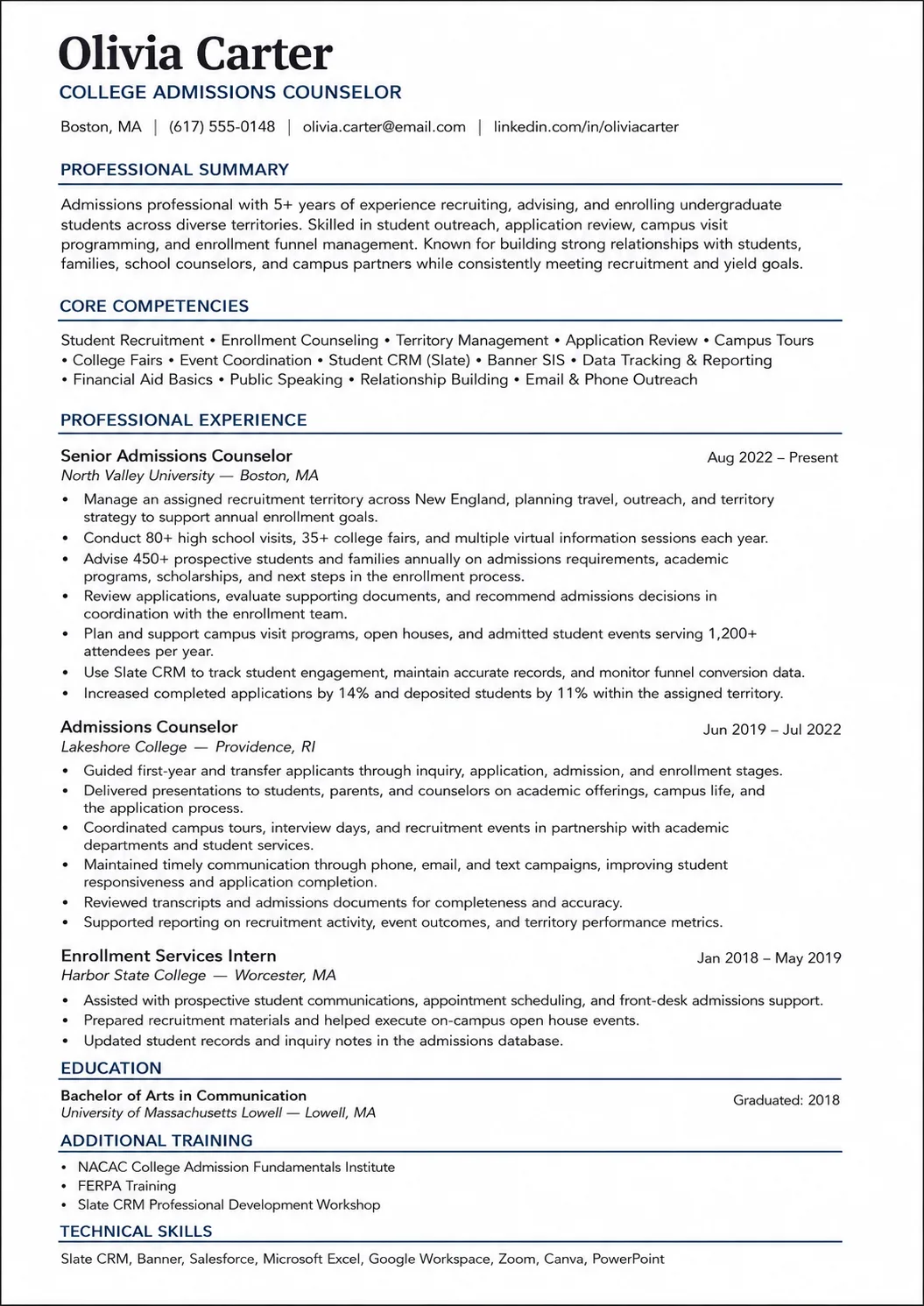
Entry-level admissions
- Contact information
- Resume summary
- Education
- Admissions or student-facing experience
- Skills
- Systems and certifications
Use these college admissions resume examples to show student outreach, application support, and CRM follow-up in a clear way.
College Admissions Counselor
nadia.lopez@email.com | (602) 555-1842 | Phoenix, Arizona | linkedin.com/in/nadialopez
College admissions professional with experience in student outreach, campus visits, applicant support, and records coordination. Skilled at guiding students through deadlines and next steps while keeping CRM follow-up accurate and professional.
Admissions Assistant, Westbridge University
Phoenix, Arizona | 2023 - Present
Student Services Intern, Glendale Community College
Glendale, Arizona | 2022 - 2023
Quick breakdown
It shows student-facing communication and process work right away.
It balances outreach, file accuracy, and event support.
It keeps systems and FERPA training easy to spot.
It sounds helpful and campus-ready instead of sales-heavy.
Fast template guide
Do not copy the resume word for word. Copy the structure, the section order, and the level of specificity so your own version feels just as credible.
A short summary that shows student support, detail accuracy, and enrollment focus.
Bullets that turn tours, file review, and follow-up into clear admissions proof.
CRM, Slate, Banner, or records work placed where schools can find it quickly.
Student communication and event support shown in plain higher-education language.
A clean section order that helps campus jobs and internships carry more weight.
Build the right structure
A strong college admissions resume should include the sections employers expect to scan quickly, plus a few optional sections that help you prove readiness when your experience is still growing.
Must-have sections
Optional sections that strengthen the resume
For college admissions roles, campus tours, application support, student services work, and outreach events matter more than generic office detail.
Smarter ordering
The best section order depends on your experience level. A new college admissions should not use the same structure as a senior candidate with years of results.
If you are new to admissions, move student-facing work, data accuracy, and campus familiarity higher so employers can see your fit fast.
Use this entry-level college admissions example to study how student outreach, application support, and CRM follow-up are easy to scan.
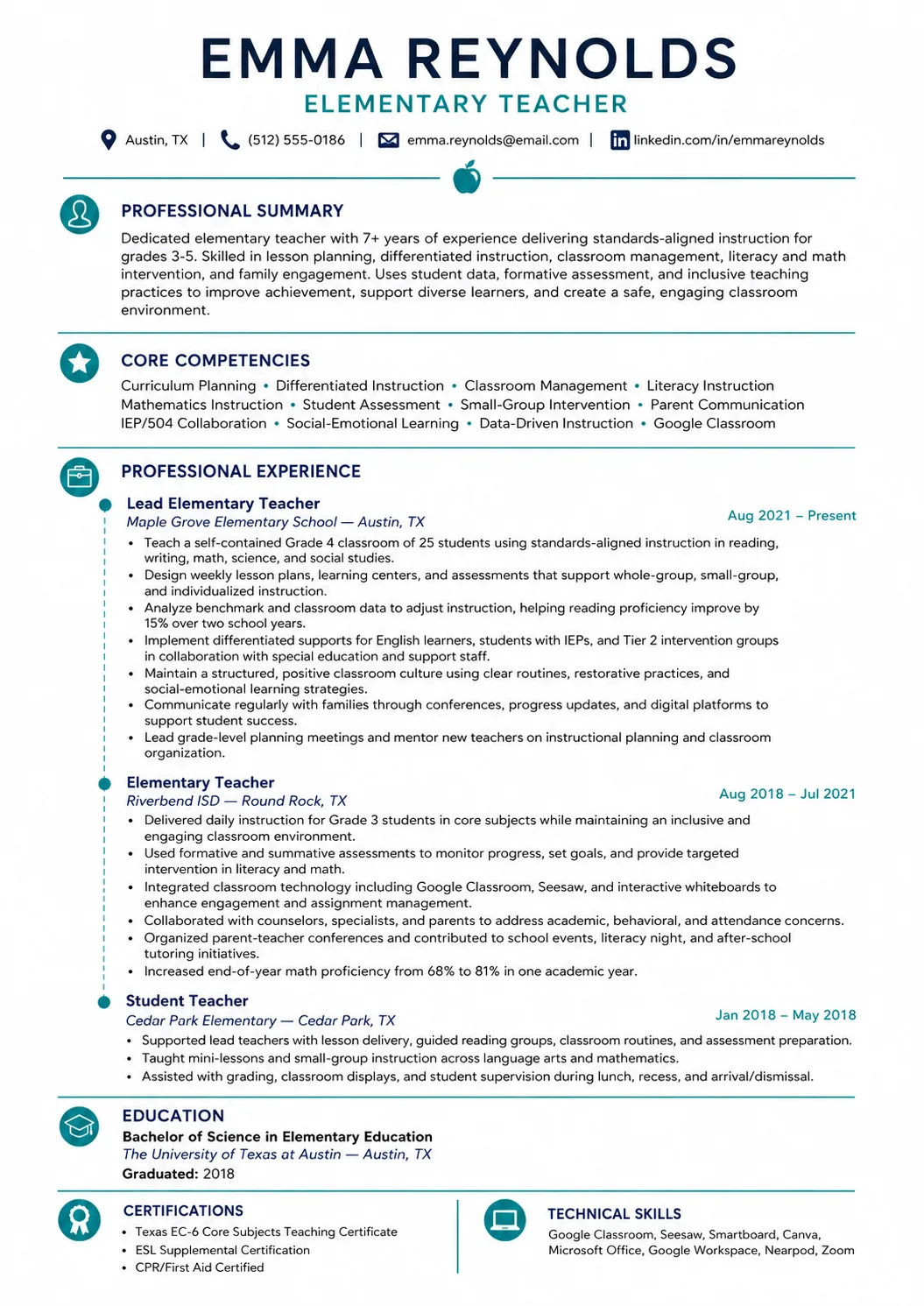
Use these teacher resume examples to show student teaching, classroom skills, and license status in a clear way.
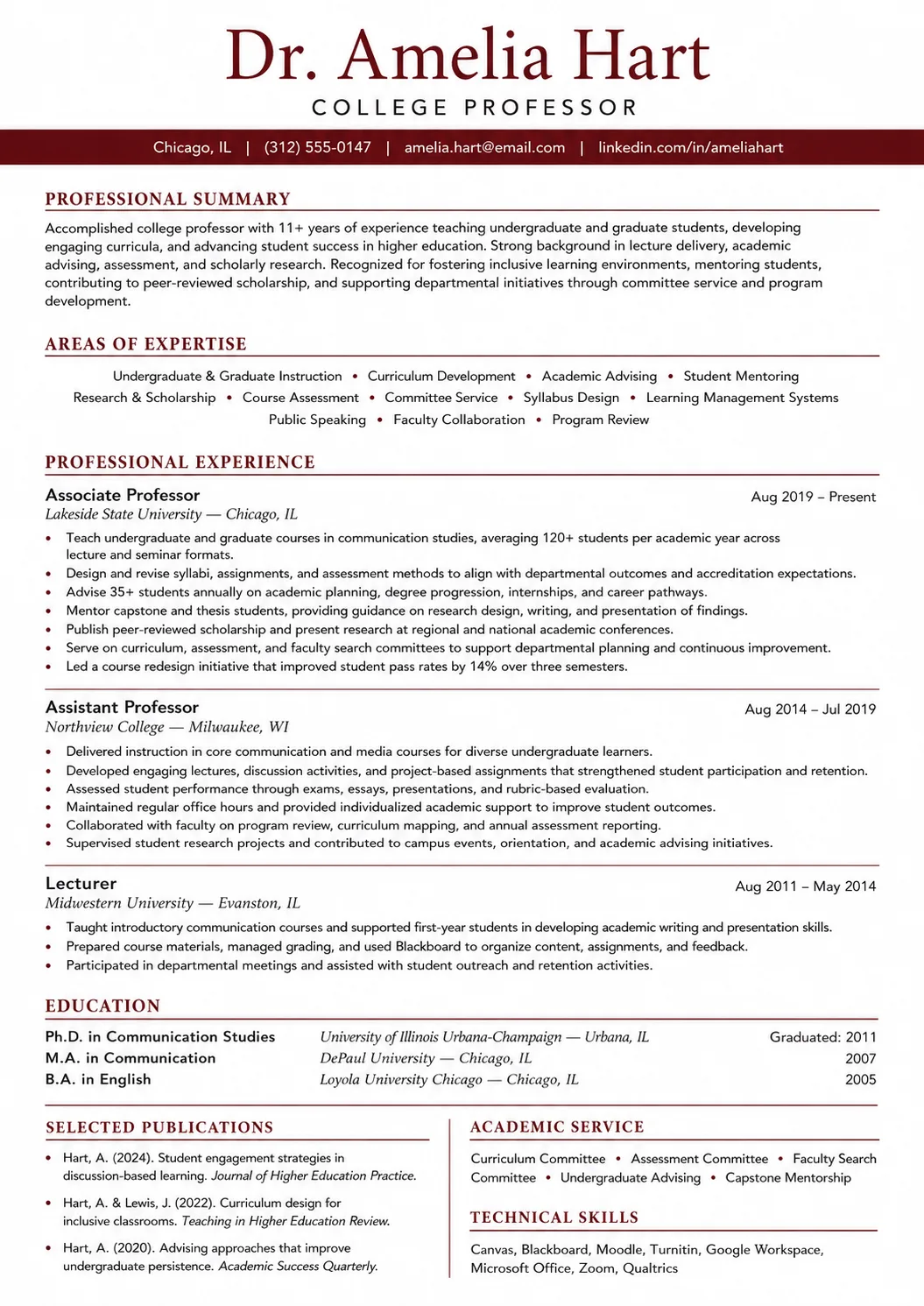
Use these college professor resume examples to show teaching, curriculum work, research, and service in a clear way.
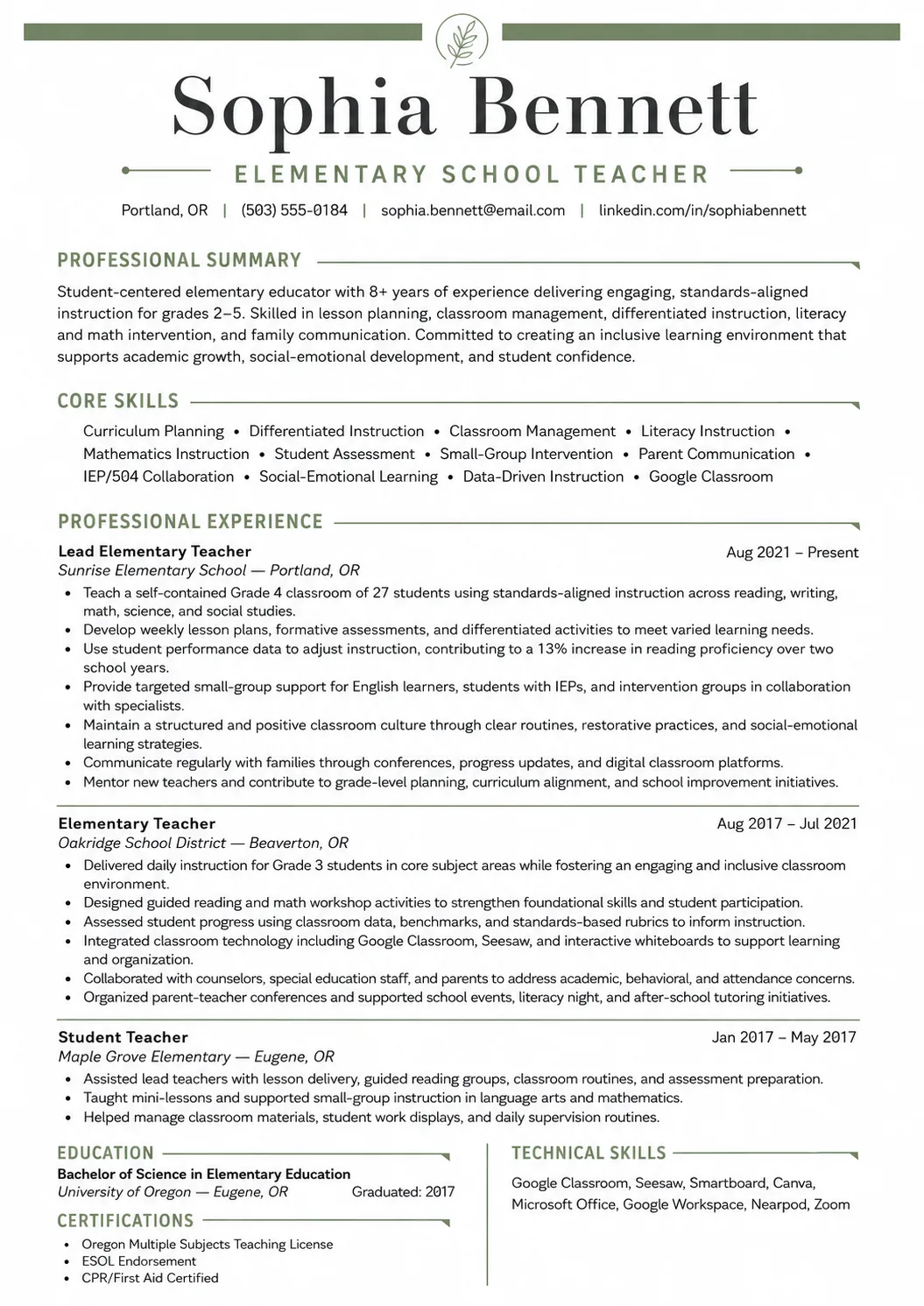
See how an elementary school teacher resume can present role-specific strengths, relevant achievements, and clean formatting that is easy to adapt.
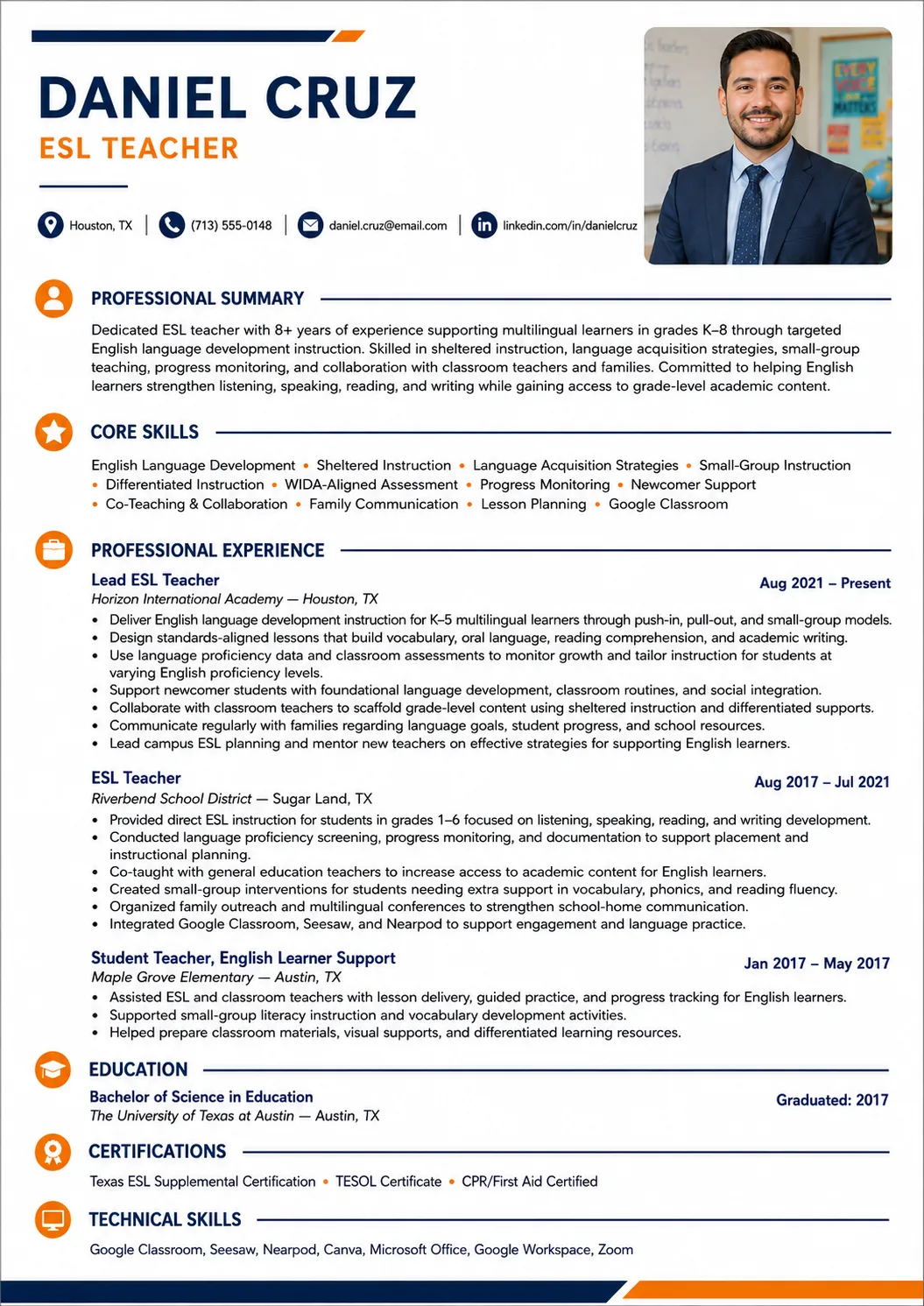
See how an ESL teacher resume can present role-specific strengths, relevant achievements, and clean formatting that is easy to adapt.
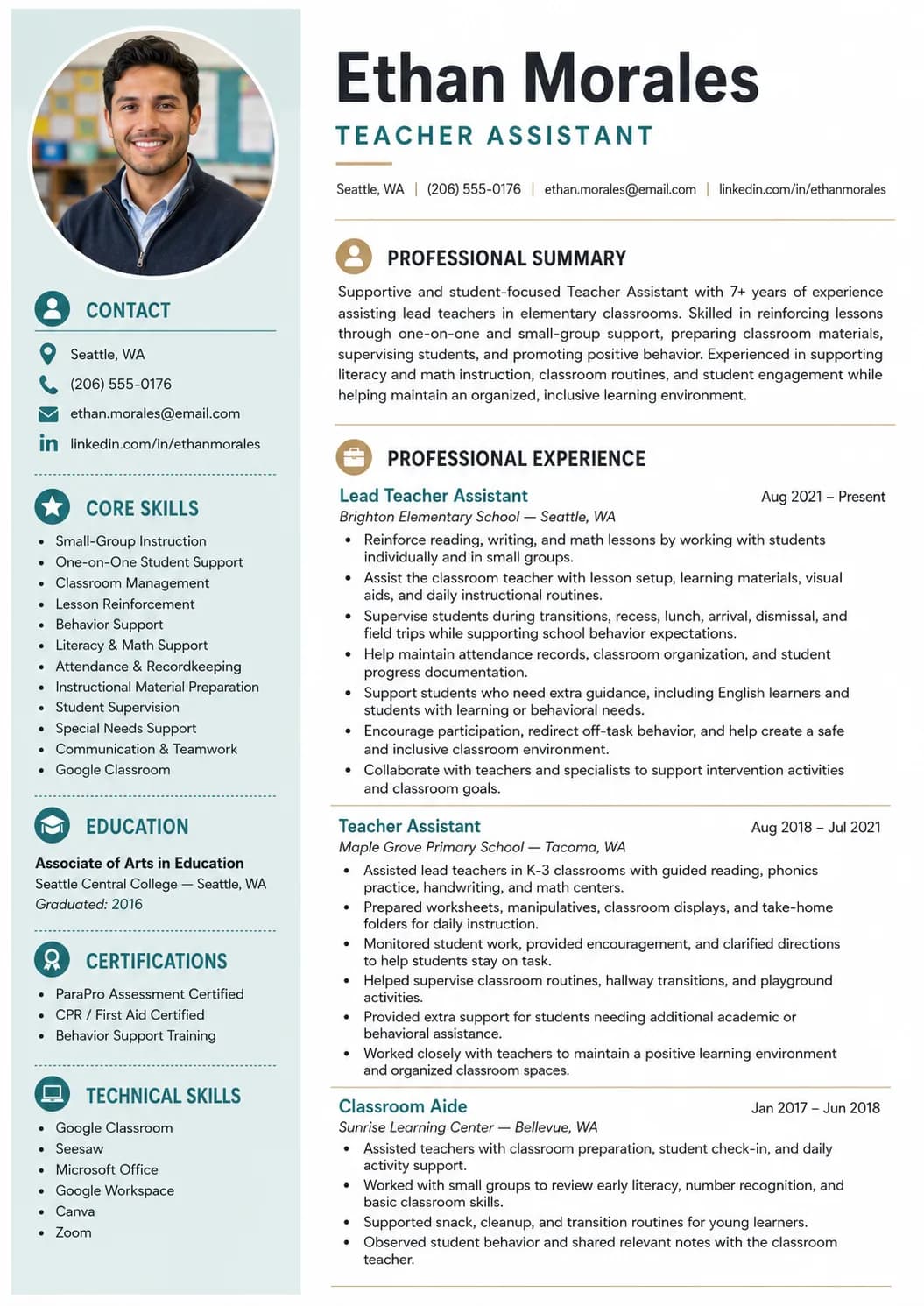
See how a teacher assistant resume can present role-specific strengths, relevant achievements, and clean formatting that is easy to adapt.
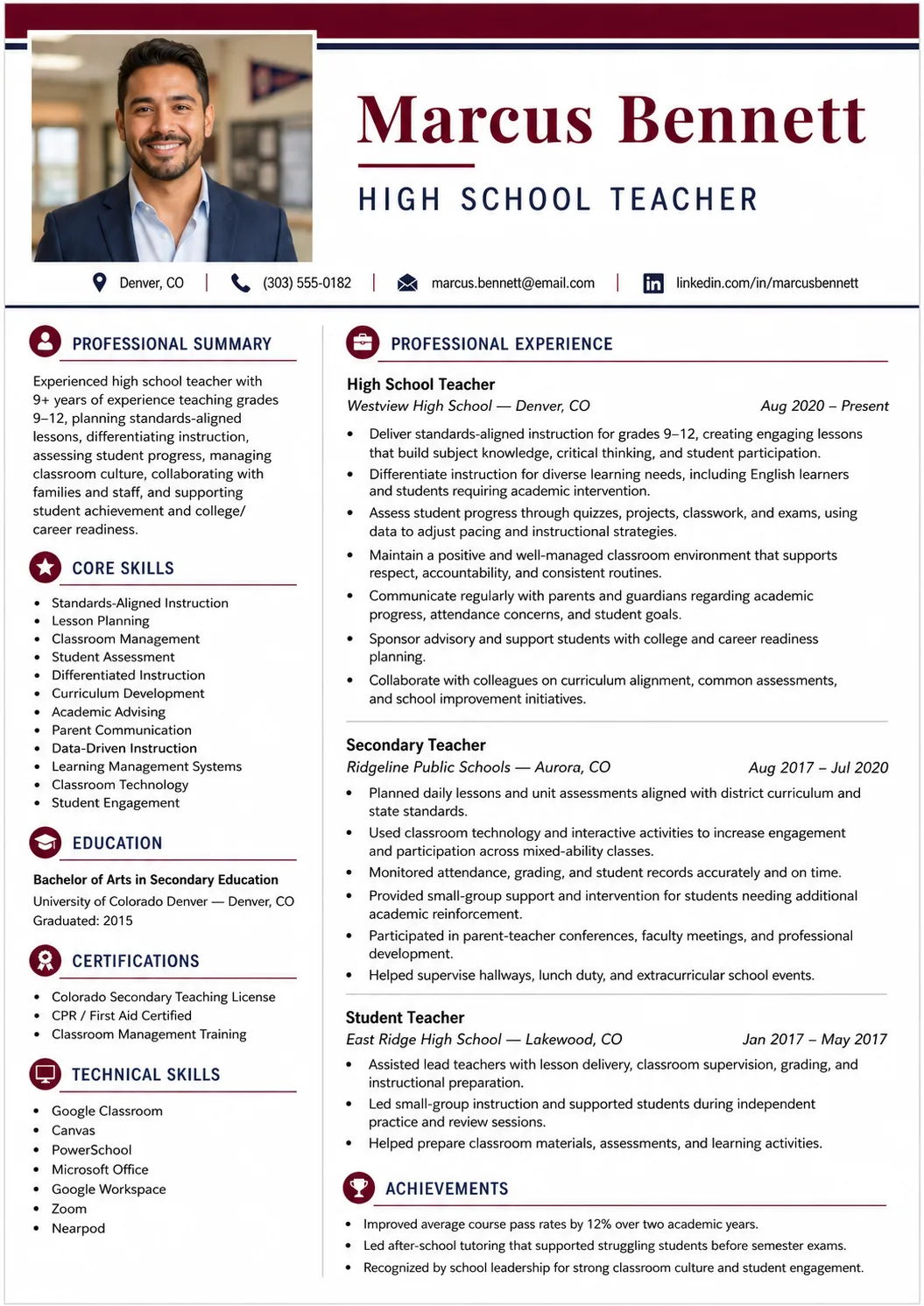
See how a high school teacher resume can present role-specific strengths, relevant achievements, and clean formatting that is easy to adapt.
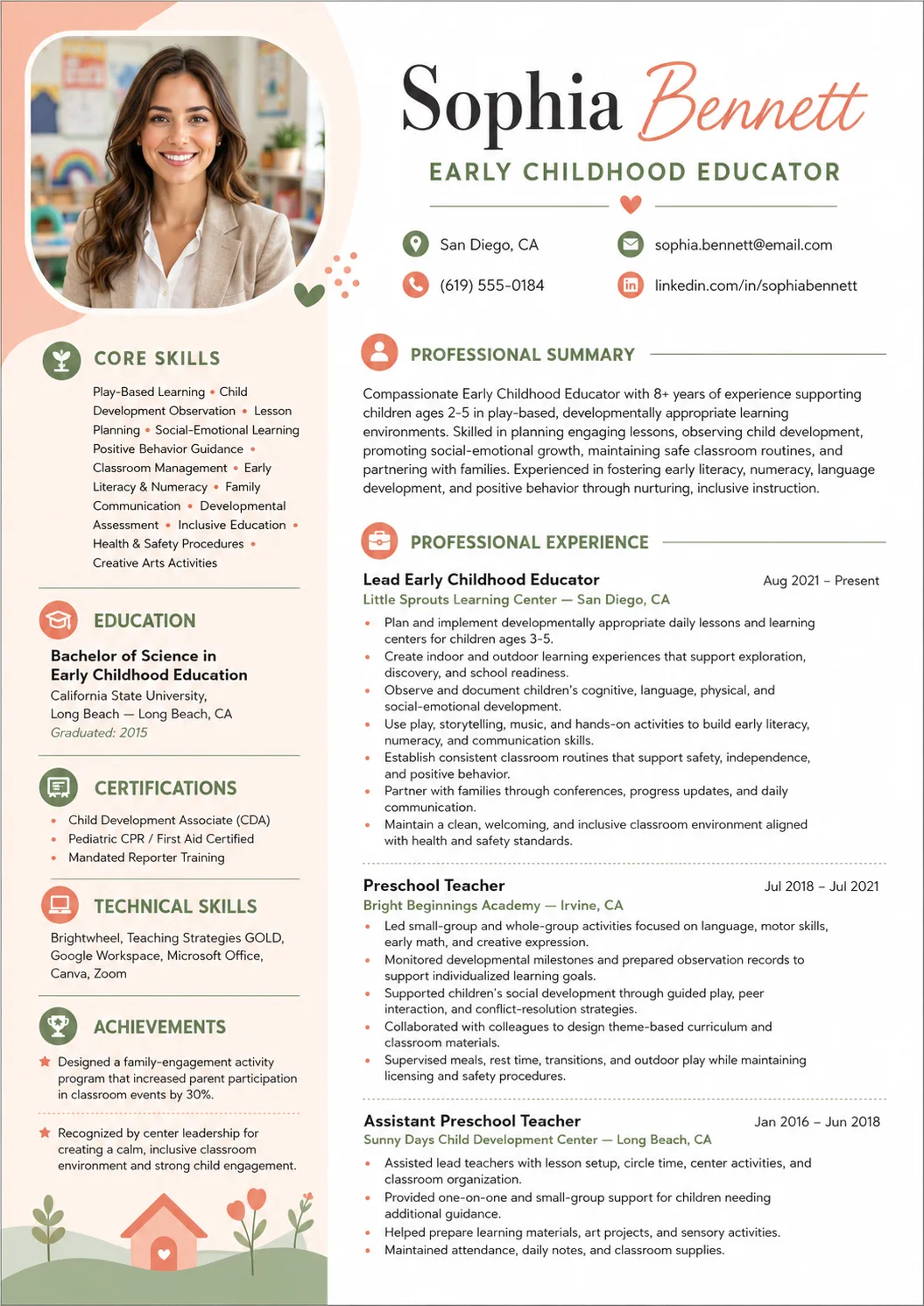
See how an early childhood educator resume can present role-specific strengths, relevant achievements, and clean formatting that is easy to adapt.
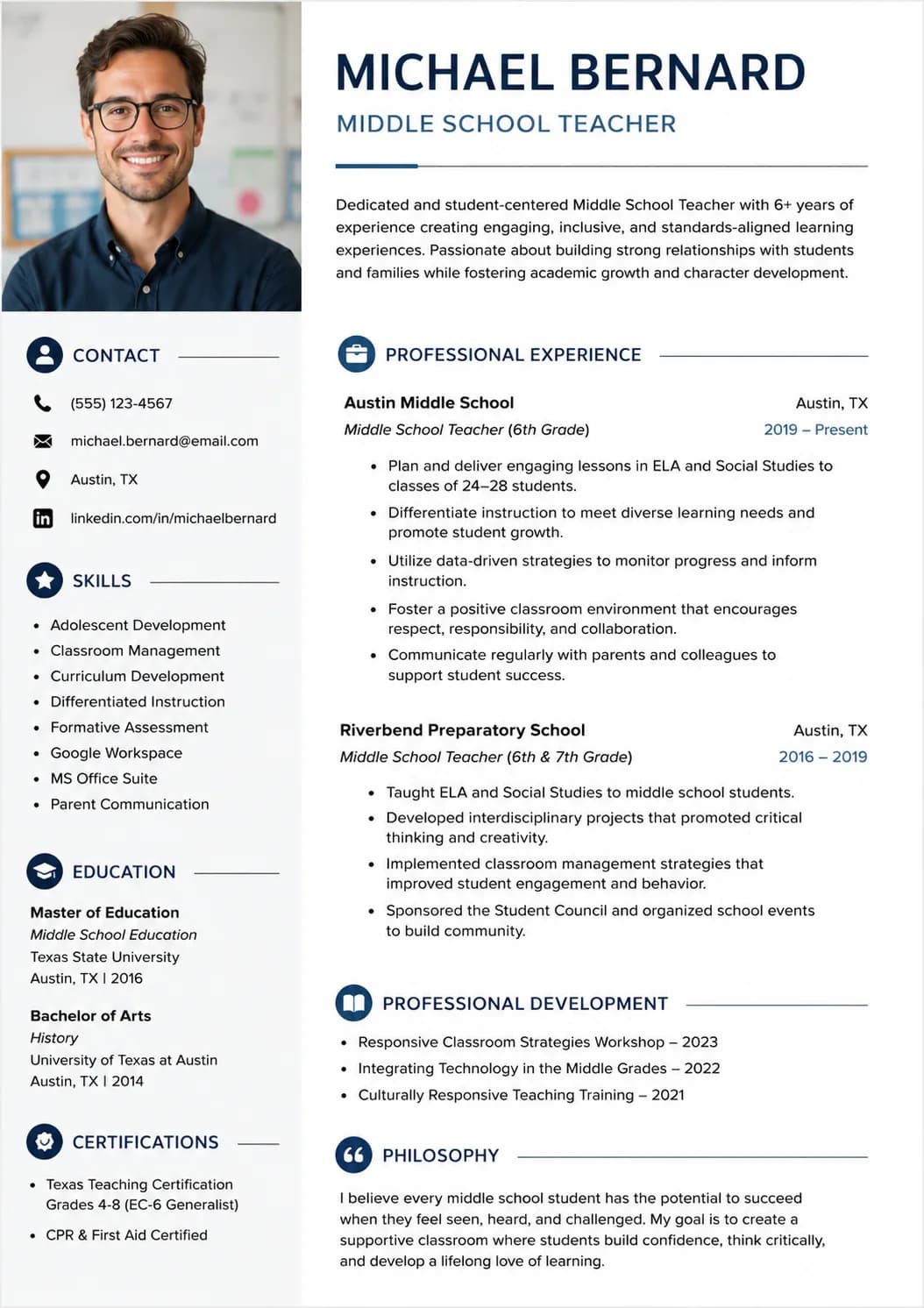
See how a middle school teacher resume can present role-specific strengths, relevant achievements, and clean formatting that is easy to adapt.
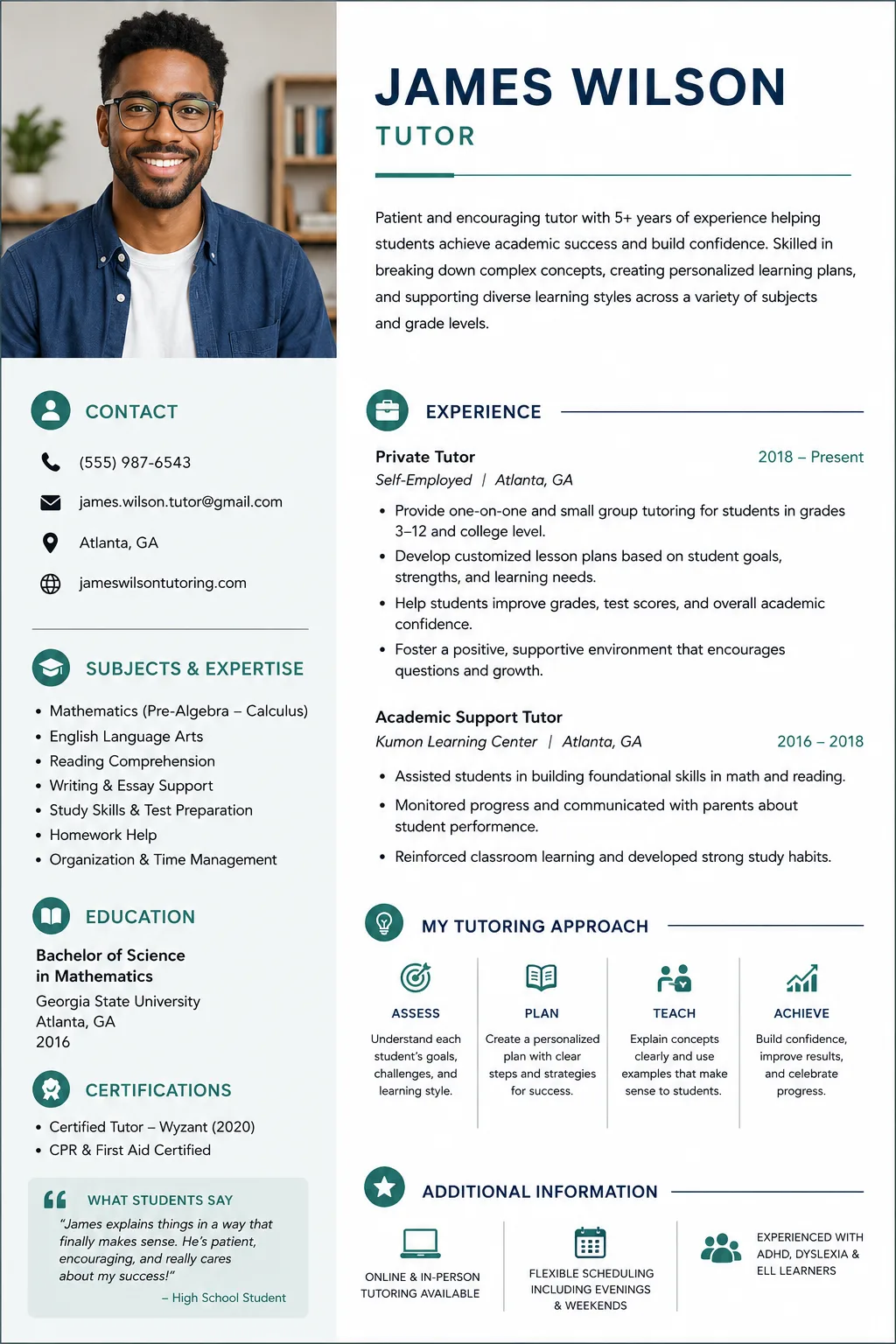
See how a tutor resume can present role-specific strengths, relevant achievements, and clean formatting that is easy to adapt.
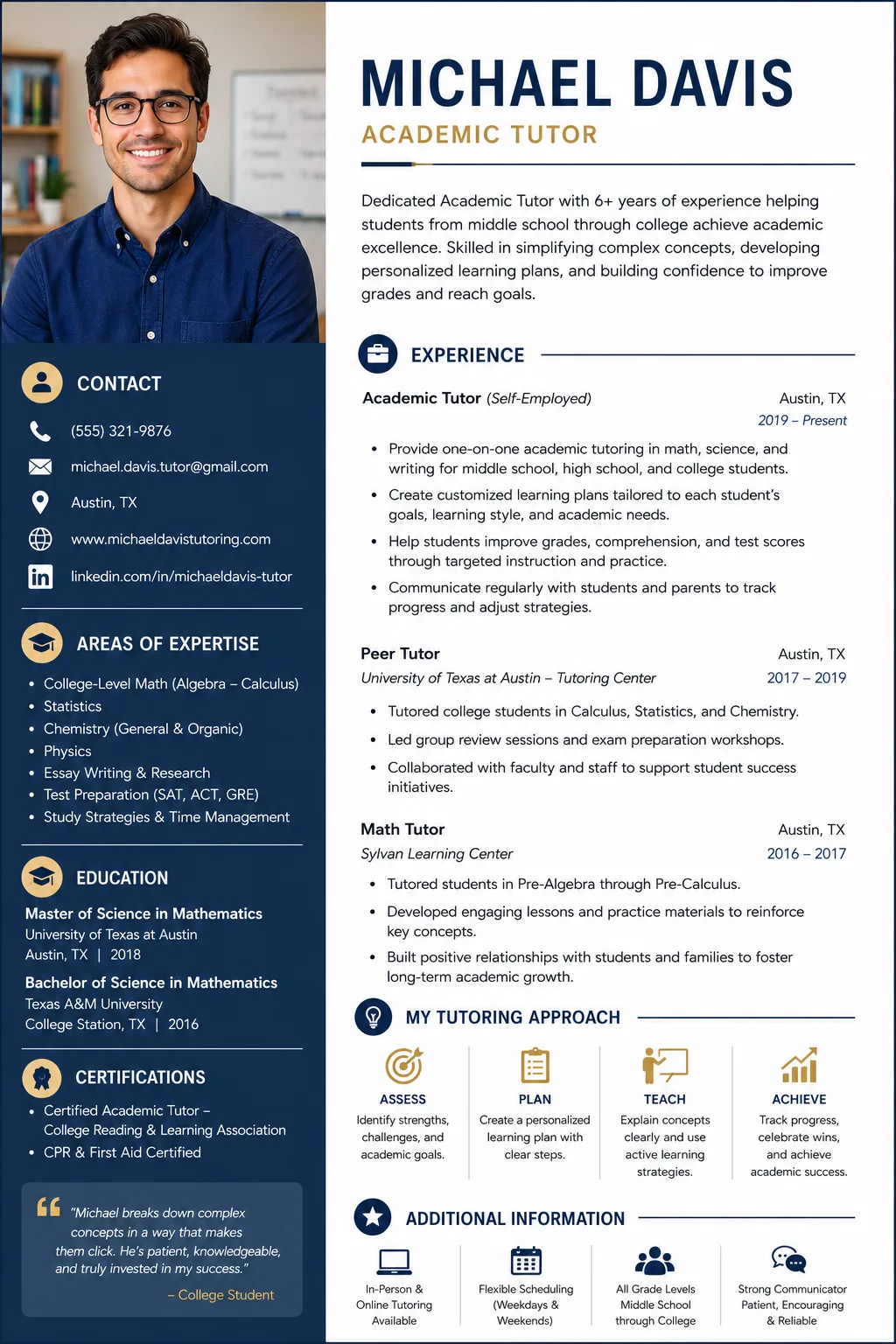
See how an academic tutor resume can present role-specific strengths, relevant achievements, and clean formatting that is easy to adapt.
College Admissions Resume Playbook
Higher-education hiring teams want proof that you can guide prospective students, keep records accurate, and move applications or events forward without losing details.
You do not need years in admissions to write a strong resume. Campus tours, student services, front-desk work, and outreach events can all help when you describe them clearly. This guide will show you how to:
A strong admissions resume should quickly show two things: you communicate well with students and families, and you can manage details accurately across applications, events, and follow-up.
Most enrollment teams look for the same proof: student-facing communication, application detail accuracy, event support, and the ability to follow process without losing empathy.
High-priority proof points
Transferable experience that counts
Higher-education hiring often depends on exact language around student recruitment, application management, event support, and information systems. If your background is relevant but your wording stays generic, your resume can look weaker than it really is.
An admissions resume does not need to sound sales-heavy to win. In most cases, detail accuracy, responsiveness, empathy, and professional follow-through matter more than persuasive buzzwords.
Start with the strongest version of your resume, then tune the language for the exact institution. Your goal is to make student support, process ownership, and higher-education fit obvious on the first pass.
If you are early-career, let the resume prove readiness through campus familiarity, communication, and dependable follow-up instead of apologizing for limited tenure.
The best college admissions resume format keeps student-facing work, systems knowledge, and process reliability easy to spot. Hiring teams want clarity more than design.
For the ATS
For recruiters and enrollment teams
Use a format that makes your student support and process ownership easy to scan.
Let CRM, event support, and follow-up responsibilities sit high enough that the reader can verify fit quickly.
Do not bury application support or campus experience under broad office-assistant phrasing.
Avoid filler personality phrases when a concrete advising or event example would say more.
Choose a resume template that looks organized and approachable. Admissions roles depend on trust, accuracy, and communication, so the layout should feel steady and easy to read rather than overly styled.
Browse our resume templates or jump into the resume builder when you are ready to tailor a version for the exact institution and enrollment cycle you want.
The summary should show that you can guide people through a structured process with warmth and accuracy. It should sound student-ready and dependable under deadline-driven work.
A strong admissions summary feels calm and useful. It should make the reader trust that you can represent the institution well while keeping details organized.
Skip vague people-skill claims unless the rest of the sentence proves them. A better summary shows what kind of students or processes you supported and how you handled them well.
If you are early-career, pull from the strongest campus-facing evidence you already have: tours, student services, front-desk support, event coordination, records work, or advising-adjacent roles.
The summary should make the employer comfortable that you can help students move through the process clearly, accurately, and with the right tone.
College admissions professional with experience in student outreach, campus visits, applicant support, and records coordination. Skilled at guiding students through deadlines and next steps while keeping CRM follow-up accurate and professional.
Your experience section should prove that you can communicate well, handle details accurately, and move students or applications through a clear process. Even internships or campus roles can do that when the bullets stay focused.
Campus ambassador work, student services support, tour coordination, and event check-in duties often provide stronger entry-level admissions proof than candidates realize. If you guided, scheduled, tracked, or answered student questions, that work counts.
For each role, make it easy to see the details that matter most in admissions hiring:
The strongest bullets show both service and accuracy. They make it obvious that you can be helpful while still handling sensitive information and deadlines responsibly.
Admissions Assistant, Westbridge University
Phoenix, Arizona | 2023 - Present
Student Services Intern, Glendale Community College
Glendale, Arizona | 2022 - 2023
A strong admissions skills section should sound like the real work of helping students move through recruitment and enrollment, not like a list of vague people skills. It should blend process accuracy with student-facing communication.
Use the posting to decide which terms deserve space at the top. For some roles that may be event support and outreach. For others it may be file review, student systems, or territory coordination.
Admissions employers often prioritize skill families such as:
The best skills lists feel grounded in campus work. They make it obvious that you can support people well while managing the details that keep enrollment moving.
Education matters in admissions roles because schools often want to see both campus familiarity and a solid academic background. Keep the section clean and secondary to your strongest outreach or advising proof.
If you are early-career, your education can carry more weight. Once you have more direct admissions experience, let the work and systems knowledge move higher.
Admissions resumes should make compliance and professional-development credentials easy to find. FERPA training, NACAC learning, CRM familiarity, or student-services training can all help when they are relevant to the role.
Before applying, make sure any systems, training, or compliance details match the language the institution uses in its posting or application process.
Bullet upgrade
Use the stronger version as the model: lead with a clear action, add context, and include the detail or outcome that proves the work mattered.
Weak
Helped with recruitment events.
Stronger
Supported 18 campus visit and open-house events, guided prospective students through next steps, and logged follow-up tasks in Slate CRM.
The stronger version shows event scale, student interaction, and the system used to manage follow-through.
Weak
Reviewed student applications.
Stronger
Reviewed applicant files for completeness, flagged missing materials, and coordinated counselor follow-up before committee deadlines.
This version shows process accuracy and how your work supported the admissions timeline.
Weak
Talked to students and families.
Stronger
Advised prospective students and families on deadlines, program fit, and financial-aid next steps during phone and virtual appointments.
The stronger bullet turns communication into actual advising value with clear context.
ATS keyword bank
Schools, recruiters, and applicant tracking systems often scan for exact role language. Use these terms only when they honestly match your background and results.
Mirror the institution's language for territory support, events, CRM systems, and student advising whenever it accurately reflects your background.
Matching application
Pair this resume with a short cover letter that explains why you are a fit for the role, what proof from your background matters most, and why this employer should keep reading.
State clearly why you are a strong fit for this college admissions role.
Use one concrete example from the resume to prove your value quickly.
Close with why this employer or team is a strong match for your background.
Final review
Before you send your college admissions resume, review it against the job posting one last time.
Admissions teams should quickly trust your communication, detail handling, and follow-through.
Before You Start Writing
Ready to build
Use this guide as the outline for your own college admissions resume, then finish with a matching cover letter before you apply.