
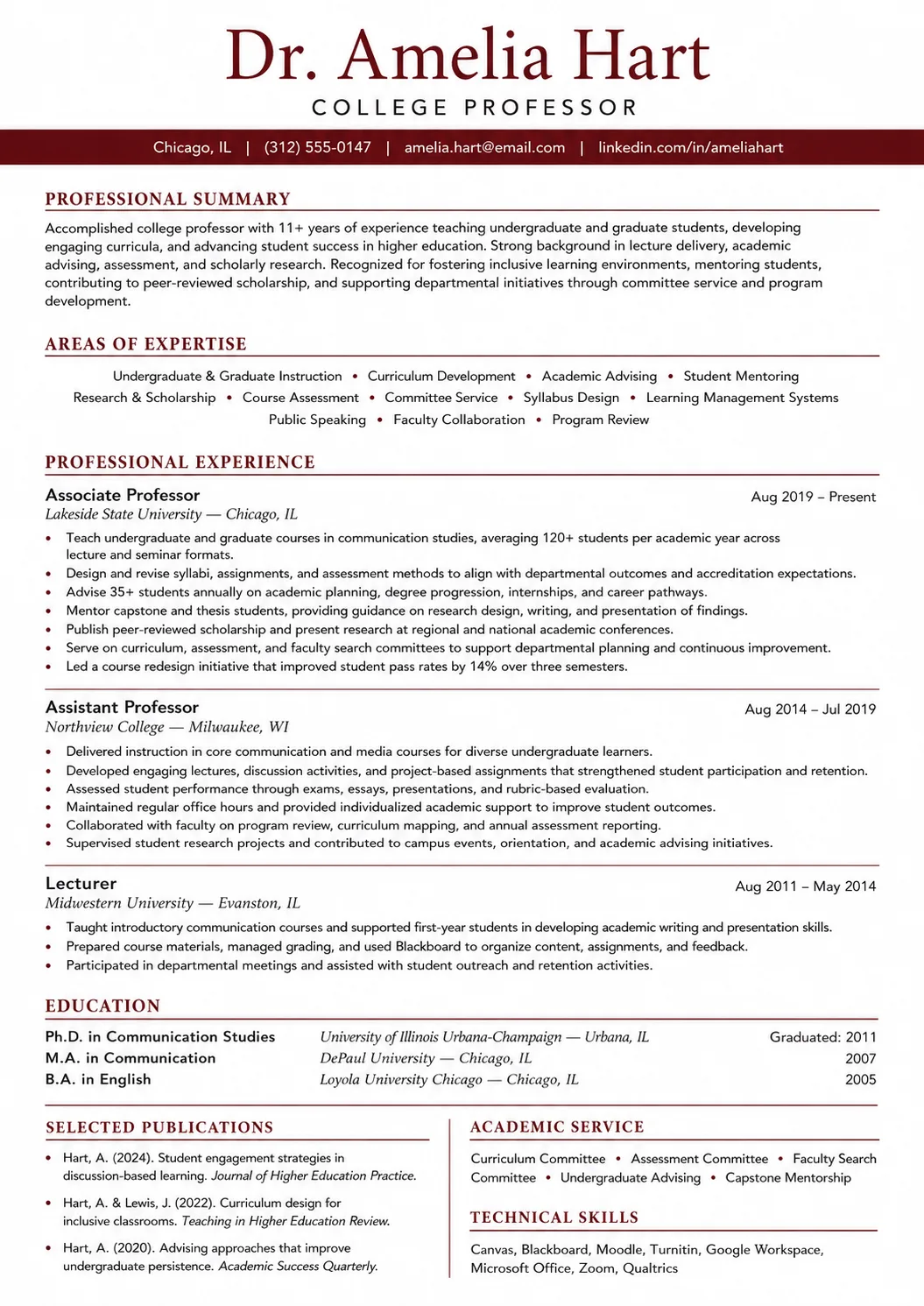
Early faculty or adjunct professor
- Contact information
- Professional summary
- Education
- Teaching experience
- Research or publications
- Skills
Use these college professor resume examples to show teaching, curriculum work, research, and service in a clear way.
Associate Professor of Sociology
elaine.porter@email.com | (312) 555-2774 | Chicago, Illinois | linkedin.com/in/elaineporter
Higher-education faculty leader with 10+ years of experience teaching sociology, revising curriculum, advising students, and supporting department service. Known for clear instruction, strong student mentorship, and research activity that supports program goals.
Associate Professor of Sociology, North Valley University
Chicago, Illinois | 2020 - Present
Assistant Professor of Sociology, Lakeside College
Milwaukee, Wisconsin | 2015 - 2020
Quick breakdown
It balances teaching, research, advising, and service.
It shows real academic responsibility through course load, mentorship, and curriculum work.
It keeps faculty credibility visible with the right degree and development details.
It uses academic wording that still reads clearly.
Fast template guide
Do not copy the resume word for word. Copy the structure, the section order, and the level of specificity so your own version feels just as credible.
A summary that quickly shows your subject area, teaching depth, and academic strengths.
Bullets that connect course ownership, student outcomes, research, and service.
A section order that keeps faculty credibility and curriculum work easy to scan.
Teaching credentials and faculty development placed where schools can find them fast.
Language that sounds like real faculty work, not generic management talk.
Build the right structure
A strong college professor resume should include the sections employers expect to scan quickly, plus a few optional sections that help you prove readiness when your experience is still growing.
Must-have sections
Optional sections that strengthen the resume
For college professor resumes, teaching load, advising, curriculum work, and scholarship should appear in a balance that fits the institution.
Smarter ordering
The best section order depends on your experience level. A new college professor should not use the same structure as a senior candidate with years of results.
If the institution emphasizes research, move publications, grants, and subject expertise higher while still keeping teaching easy to find.
Use this senior-level college professor example to study how program leadership, scholarship, and institutional contribution define the strongest version.
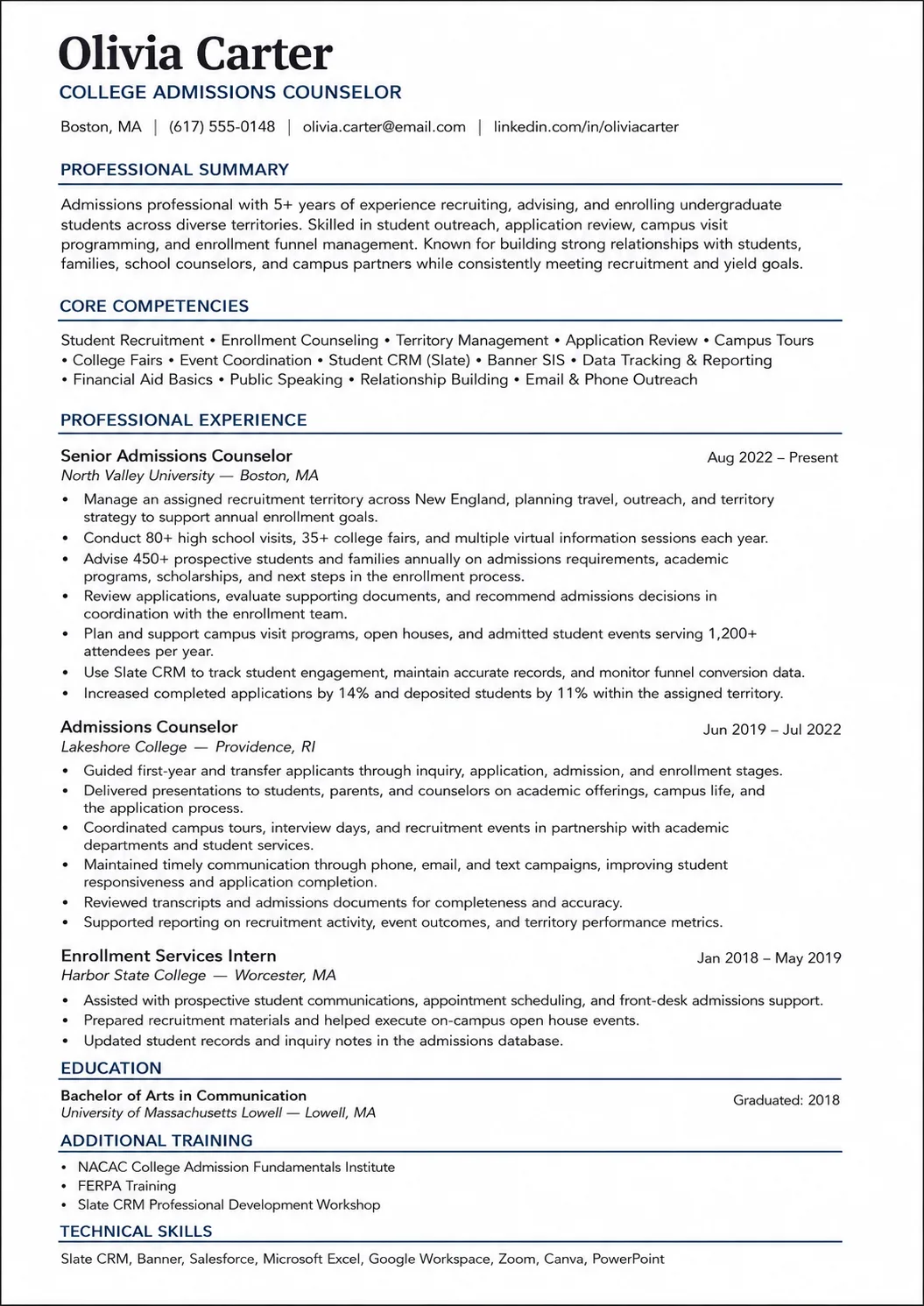
Use these college admissions resume examples to show student outreach, application support, and CRM follow-up in a clear way.
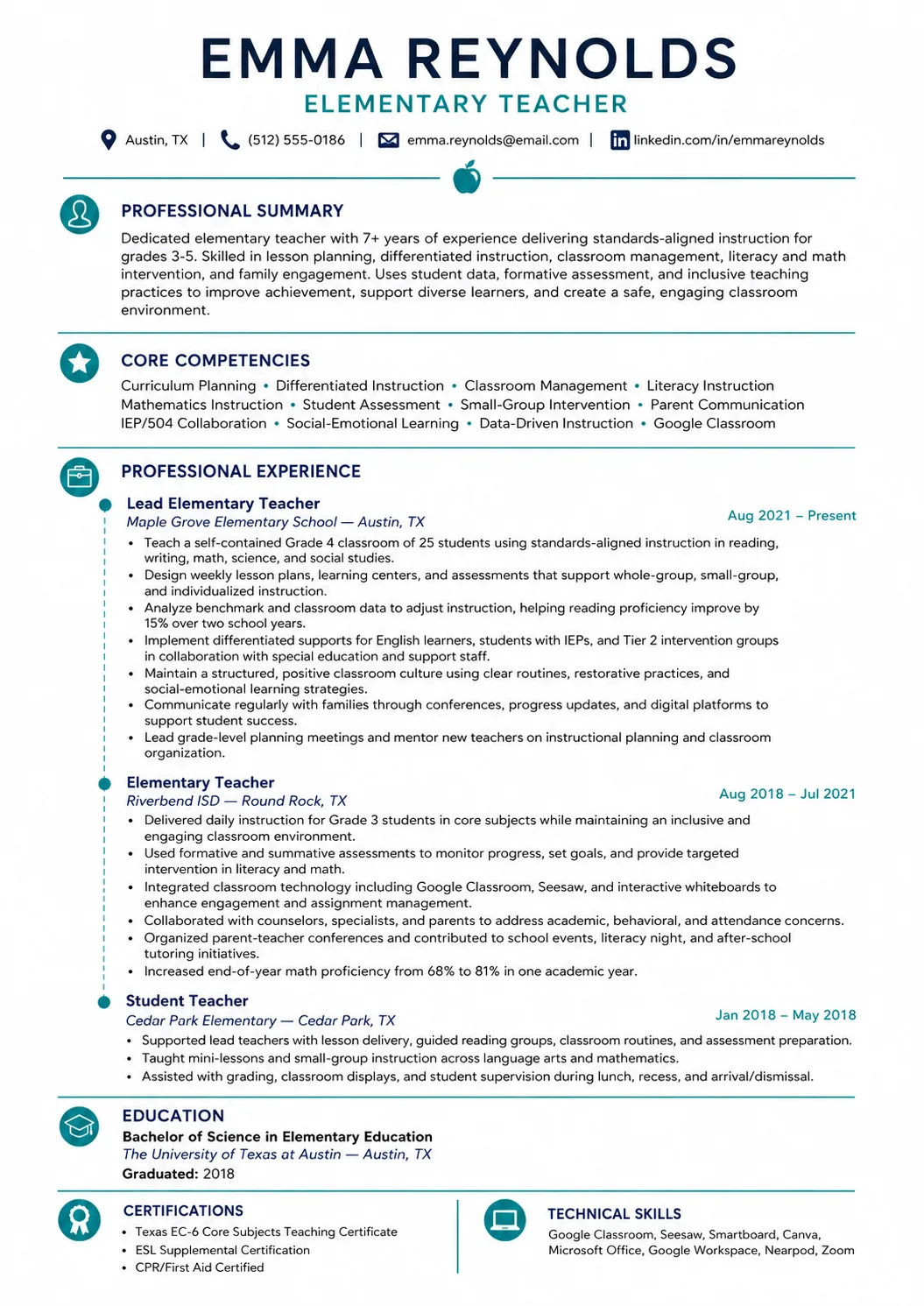
Use these teacher resume examples to show student teaching, classroom skills, and license status in a clear way.
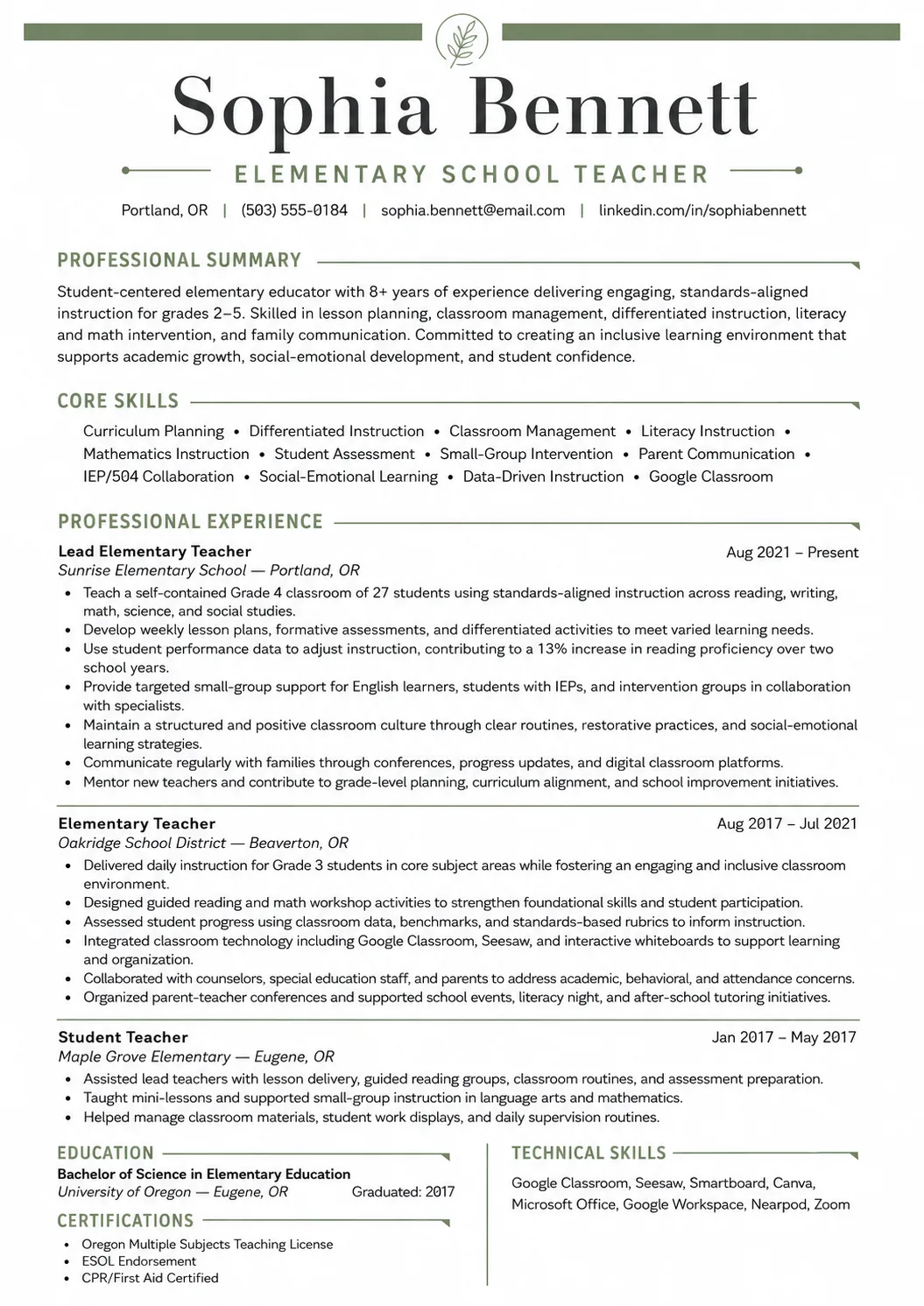
See how an elementary school teacher resume can present role-specific strengths, relevant achievements, and clean formatting that is easy to adapt.
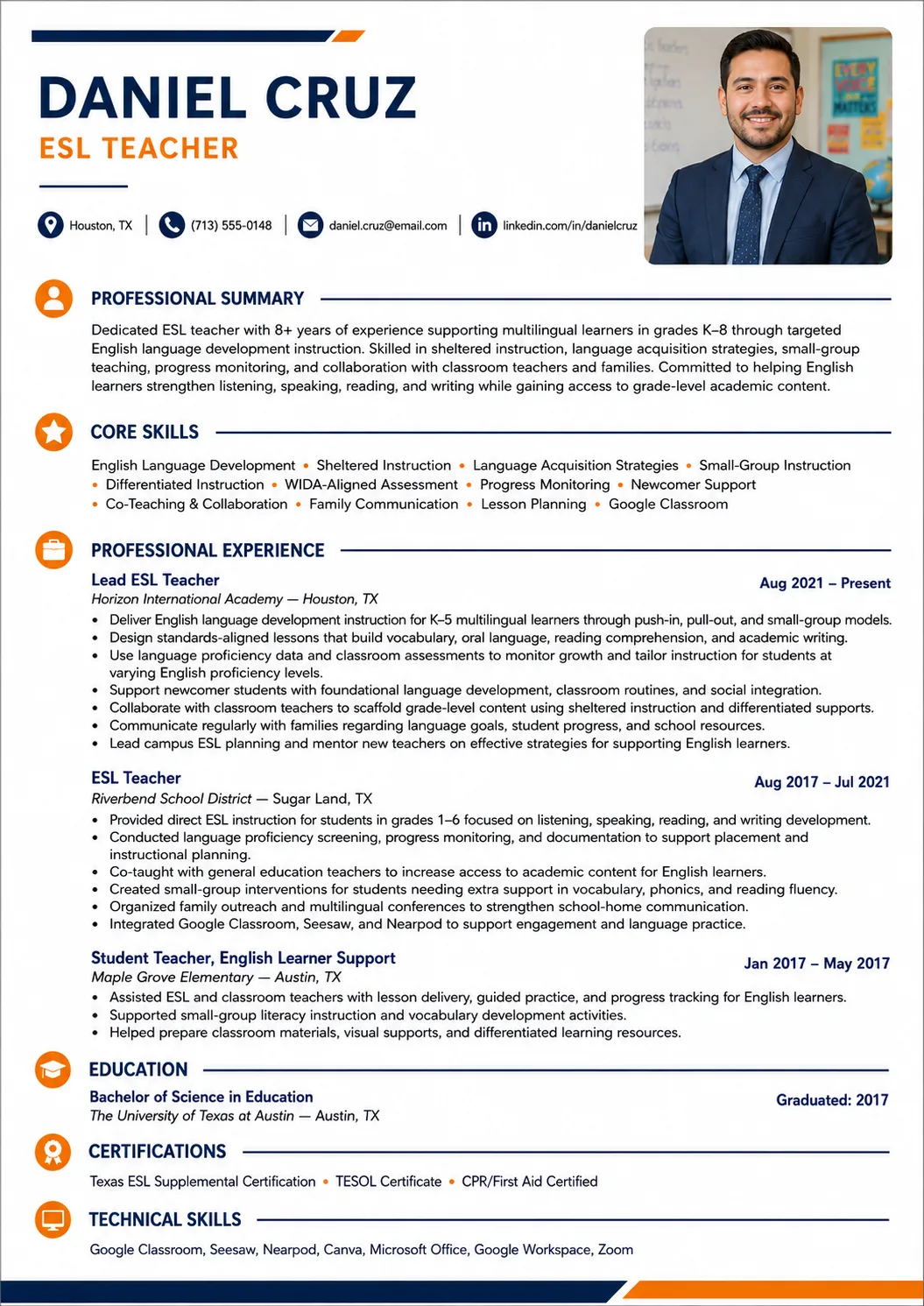
See how an ESL teacher resume can present role-specific strengths, relevant achievements, and clean formatting that is easy to adapt.
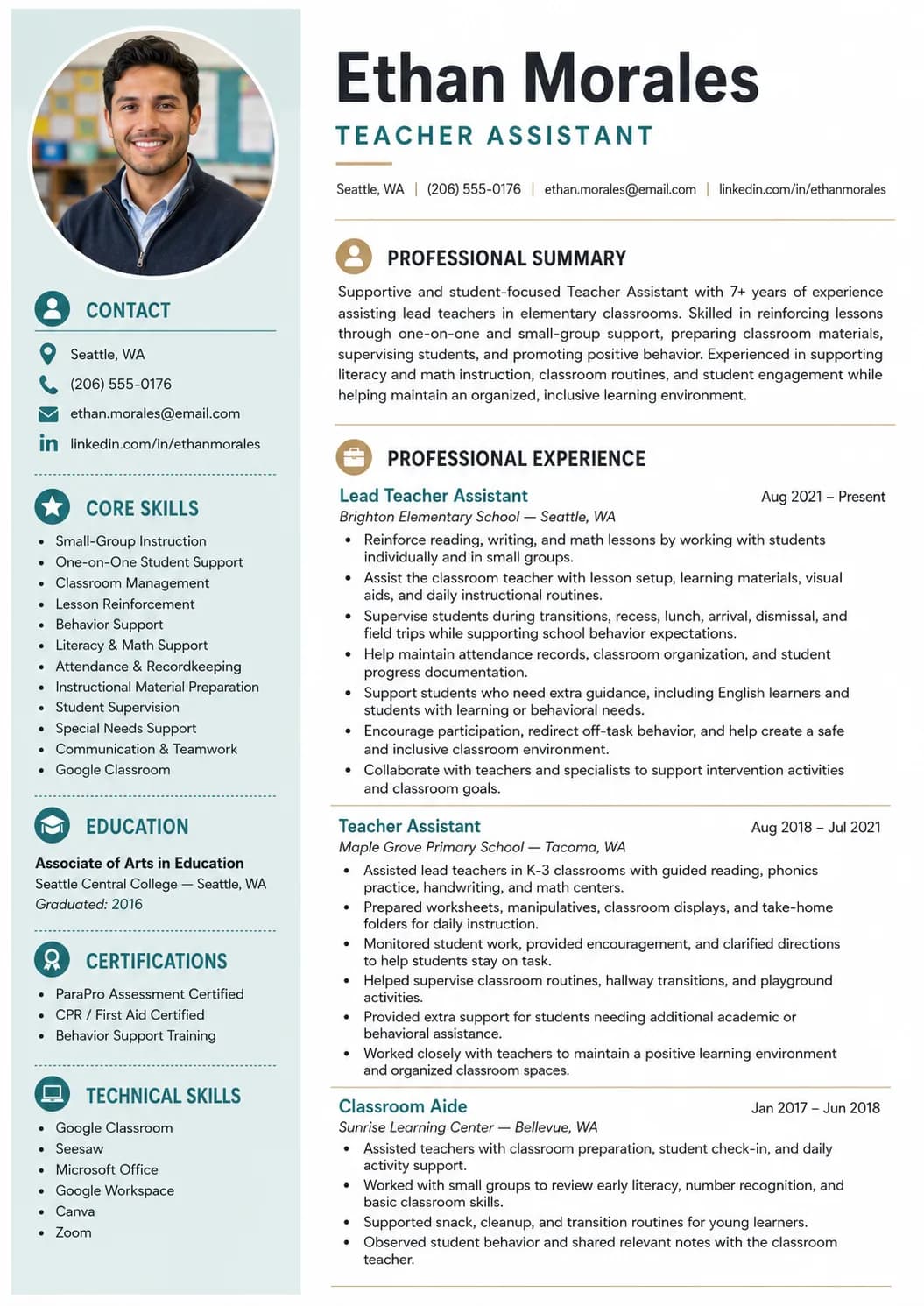
See how a teacher assistant resume can present role-specific strengths, relevant achievements, and clean formatting that is easy to adapt.
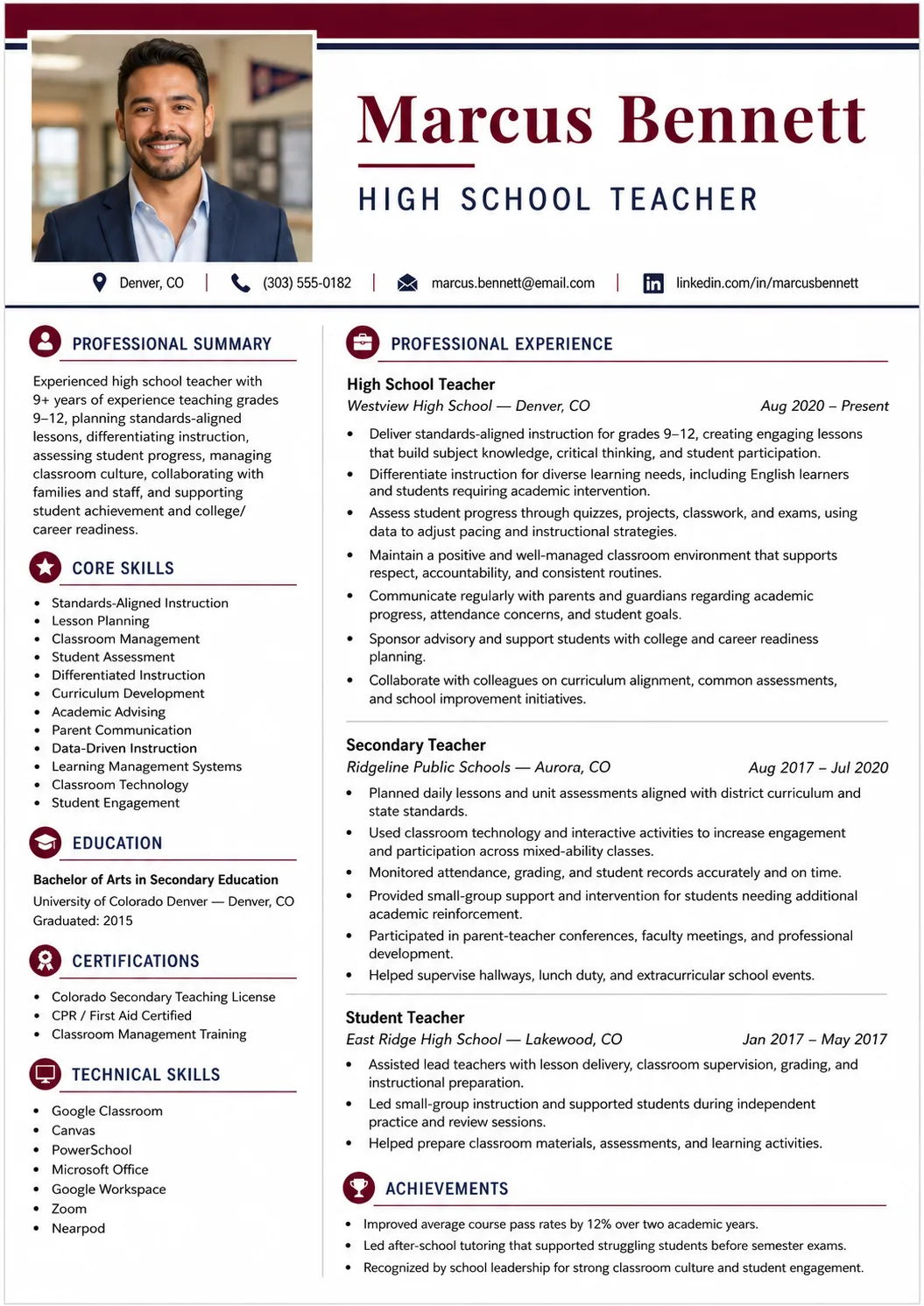
See how a high school teacher resume can present role-specific strengths, relevant achievements, and clean formatting that is easy to adapt.
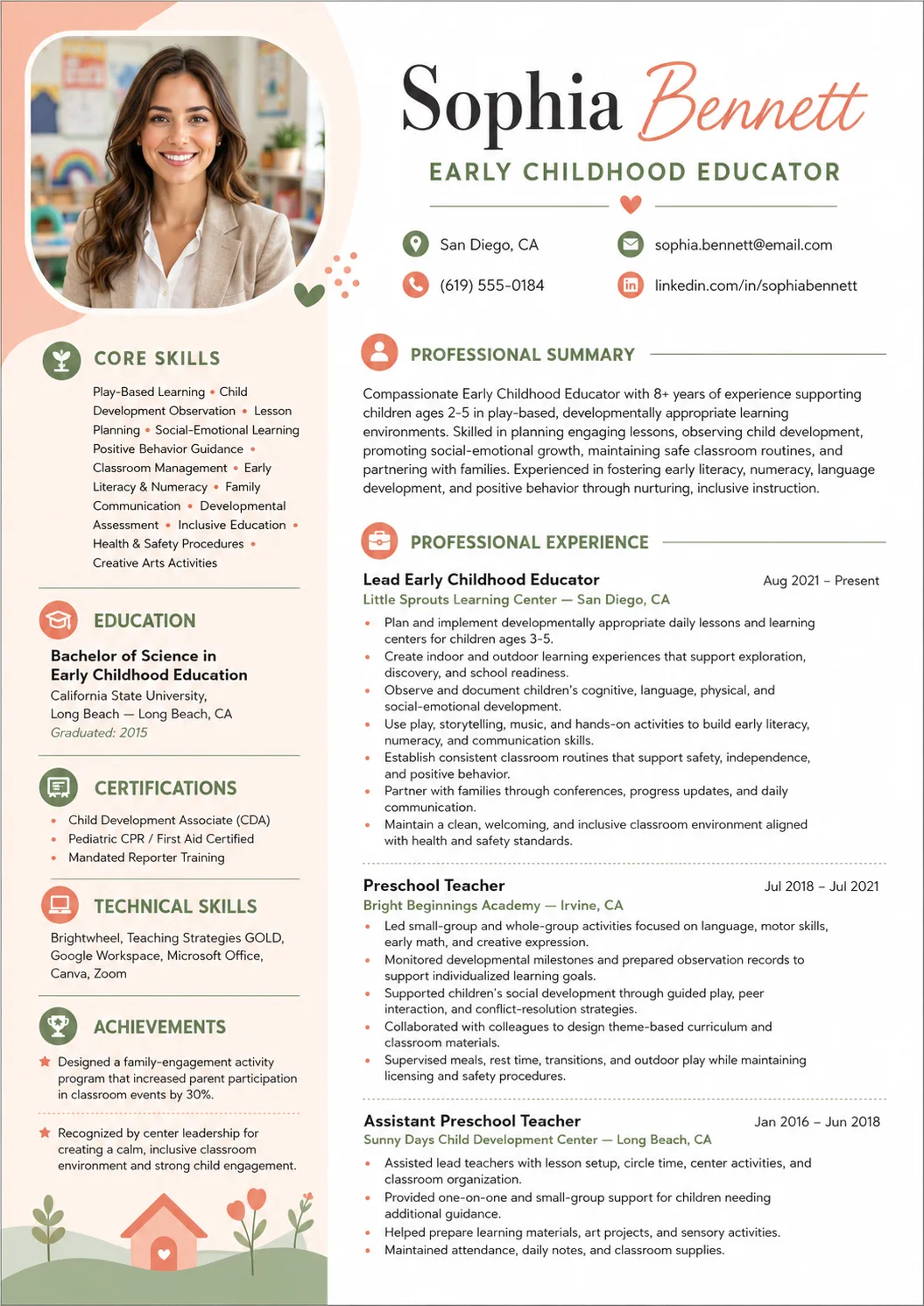
See how an early childhood educator resume can present role-specific strengths, relevant achievements, and clean formatting that is easy to adapt.
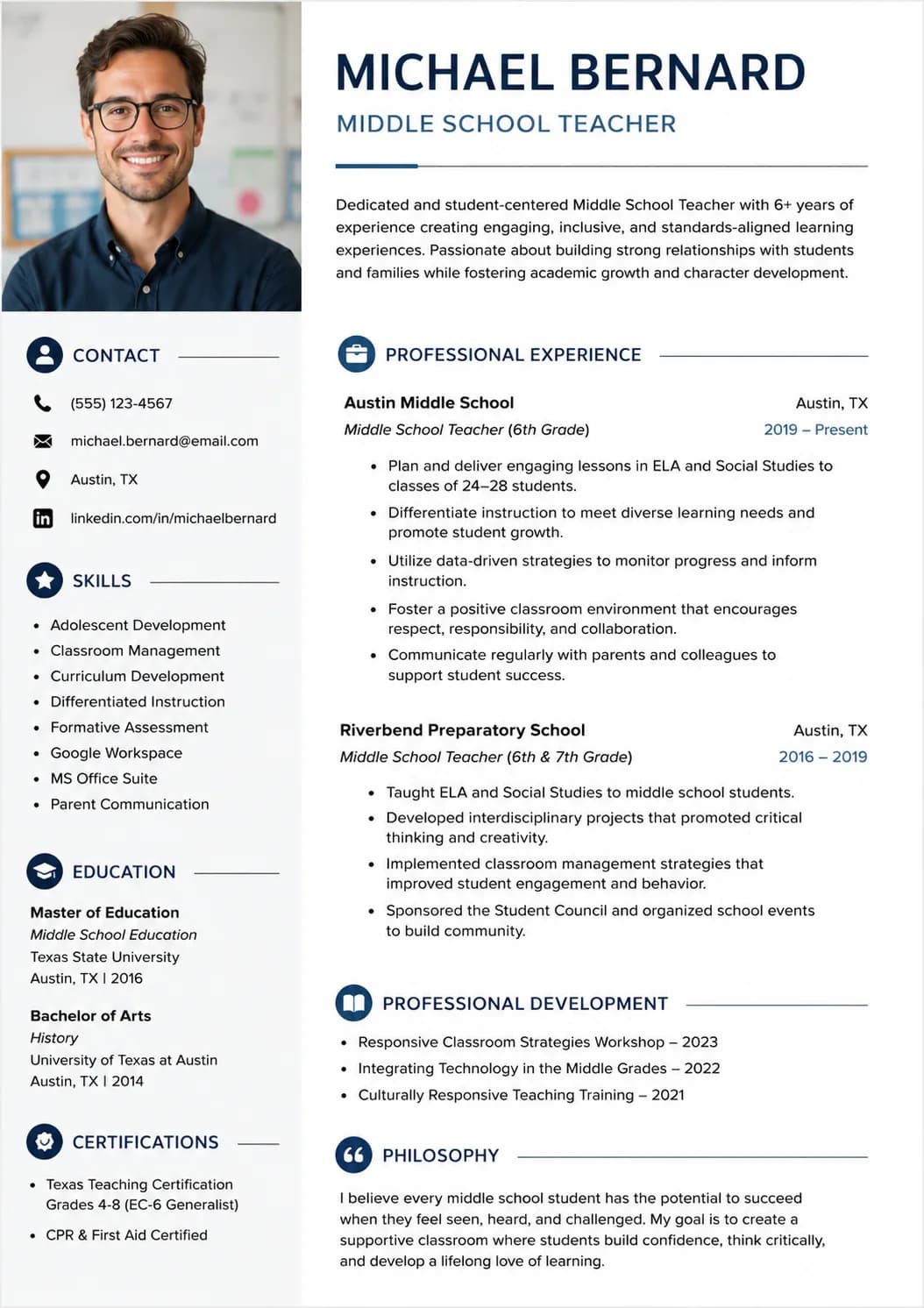
See how a middle school teacher resume can present role-specific strengths, relevant achievements, and clean formatting that is easy to adapt.
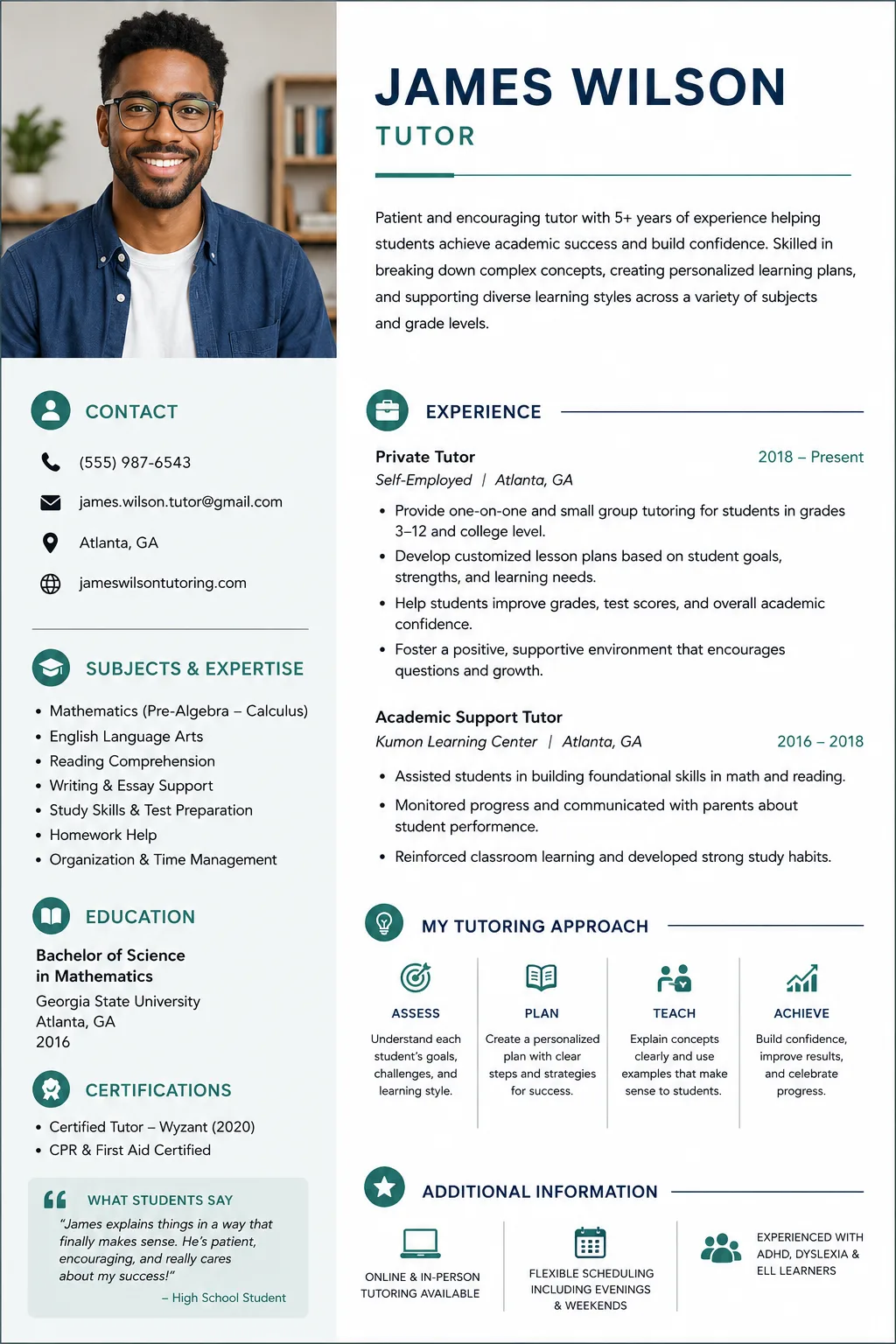
See how a tutor resume can present role-specific strengths, relevant achievements, and clean formatting that is easy to adapt.
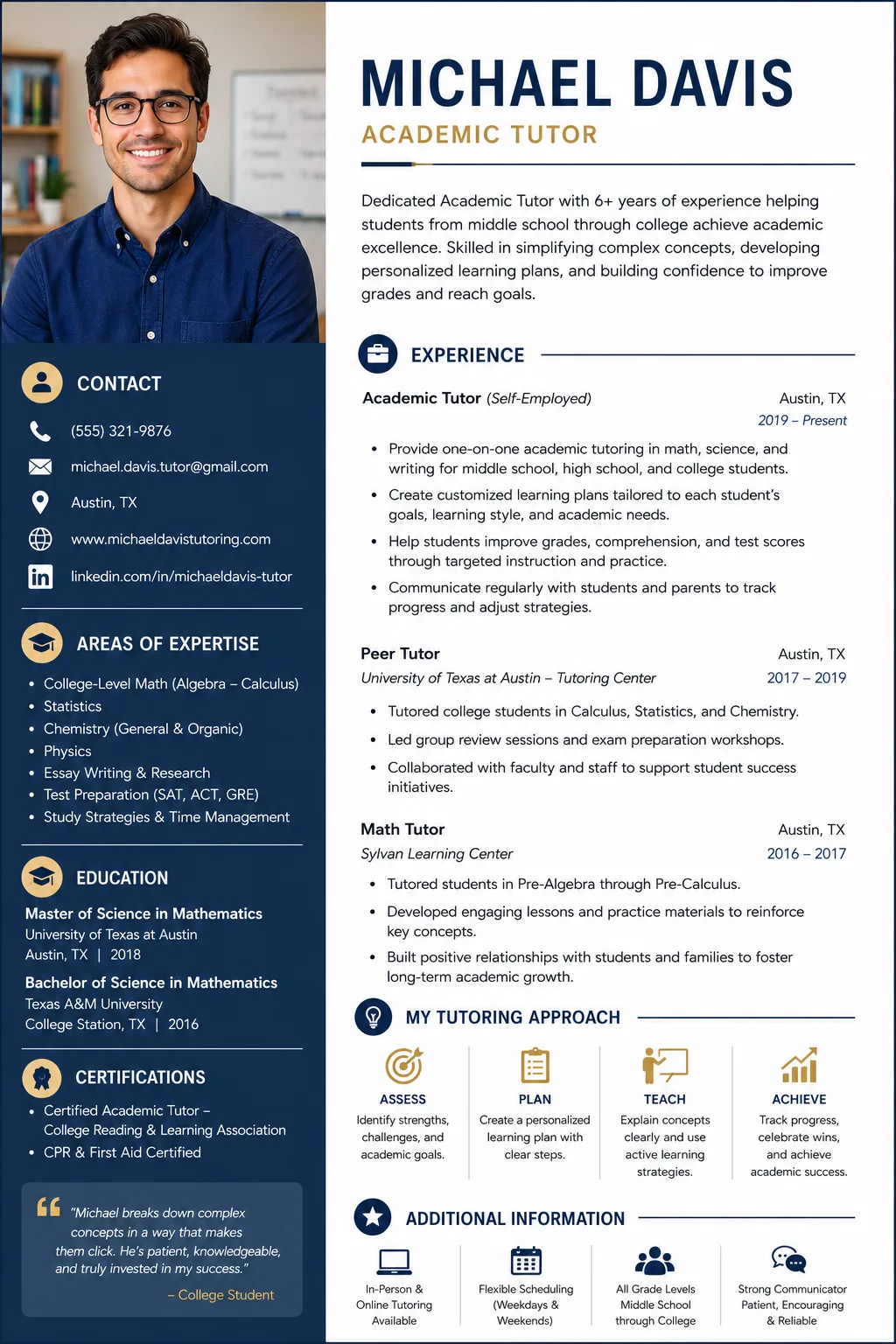
See how an academic tutor resume can present role-specific strengths, relevant achievements, and clean formatting that is easy to adapt.
College Professor Resume Playbook
Faculty hiring committees want proof that you can teach well, support students, and contribute to the department. The best resumes make that balance easy to scan without turning into a full CV.
Whether the role is teaching-heavy or research-heavy, you need to show your subject fit, course ownership, and academic service early. This guide will show you how to:
A college professor resume should quickly show your academic value. That means highlighting the mix of teaching, scholarship, advising, and service that matters most for the institution.
Most academic reviewers are looking for a blend of subject-matter fit and institutional value. They want to understand what you teach, what you contribute beyond the classroom, and whether your profile matches the department's current needs.
High-signal proof points
What committees compare quickly
Academic hiring can still involve ATS or standardized screening. Use the exact department language for discipline terms, LMS tools, course levels, student advising, and institutional priorities when that language reflects your real experience.
A faculty resume should feel selective, not skeletal. You are not trying to fit a full academic CV into one page without thinking. You are deciding which teaching, scholarship, and service details most clearly prove fit for this specific role.
Start with the strongest version of your faculty profile, then tune the balance by institution. A teaching-first school may care more about student outcomes and course coverage, while a research-oriented department may scan publications and grants earlier.
The best professor resumes make thoughtful academic judgment visible before the interview even begins.
The best college professor resume format makes academic credibility easy to read without turning the page into an overloaded mini-CV. Committees often compare many profiles quickly, so clarity matters.
For the ATS
For committees and reviewers
Use a format that lets course ownership, advising, and scholarship speak clearly.
Let the role-relevant academic strengths take priority over less important background details.
Do not paste a full CV into a resume format without prioritizing what matters most to this role.
Avoid generic teaching language when you can show course levels, assessment design, or mentorship scope.
Choose a template that feels polished and disciplined. Faculty resumes do not need dramatic styling. They need a structure that lets teaching, scholarship, and service stand out with as little friction as possible.
Browse our resume templates or jump into the resume builder when you are ready to tailor a version for the exact department and institution you want.
The summary should tell the committee what subject perspective, teaching scope, and academic value you bring. It should feel specific enough to trust without becoming a compressed biography.
A good professor summary feels grounded and selective. It gives the committee an immediate sense of academic maturity and institutional relevance.
Avoid summaries that read like a dense academic abstract. A committee should be able to understand your role fit in seconds, not after parsing several long sentences.
If you are unsure what to emphasize, start with the clearest intersection of discipline fit, teaching coverage, and the kind of institutional contribution this role needs most.
The summary should help the institution picture you in the department before they read the rest of the page.
Higher-education faculty leader with 10+ years of experience teaching sociology, revising curriculum, advising students, and supporting department service. Known for clear instruction, strong student mentorship, and research activity that supports program goals.
The experience section should show what you teach, how much responsibility you carry, and how your work supports students or the department.
Committees often remember bullets that combine teaching scope with academic value. They forget bullets that only say taught courses or advised students without showing the level, load, or contribution behind that work.
For each role, make it easy to find the details that define strong faculty experience:
The strongest bullets feel academic but not inflated. They name the work clearly, then show why it mattered to students, the department, or the institution.
Associate Professor of Sociology, North Valley University
Chicago, Illinois | 2020 - Present
Assistant Professor of Sociology, Lakeside College
Milwaukee, Wisconsin | 2015 - 2020
The skills section should support your academic story, not replace it. It should help the committee confirm the kind of teaching, advising, research, and department work you do well.
Group the strengths around real faculty work instead of broad professional adjectives. That makes the section easier to trust and easier to compare.
Professor skill sections are usually strongest when they reflect categories such as:
Keep the list aligned with the actual role. A teaching-heavy institution may care less about broad research terms than about student support, assessment, and classroom delivery.
Education carries real weight in professor roles, but the section still needs to stay readable. List the relevant degrees clearly, then let your teaching and institutional contributions do the rest of the persuasion.
At this level, committees care less about padding the academic section and more about how your degree background supports the teaching and scholarship they need.
Formal certifications are not always central in professor roles, but faculty development can strengthen your profile when it supports online teaching, inclusive instruction, assessment, or curriculum delivery. Keep it relevant and easy to scan.
Only keep development or credential details that reinforce the academic story you are telling for this institution. Relevance matters more than volume.
Bullet upgrade
Use the stronger version as the model: lead with a clear action, add context, and include the detail or outcome that proves the work mattered.
Weak
Taught sociology classes.
Stronger
Designed and taught undergraduate sociology courses for 120+ students per semester, aligning assessments with department learning outcomes.
The stronger bullet shows scope, ownership, and academic alignment instead of a generic teaching claim.
Weak
Advised students.
Stronger
Advised 35 undergraduate majors each academic year on course selection, research planning, and graduation requirements.
This version shows mentorship load and the actual advising responsibilities involved.
Weak
Worked on curriculum updates.
Stronger
Led curriculum revision for the introductory methods sequence, updating assignments and assessment rubrics across three course sections.
The better bullet adds leadership, academic context, and the scale of the curriculum work.
ATS keyword bank
Schools, recruiters, and applicant tracking systems often scan for exact role language. Use these terms only when they honestly match your background and results.
Match the department posting for discipline terms, course levels, LMS platforms, research focus, and service expectations whenever they accurately reflect your background.
Matching application
Pair this resume with a short cover letter that explains why you are a fit for the role, what proof from your background matters most, and why this employer should keep reading.
State clearly why you are a strong fit for this college professor role.
Use one concrete example from the resume to prove your value quickly.
Close with why this employer or team is a strong match for your background.
Final review
Before you send your college professor resume, review it against the job posting one last time.
Faculty resumes work best when the school can quickly see how your teaching, scholarship, and service fit the role.
Before You Start Writing
Ready to build
Use this guide as the outline for your own college professor resume, then finish with a matching cover letter before you apply.