Academic tutor skills section example: show how you help students learn
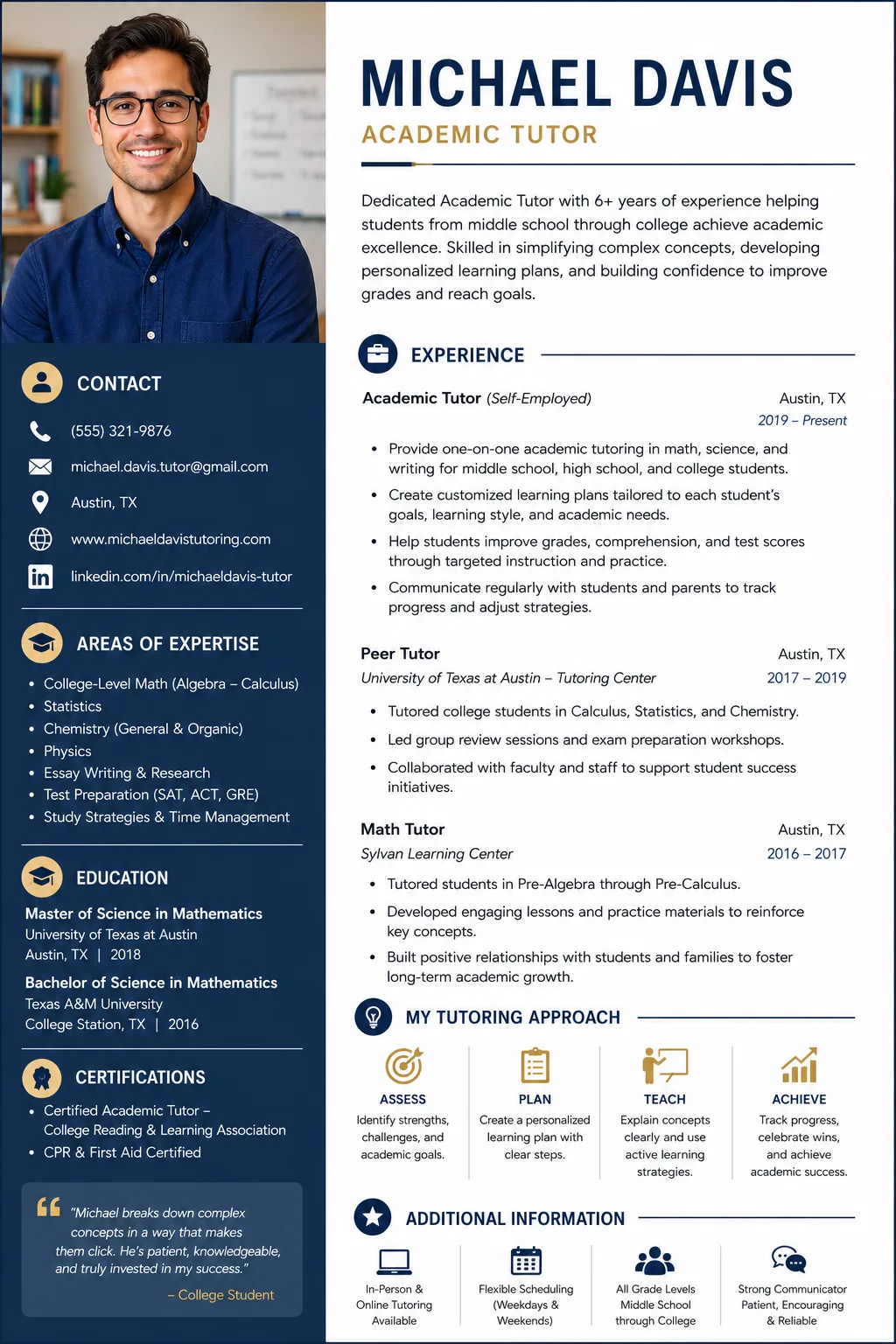
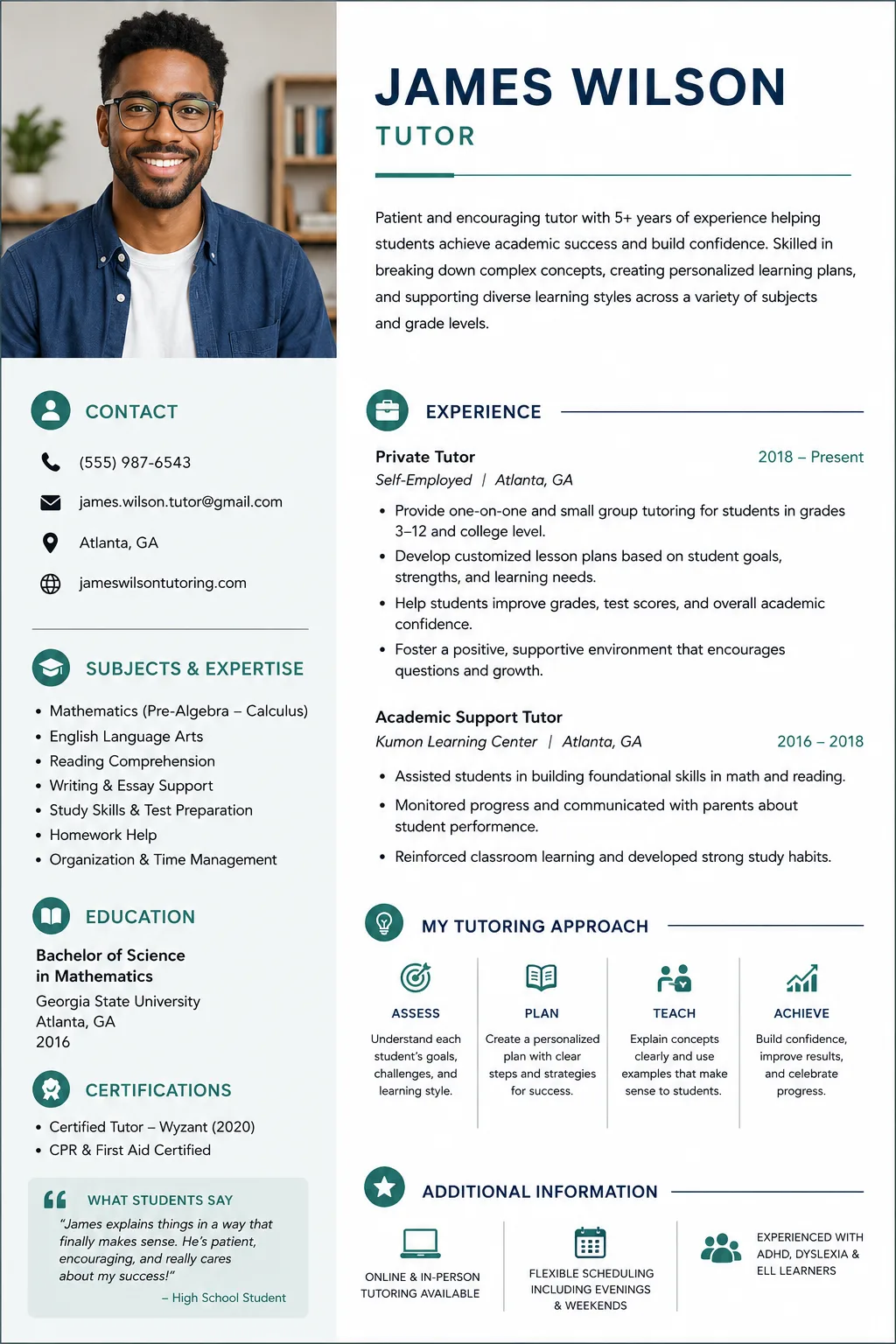
The academic tutor skills section should reflect real tutoring work. It should help a tutoring manager, school recruiter, parent, or ATS tool see that you can explain, assess, plan, support, track, and communicate. Good academic tutor resume skills are not random personality words. They are skills connected to actual tutoring: one-on-one tutoring, small-group instruction, subject matter expertise, diagnostic assessment, study skills coaching, homework support, progress tracking, test preparation, reading comprehension, essay feedback, algebra support, online tutoring, parent communication, and learning plans.
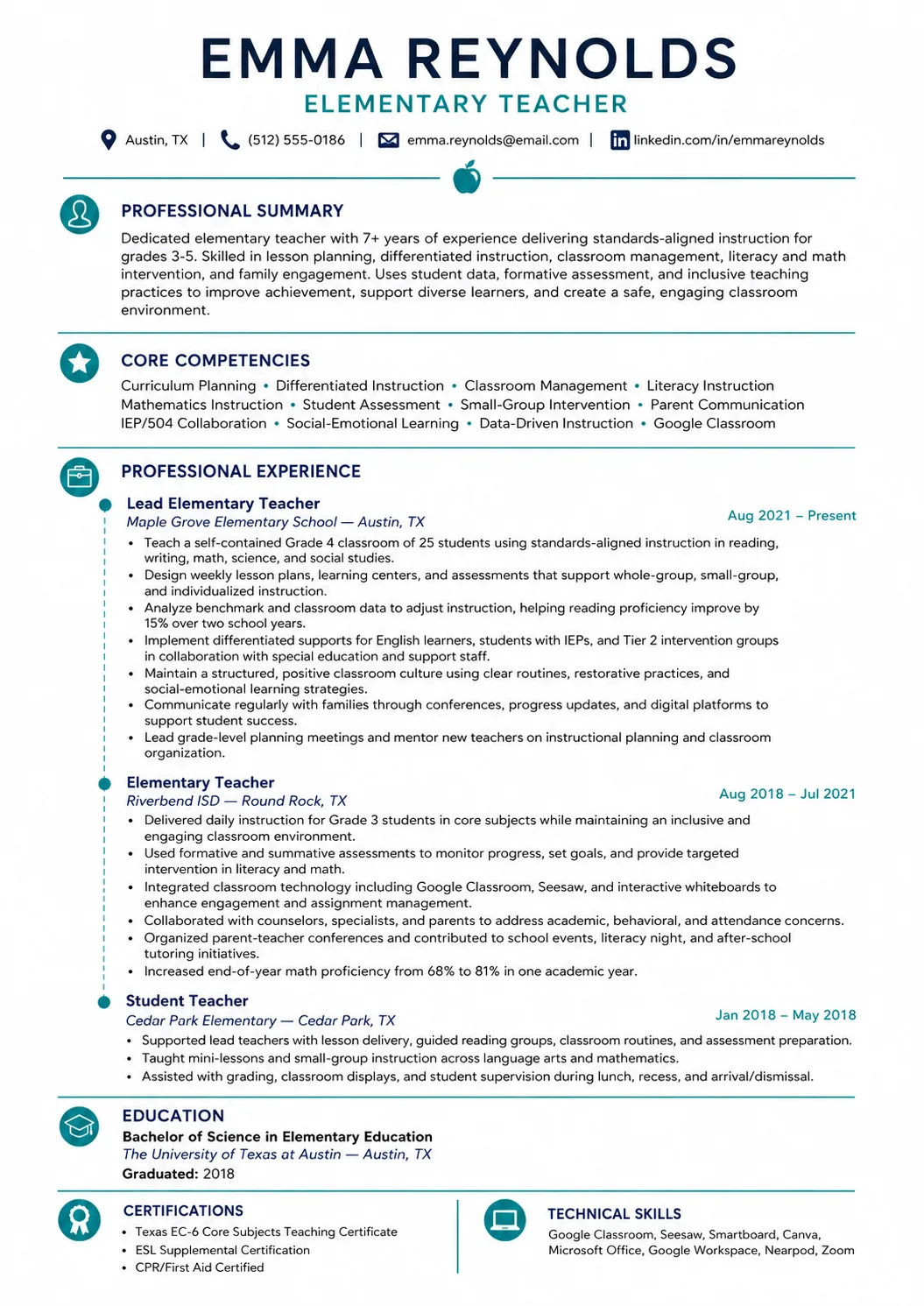
Keep a longer master list outside your resume, then choose the skills that fit each posting. A good academic tutor resume does not need every skill you have. It needs the skills that match the subject, student level, exam type, and tutoring format in the job description. For example, an elementary tutor may highlight phonics, reading support, homework help, numeracy, patience, and parent updates. A high school math tutor may highlight algebra, geometry, calculus, problem-solving, test prep, and progress tracking. A writing tutor may highlight thesis development, essay structure, grammar review, feedback notes, and revision planning.
A strong academic tutor skills section mixes subject skills with tutoring methods and communication skills. Do not separate skills in a way that makes the page confusing. Group them if your template allows it, or list the most important ones first. The most useful academic tutor resume skills are usually the ones that also appear in your experience bullets. If you list diagnostic assessment, show a bullet where you checked learning gaps. If you list parent communication, show a bullet where you sent progress notes or updates. This makes your skills believable instead of decorative.